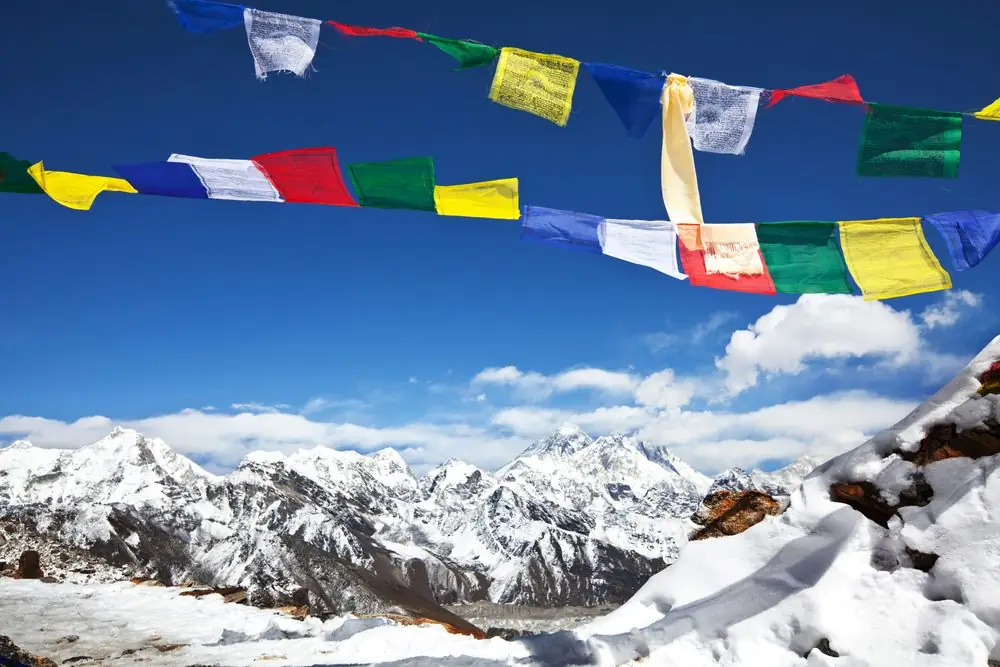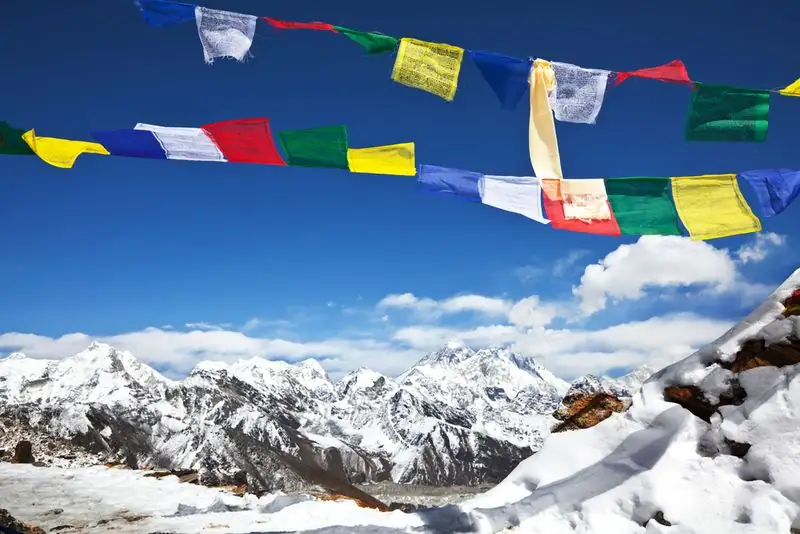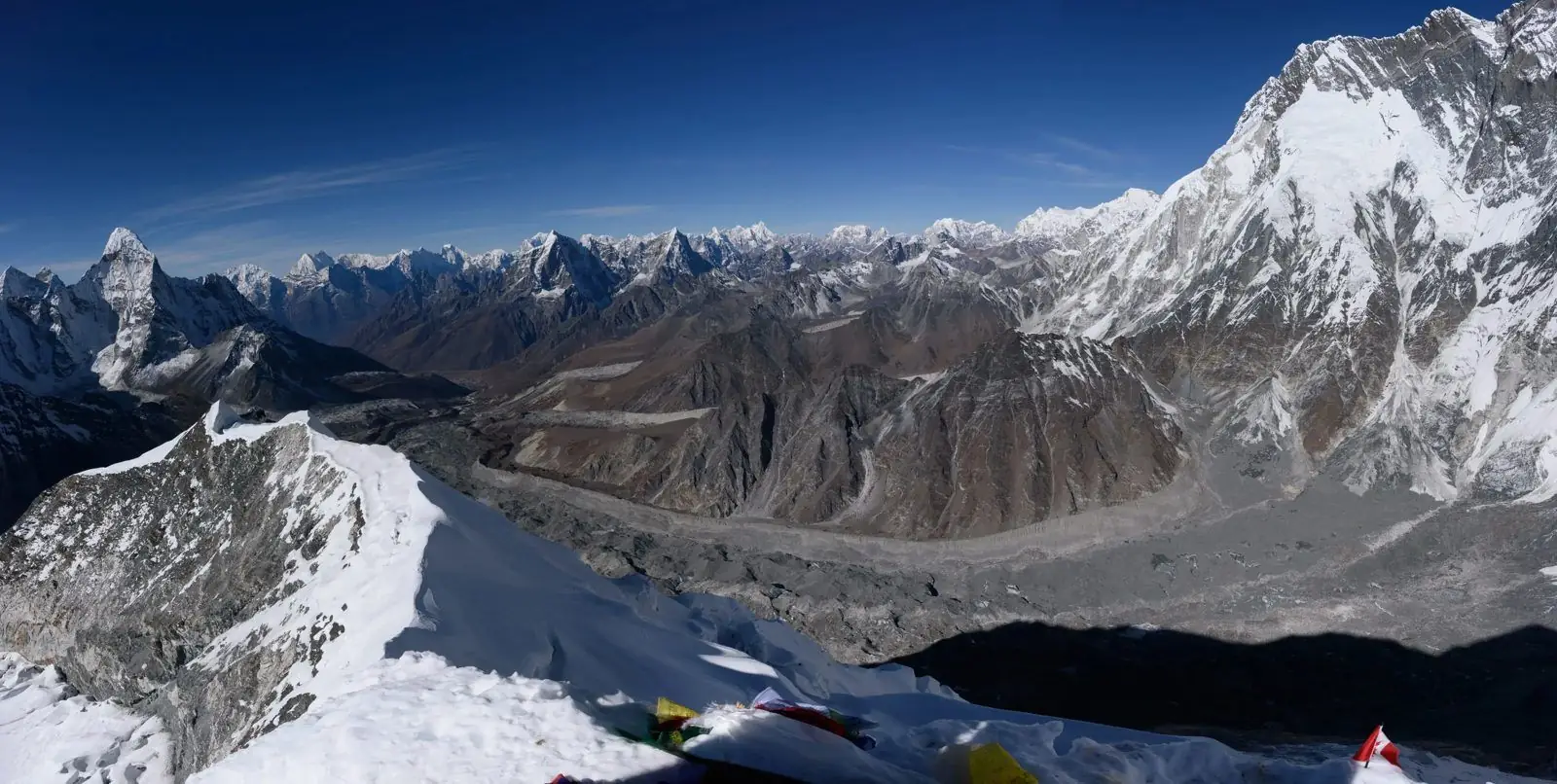
Kongma La, at about 5,535 m, is the highest of the Three Passes and the one that most often decides how tired you feel at the end of the trek. It links the Lobuche or Everest Base Camp side with Chhukung and the Imja valley. The pass is not technical in dry conditions, but it is long, steep in places and exposed to wind.
The day in outline
The day usually starts before dawn, around 4 to 5 am, with breakfast in the dark and a headlamp. From Lobuche the path crosses moraine and climbs a rocky ridge to the first false summits and then to the saddle. After the top you descend a steep, stony slope, cross a glacier moraine and continue down to Chhukung at about 4,730 m. The whole day can take eight to ten hours.
What it feels like
The ascent is slow and rhythmic. The wind increases near the top, so layers matter. At the saddle the views open toward Nuptse, Lhotse and Makalu and, on clear days, the lakes below. The descent is long and hard on knees and toes, so poles are useful.
Weather and snow
- Fresh snow can hide the trail and make the rocks slippery.
- Afternoon wind and cloud can reduce visibility, so an early start is important.
- If conditions are poor, your guide may wait a day or choose another route.
Preparation for the day
Eat a solid breakfast, drink water before you start and carry a thermos with something warm. Pack a down jacket, hard shell, warm gloves, a hat, sunglasses and snacks in your daypack. Keep a first-aid kit, sun cream and spare batteries close by. Tell your guide how you feel at every rest, and be ready to turn around if the weather or your health demands.
After the pass
Expect to be tired when you reach Chhukung. Eat, drink and rest, and avoid planning a long day afterwards. A rest at Chhukung or Dingboche allows the body to recover before the descent toward Namche.