The Three Passes trek is named for three high crossings between Khumbu valleys: Renjo La at about 5,360 m, Cho La at about 5,420 m and Kongma La at about 5,535 m. They are close in height, but each has a different character, and knowing the differences helps you plan your energy and your gear.
Renjo La: the scenic one
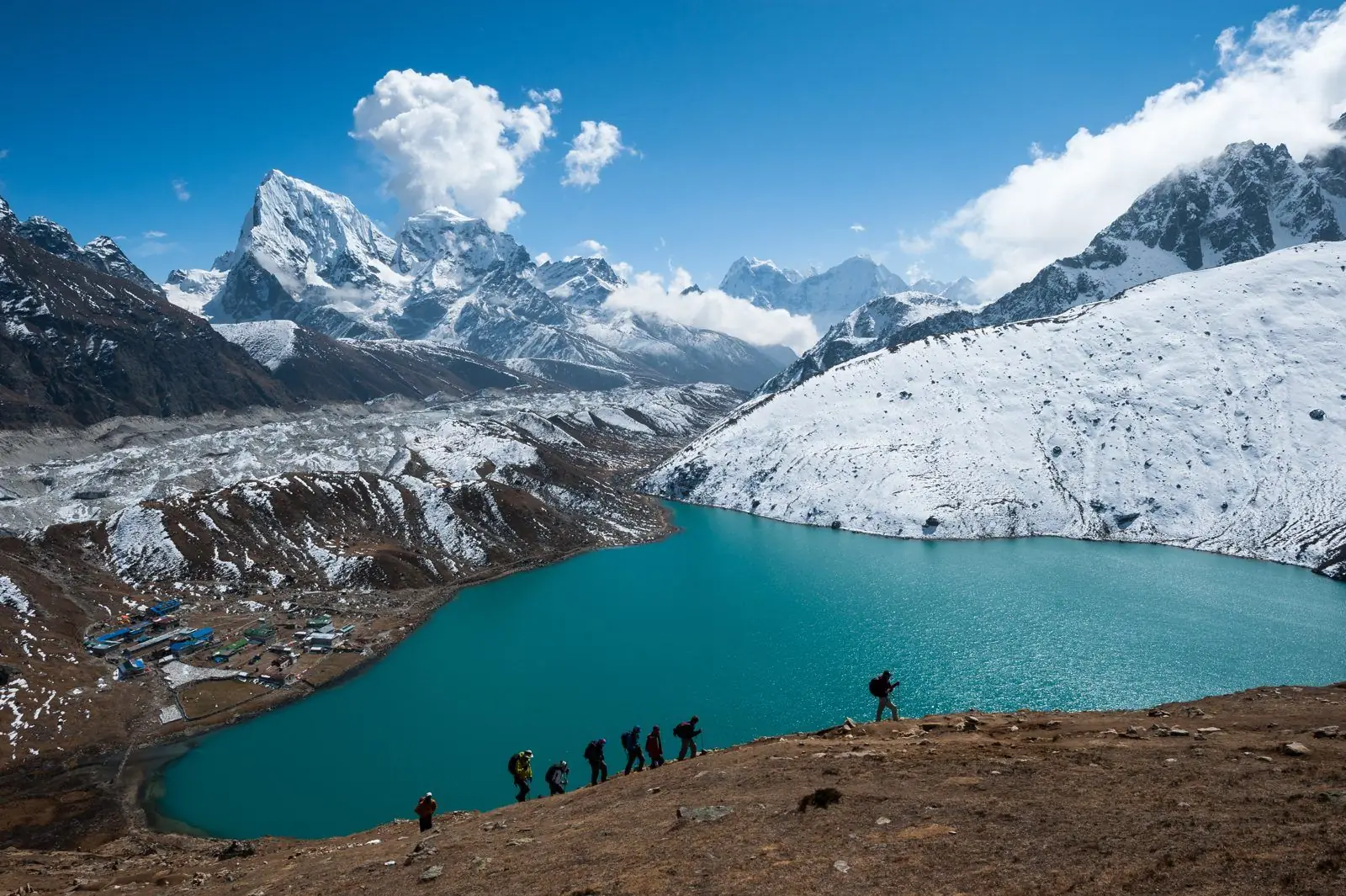
Renjo La links Lungden in the Bhote Koshi valley with Gokyo. The ascent is steady, on stone steps and moraine, and is usually the easiest of the three technically. The reward is the view from the top, with the Gokyo Lakes below and Everest, Lhotse, Makalu and Cho Oyu on the horizon. It is a popular photo stop, and clear mornings are valuable.
Cho La: the technical one
Cho La links Dragnag or Thangnak with Dzongla. The Gokyo side is a steep scramble over loose rock. The Dzongla side crosses a small glacier whose conditions vary a lot from year to year. Depending on snow and ice your guide may ask the group to wear microspikes and to move carefully. Of the three it has the greatest rockfall and slip hazard, and it should never be rushed.
Kongma La: the highest and longest
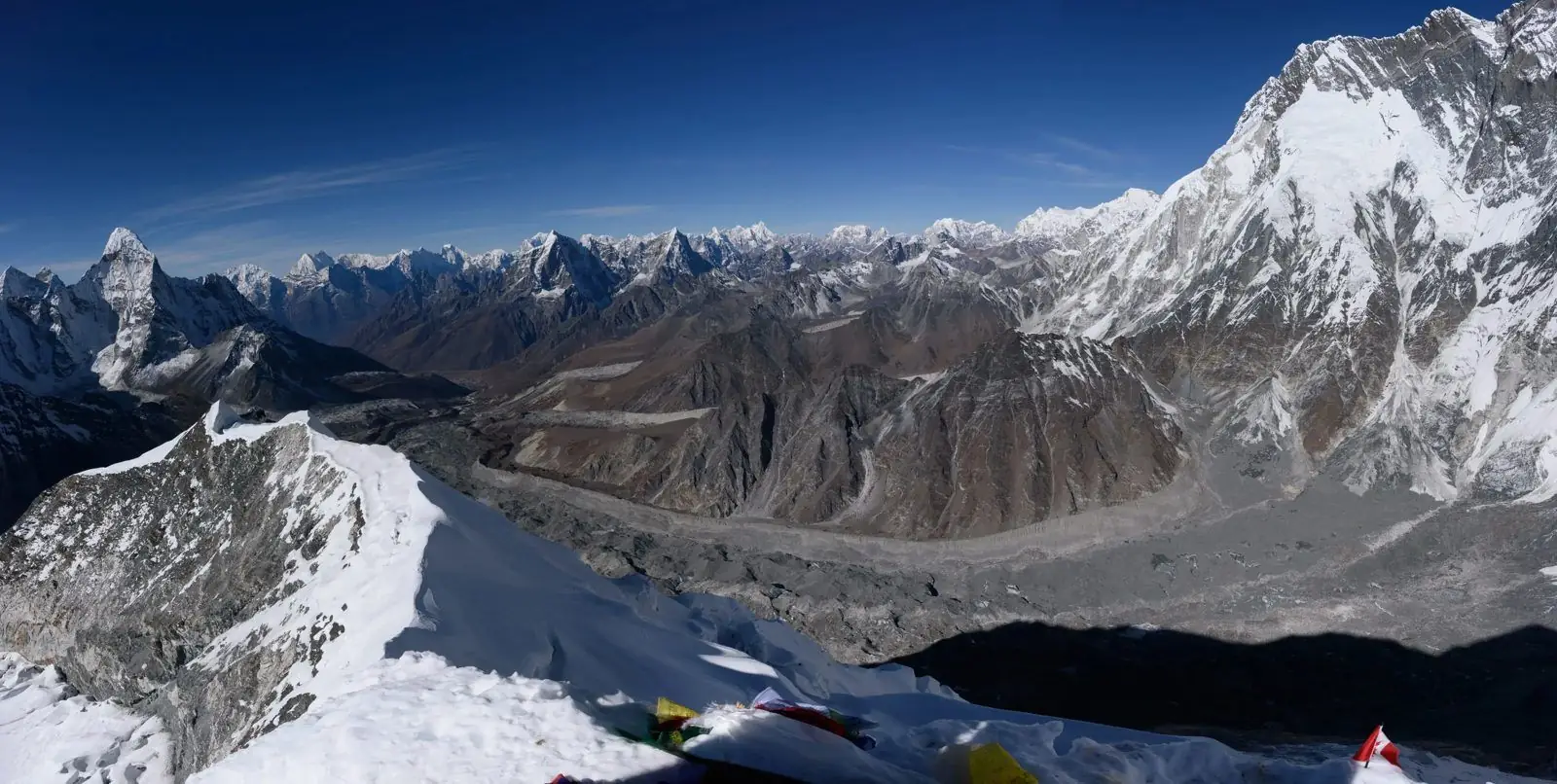
Kongma La links Lobuche with Chhukung, and is the highest of the three. The climb is long and rocky, the top is a narrow saddle with strong views of Nuptse and Makalu on clear days, and the descent crosses moraine and loose stone. It is usually the most tiring day of the whole route, partly because you have been at altitude for a long time by then.
Quick comparison
- Easiest technically: Renjo La.
- Most technical: Cho La.
- Highest and most tiring: Kongma La.
- Best views: Renjo La and Kongma La on clear days.
Which order is best
Most itineraries cross Renjo La first, Cho La second and Kongma La last, because the gentlest pass comes while you are still fresh, and the hardest crossing is done after you are fully acclimatised. The reverse direction is also used. See the direction guide for the pros and cons of each.