




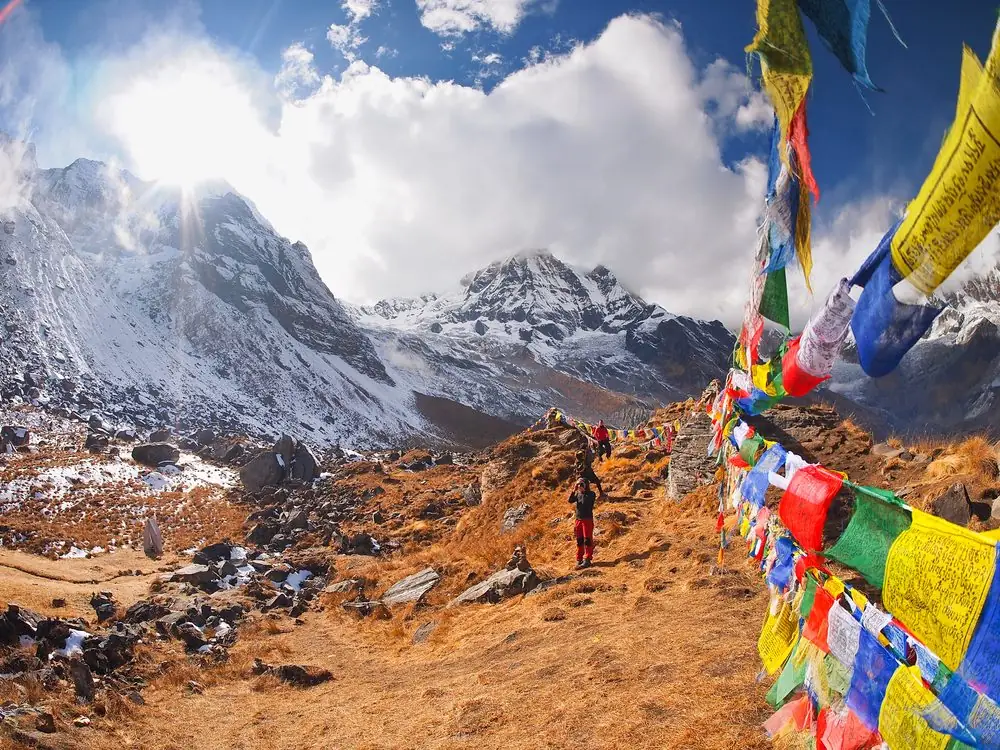
At about 4,919 m, Tilicho Lake is higher than any point you reach on the Annapurna Base Camp trek and only a few hundred metres below Thorong La. The day is short in distance but steep in height gain, so how well you have acclimatised beforehand decides how it feels. This page explains how to prepare, what to watch for and how to decide on the day.
Why the lake day is demanding
From the base lodge at about 4,150 m, you climb roughly 770 m in a few hours, in thin, cold air, and then come straight back down. You are not spending a night at the lake, which helps, but you are exposed to the lowest oxygen levels of the trek in a short time. Fatigue and dehydration add to the effect.
Build your base first
- Spend at least two nights in Manang, with a rest-day hike, before heading to Tilicho.
- Sleep at Khangsar and Shree Kharka before the base lodge, rather than skipping straight there.
- Walk slowly; talking is a good test. If you cannot hold a conversation, slow down.
- Drink steadily and eat even when appetite is low.
Sleeping heights on the way
Figures are approximate, and small differences between maps and your own watch are normal.
Typical sleeping altitudes are Manang about 3,540 m, Khangsar about 3,734 m, Shree Kharka about 4,050 m, and Tilicho Base Camp about 4,150 m. These steps are gentle and consistent with a safe profile.
On the lake day
- Start early, but do not rush the first hour.
- Take short, steady steps and use poles.
- Stop to breathe and drink; keep a sip-and-snack rhythm.
- Set a turnaround time with your guide. If you have not reached the lake by then, descend.
- Do not stay long at the lake. Descent is part of the treatment for altitude symptoms.
Symptoms and what to do
A mild headache and tiredness are common. They should ease with rest and fluids. Severe or worsening headache, vomiting, loss of balance, confusion or breathlessness at rest mean you should go down immediately, accompanied by your guide. Do not continue to the lake. See our general guide, Annapurna Circuit acclimatisation plan.
Medication and medical advice
Whether to use altitude medication is a matter for you and your doctor. Do not treat medication as a licence to ascend faster. Carry any prescribed medicine in its original packaging, and tell your guide about conditions or allergies.
After the lake
Descend to the base lodge, rest, drink and eat. The next day is often easy walking, but fatigue accumulates. Do not plan a hard day immediately after Tilicho, especially if you are heading to Thorong La. A rest day in Manang afterwards is wise.
Training and fitness
Cardio fitness helps you recover and moves you more efficiently, but it does not prevent altitude illness. Prepare with hill walks and stair work, but accept that fit people also get sick. What protects you is slow ascent, rest days, hydration and honest communication.
Sleeping well at altitude
Poor sleep is common above 3,500 m. A warm sleeping bag, a hat, earplugs and a regular routine help. Avoid sleeping pills and alcohol. If you wake with a headache, sit up, drink water, and tell your guide in the morning.
Common questions
How high is the Tilicho Lake climb from base camp?
About 770 m in gain from the base lodge at roughly 4,150 m to the lake at about 4,919 m.
Do I sleep at the lake?
No. Most itineraries return to the base lodge for the night, which is safer for altitude.
What if I have a headache on the morning?
A mild headache that improves after breakfast and fluids may be manageable, but worsening symptoms mean you should not go up. Tell your guide at once.
What our guests say
Excerpts from trekker reviews on our reviews page.
“Good humble guides, good support, good back up at remote areas — travelled with my son.”

