




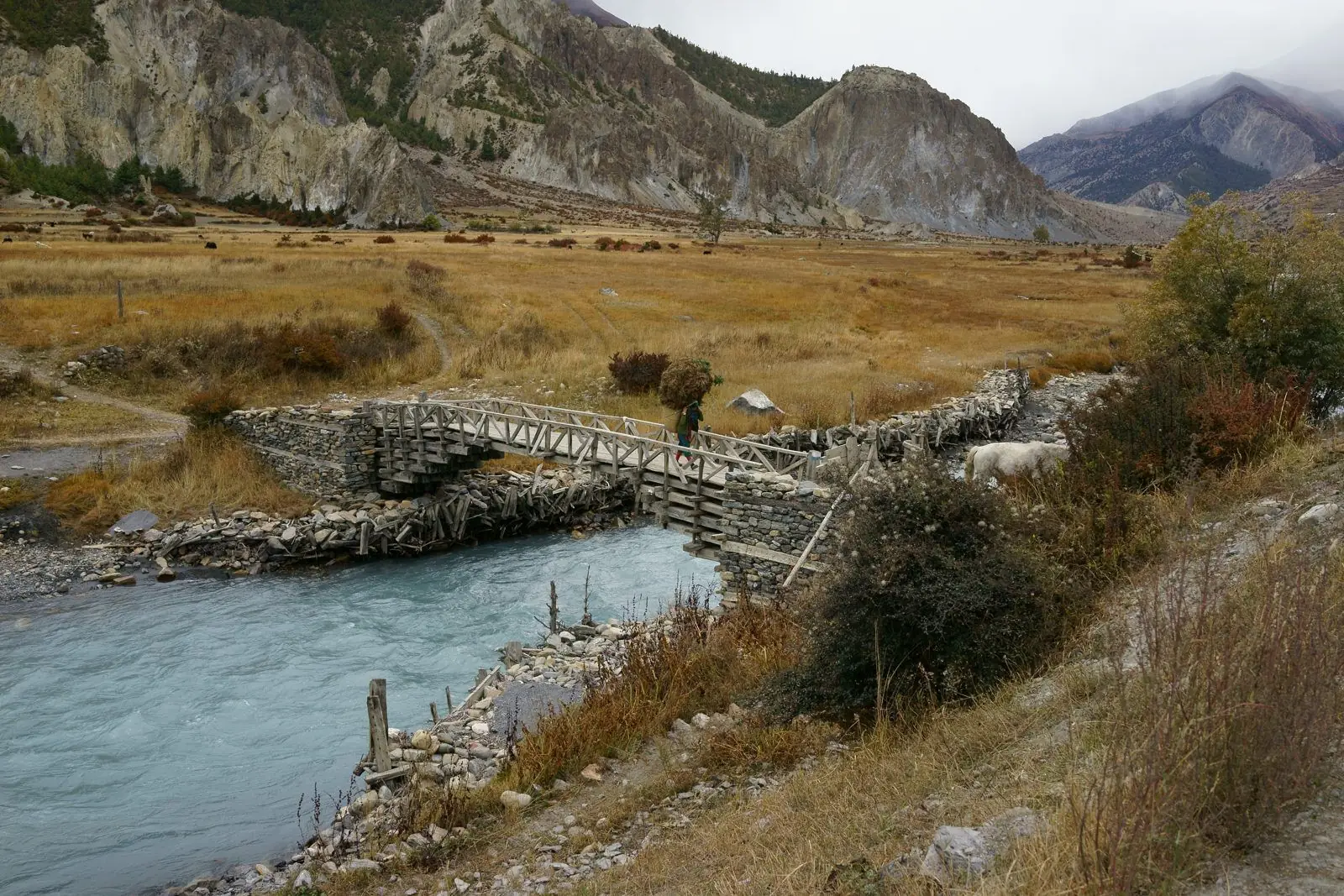
Upper Dolpo is in the rain shadow, so many treks run from May to September, outside the usual spring and autumn windows. Snow closes the high passes from late October to April.
A summer trek in a dry land
Upper Dolpo lies in the rain shadow of the Dhaulagiri range, so unlike most of Nepal it can be walked in the monsoon.
Late spring and summer
From late May to early September the passes are usually open and the barley is green. Showers occur, but they are lighter than elsewhere in Nepal. Nights can be below freezing even in July.
Autumn
September and October bring clear skies and the harvest. Passes may be snowy by late October.
Winter and early spring
Snow closes the high passes. Not recommended.
Seasonal highlights
In June the pastures are fresh and flowers bloom. In July and August farmers harvest and herders move yaks to high pastures. In September the barley turns golden and the sky is clear. This variety is part of the appeal of the region.
Festivals
The Shey Festival is held in the summer months at Shey Gompa in some years, with masked dances and pilgrims. Dates depend on the lunar calendar, so ask your agency if you want to time your trek for it.
Why summer works here
The region is in the rain shadow, which means that while Kathmandu and Pokhara are soaked, Dolpo gets only occasional showers. The high passes are free of snow and the barley fields are green. Herders move their animals to high pastures and the villages are alive with activity. This is the season when trade caravans move across the passes.
Cold nights
Even in July, the temperature at 4,500 m can fall to near freezing at night. A sleeping bag rated to minus ten, a down jacket and warm accessories are necessary.
Choosing
July to September is the usual window. See the difficulty guide.
Common questions
- Is the monsoon trek wet? Much drier than elsewhere, but showers and storms occur.
- When do the passes open? Usually from late May to early October.
- Is it cold in July? Days are mild, but nights at camp can be near freezing.


