




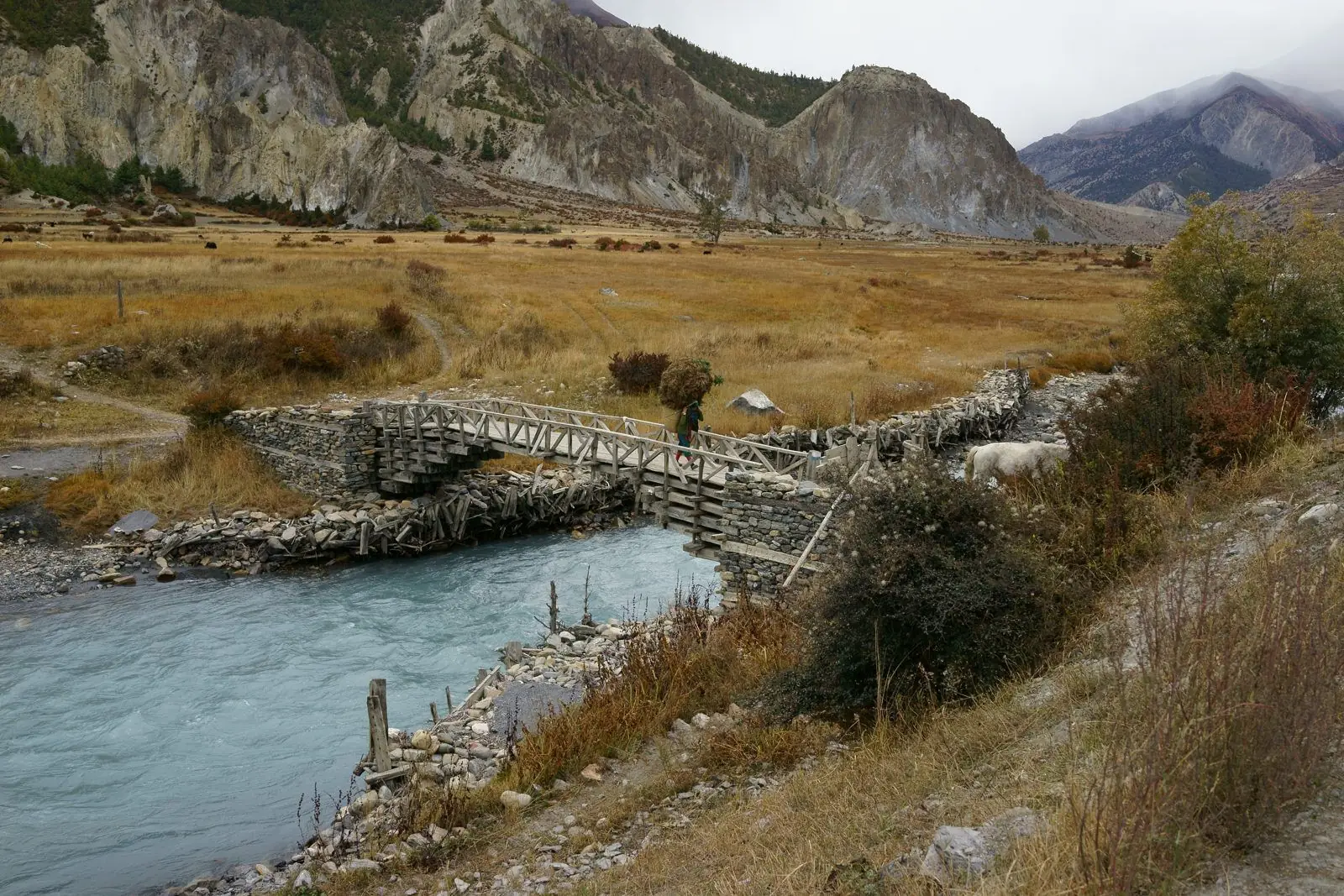
Upper Dolpo is a demanding trek. You spend weeks above 4,000 m, cross passes above 5,000 m and are many days from a road, so fitness, experience and good logistics matter.
Challenging, remote and long
Upper Dolpo is one of the toughest treks in Nepal, not because of technical climbing, but because it combines several high passes, three weeks of camping, rough trails and total remoteness.
Altitude
Several nights are above 4,000 m, and Kang La reaches about 5,151 m. Acclimatisation days are built into the plan, and an experienced guide watches for symptoms.
Terrain
Some sections use wooden footways fixed to rock, narrow cliff paths, steep stairs and wet stepping stones. Distances between camps are long.
Medical risk
There are no hospitals in the region. Evacuation depends on helicopters and weather.
Physical demands
Expect to walk six to nine hours on many days, often above 4,000 m. The Kang La and Jeng La passes are long climbs. Fitness from months of preparation matters.
Mental demands
Three weeks in a remote region with simple food and few comforts can be difficult. A calm temperament and willingness to adapt will help.
Passes and exposure
Kang La and Jeng La are the main passes, both above 5,000 m. The climb to Kang La is steep and takes about three hours from the camp, while the descent is shorter. Wind on the pass can be strong and cold. Other sections follow narrow ledges, including wooden walkways fixed to cliffs. People who dislike heights should discuss this before booking.
Support and self-reliance
The crew carries tents, food and fuel, and prepares meals. You carry a light day pack with water, camera, layers and snacks. Because villages are widely spaced, the group is largely self-sufficient and moves as a unit.
Who should go
Experienced trekkers with multi-week high-altitude experience. See permits and logistics.
Common questions
- Can a beginner go? Not recommended. Previous high-altitude trekking is advised.
- How many days? Usually three to four weeks.
- Is there medical help? Very limited. Insurance with evacuation is essential.
Why it is demanding
Long days, several passes above 5,000 m and little infrastructure make this trek harder than most teahouse routes. Camping is the norm, so fitness and self-reliance are essential.


