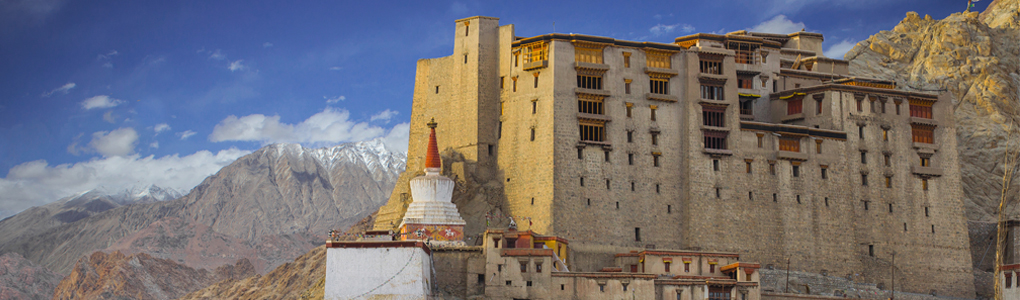
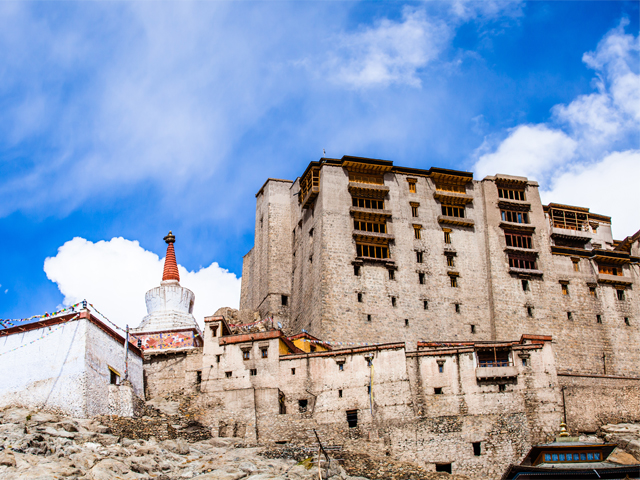
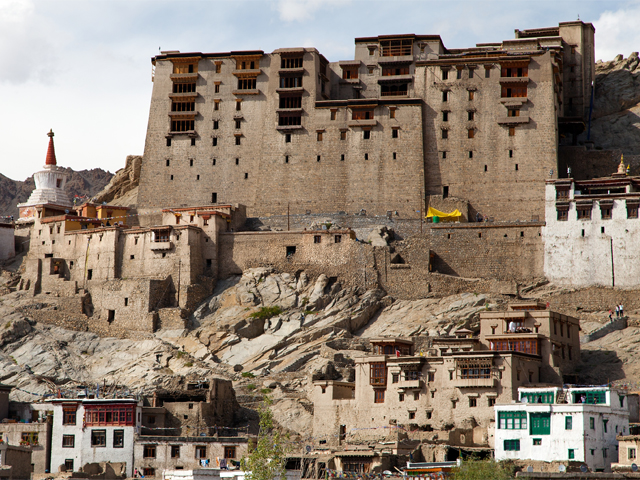
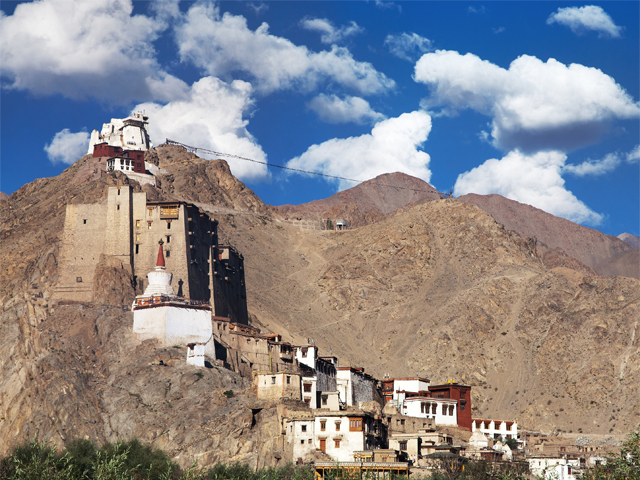
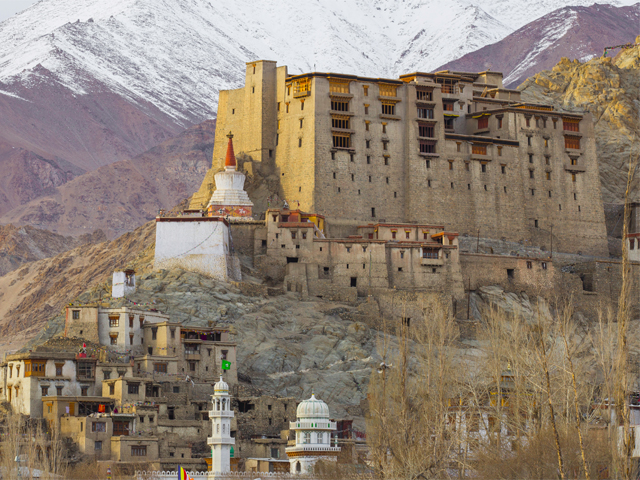
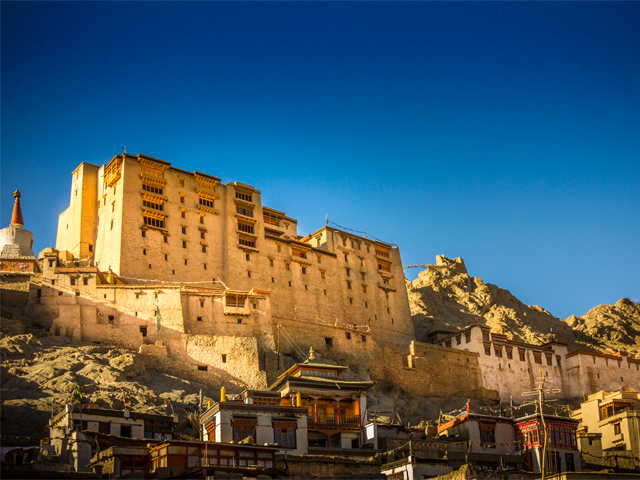
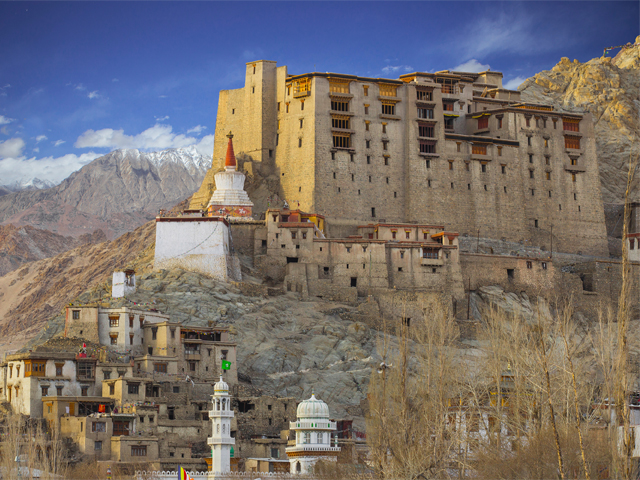
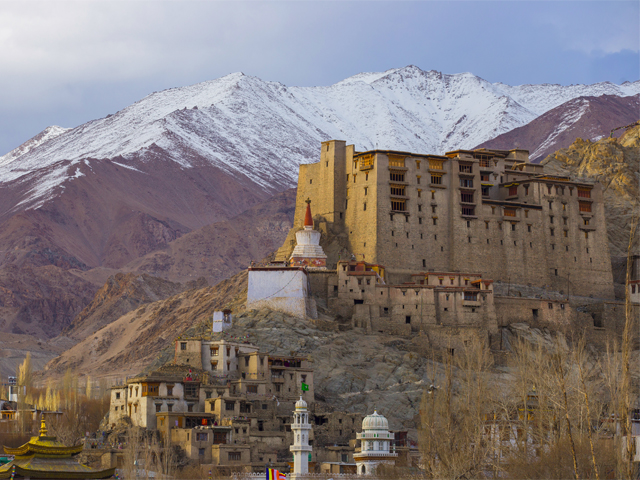
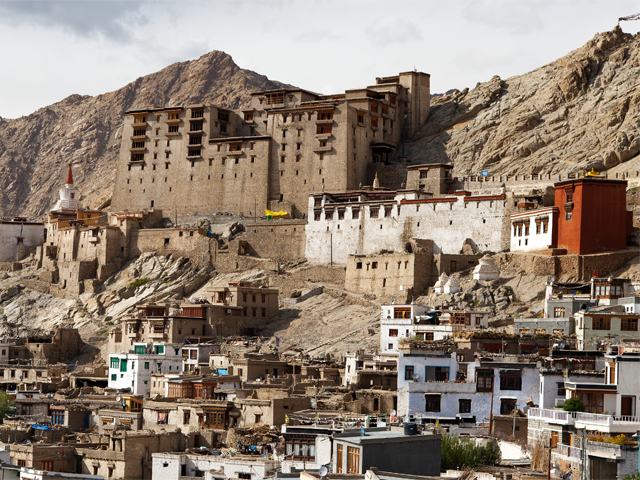
Leh Palace is the most conspicuous landmark in Ladakh, a tall, many-windowed building that clings to the side of Tsemo Hill above the old town. It has nine storeys, and the design is closely modelled on the Potala in Lhasa, which was fashionable in the Himalaya at the time. The upper floors housed the royal family, while stables and storerooms occupied the lower ones, and the whole structure is built of stone, mud brick and timber, which gives it a pleasantly rough texture in the sun.
Building began in 1553 under Tsewang Namgyal, the founder of the Namgyal dynasty of Ladakh, and the palace was completed in the 17th century by his nephew Sengge Namgyal. When Dogra forces took control of Ladakh in the middle of the 19th century, the royal family moved across the Indus to Stok Palace, and Leh Palace was left to decay. Parts have since been repaired and opened to visitors, and the climb through the dim rooms to the roof is rewarded with views across the town, the Indus valley and the Stok Kangri range.
The path to the palace winds up through the old quarter, past flat-roofed houses and the main mosque, and the walk is itself a good first excursion for newcomers, as it is short enough to allow for acclimatisation. Above the palace, a further path leads to Namgyal Tsemo gompa and the ruined fort. Go early or late in the day for softer light and cooler air, and carry water: the sun is strong at 3,500 m.
Featured Adventure

Quick Answers about Leh Palace
What is the elevation of Leh Palace?
Leh Palace is at an elevation of 3,505 m.
Where is Leh Palace located?
Leh Palace is in Jammu and Kashmir, Asia, at latitude 34.166278, longitude 77.586389.
When was Leh Palace built?
Leh Palace dates from 17th Century.