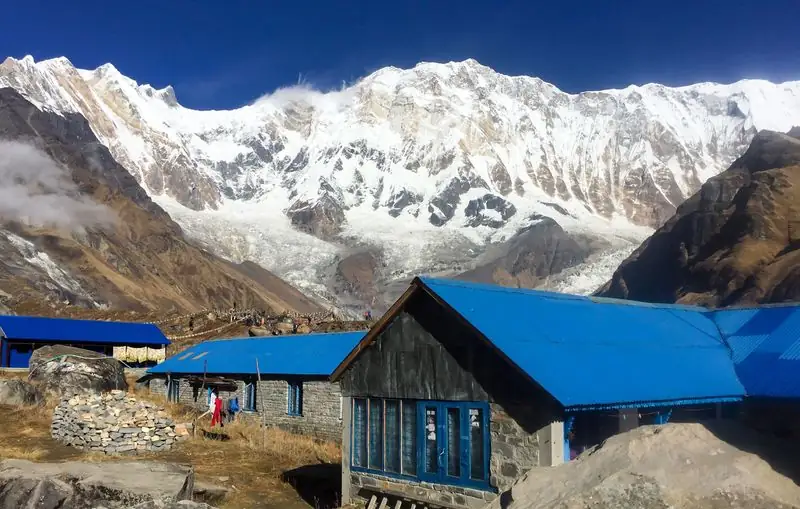
The Annapurna Base Camp trek is a teahouse trek, which means you sleep and eat in family-run lodges that line the route. There are no tents or camping needed. The standard of lodging is simple but friendly, with the biggest change being how basic things become as you climb higher.
What a typical room looks like
Lower villages such as Ghandruk and Chhomrong offer twin rooms with foam mattresses, a blanket or quilt and thin plywood walls. Some lodges have attached bathrooms, but most use shared toilets, which are either squat or seated. Heating is limited to the dining room, which gets a stove or a charcoal heater in the evening. At MBC and ABC, rooms are very basic and cold, so a warm sleeping bag is important.
Food on the trail
Menus are surprisingly long and similar from lodge to lodge. Dal bhat, the Nepali lentil, rice and vegetable set, is the classic fuel and is often refilled free of charge. You will also find fried rice, noodle soup, momos, pasta, pizza, eggs, porridge, pancakes and Tibetan bread. Choose vegetarian options at higher altitude, because meat is carried up for days and may not be fresh.
Drinks and water
Tea, hot lemon and ginger honey tea appear everywhere. Avoid alcohol at altitude. Boiled or filtered water is sold at each lodge, and sometimes refill stations exist on lower parts of the trail. Carry your own purification method to reduce plastic waste and cost.
Showers, charging and wifi
- Hot showers cost extra, often via solar or gas heating. Quality varies and fades with altitude.
- Charging is charged per device, and sockets may be shared in the dining room.
- Wifi is sold by the hour or in packages and is slow, especially above Chhomrong.
- Mobile data works unevenly in the lower valley and rarely at the top.
Etiquette and comfort
Eat where you sleep, as this is how lodges earn their income. Keep your voice low in the evening, since walls are thin. Bring earplugs, a headlamp and a small padlock. Leave rooms tidy, carry your rubbish out where possible and treat the family with the courtesy you would a host.
Busy seasons and booking
In autumn and spring, MBC and ABC can fill up. Guides usually phone ahead and reserve rooms. If lodges are full, they may ask guests to sleep in the dining room. Travelling on weekdays and starting early help you secure a bed.
A day in the life of a lodge
Lodges wake early. The owner lights the stove before dawn and prepares breakfast for trekkers heading out. During the day the family cleans rooms, cooks meals and carries supplies. In the evening the dining room becomes the social centre, with trekkers sharing stories and playing cards. Understanding this rhythm explains why service sometimes feels slow in peak hours and why patience is valued.
Choosing a lodge
In larger villages you can compare lodges before you decide. Look for clean rooms, a working toilet, warm dining space and fair prices. Reviews and other trekkers' advice help. Your guide will often have favourites with reliable service and good food.
Special diets
Vegetarian and vegan options are easy. For gluten-free, nut allergies or religious restrictions, tell your guide before the trek so that he can alert kitchens. Carrying a small supply of familiar snacks provides a backup. Hygiene practices differ from home, so choose freshly cooked food.
Supporting local lodges
- Order your meals in the lodge where you sleep.
- Pay promptly and in small notes.
- Leave a small tip to the kitchen and cleaning staff.
- Leave reviews that mention kindness and cleanliness.