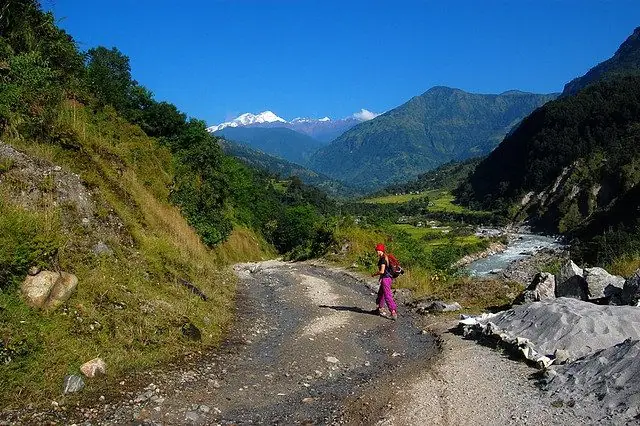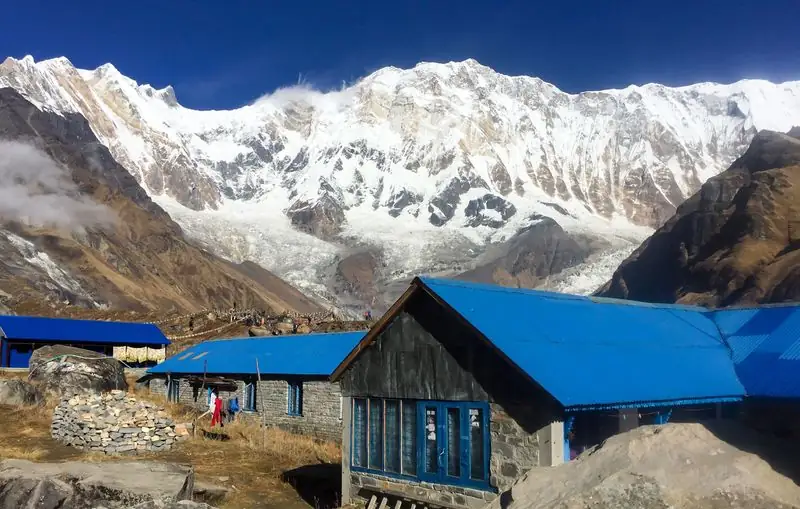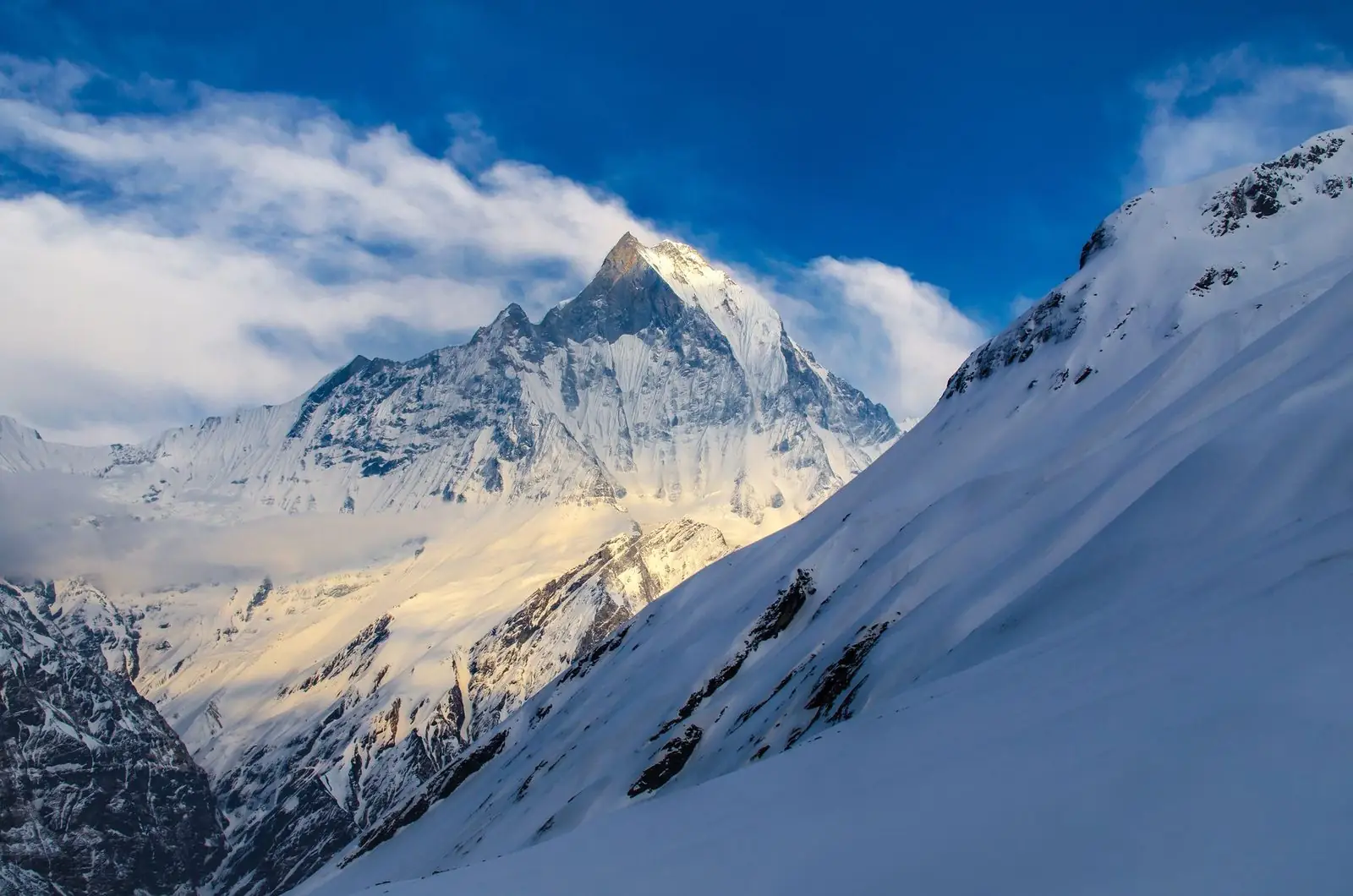
For most people the answer is 9 to 12 days from Pokhara back to Pokhara, which includes a comfortable pace, a night at base camp and a little slack for weather. Very fit trekkers do it in 7 days, and slow, scenic itineraries with the Poon Hill loop stretch to 14. The right number is mostly about how you want to feel on the trail, not about the distance.
The 7-day option and its limits
A seven-day plan uses the shortest route through Jhinu Danda and Chhomrong, usually with a jeep ride to the roadhead on the way in. The walking days are long, there is little room for rest, and a single day of bad weather can erase your base camp night. This format suits experienced hikers who are used to altitude, with strong knees and no hard deadline back in Kathmandu.
The 9 to 10 day sweet spot
Nine to ten days is where most guided groups land. It allows one easy start day, a full day in the forest, a rest or short day at Chhomrong, a night at MBC, a night at ABC and an unhurried return. You still make decent time, but you are not racing the sun every day. It is also the version that works best for people who work in an office and walk only at weekends.
The 11 to 14 day versions
Longer itineraries usually add the Ghorepani and Poon Hill loop on the way in, a second night at base camp for photography, or a gentle day at the hot springs near Jhinu. These versions are lovely for photographers, families with older members and anyone nervous about altitude. They also cost more in guide and lodge fees, so compare what extra days actually add.
How the days are usually spent
- Four to six days walking up through forest and gorge.
- One day above the tree line at MBC and ABC.
- Three to four days walking back, faster than you came.
- One buffer day for weather, rest or travel connections.
Factors that add days
Travelling in spring or winter when snow can slow the upper valley, bringing children or seniors, wanting more time in villages, or combining ABC with another trek such as Poon Hill or Mardi Himal all stretch the schedule. Starting from Kathmandu adds a day each way if you take the tourist bus, while a short flight to Pokhara trims it.
Practical advice on booking
Book your international flight home with at least two days of slack after the planned end of your trek. Trails can close, flights can be cancelled and buses can break down. Ask your operator what happens if you finish early or late, and whether a spare day is already in the price. A realistic number of days costs a little more upfront and saves a lot of stress.
What the shortest and longest plans really cost you
A shorter plan saves money, but each day you cut tends to convert a rest day into a long walking day. A longer plan costs more but gives you the ability to say yes to a late start, a long lunch or a day of cloud. If this is your first multi-day trek, the longer end of the range is almost always the better investment. If you have trekked before and know how your body behaves, you can safely shorten the plan.
Travel days at both ends
Do not forget the days before and after the trek. Arriving in Kathmandu, getting your permits and gear sorted and flying or driving to Pokhara usually takes a day and a half. After the trek you want at least one night of rest in Pokhara before heading to the airport. If you are travelling from India or overseas, add these travel days to your leave calculation, not only the trek days.
A simple way to decide
Ask yourself three questions. Do I enjoy walking long days with a pack? Have I ever slept above 3,000 metres? Do I want to spend time in villages rather than only on the trail? If the answer to most is no, choose a ten or eleven day plan. If yes, nine days is enough. Either way, tell your operator your answers so they can suggest the right plan.
How bookings reflect the days
Group departures usually fix the schedule, while private treks can be adjusted. If your leave is fixed, ask whether the operator can shorten or extend the plan en route. Changing days after you have started is possible when lodges have space and the weather allows, so a flexible operator is worth choosing.