The best Nepal treks for seniors and over-50s are moderate in altitude and unhurried: Poon Hill, Ghandruk, Mardi Himal at a slow pace, and a shorter Langtang walk. Keep sleeping heights modest, add rest days, and talk to your doctor first. For Everest Base Camp, some travellers choose a helicopter return to spare the knees. Age matters less than fitness and patience.
Fitness matters more than age
Plenty of people in their sixties and seventies trek happily in Nepal, while some younger people struggle. What counts is regular walking fitness, healthy joints, and a calm pace. Altitude affects everyone unpredictably, and age is not a reliable predictor. Before booking, ask your doctor about your heart, blood pressure, lungs, joints and any regular medicines, and ask whether altitude is advisable for you. General information only, not medical advice. Start training two to three months ahead with hill walks, stair climbs and a loaded daypack. Poles are very helpful on Nepal's long stone staircases, particularly going down.
Gentle routes with comfortable lodging
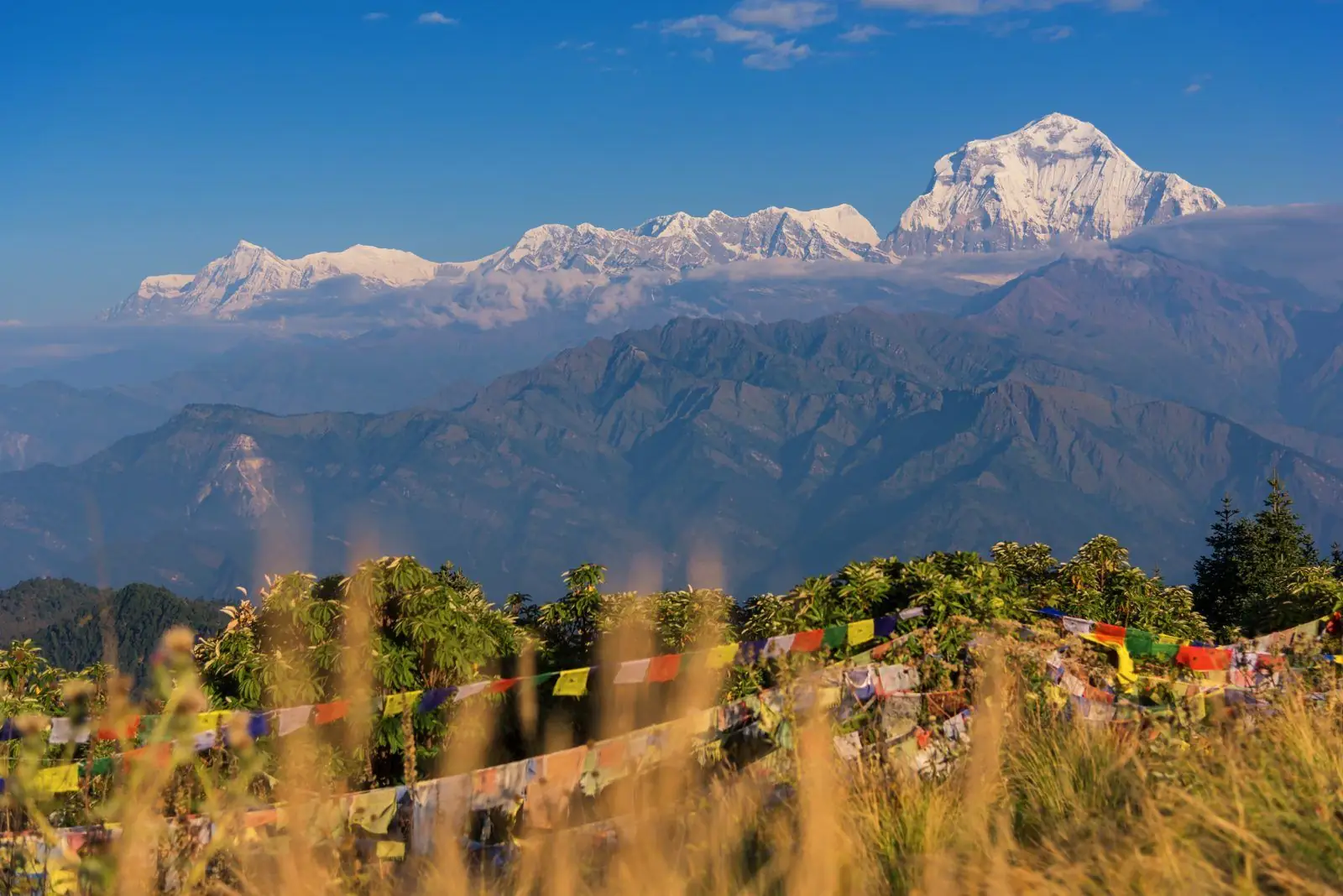
Poon Hill reaches about 3,210 m, and the teahouses along the way are among the more comfortable on the main routes. Our Poon Hill trek is 9 days. Ghandruk and nearby villages work well as a shorter, lower alternative with fewer steep climbs. Mardi Himal, 11 days with us, climbs higher and rewards a slow rhythm, so an unhurried pace and a rest day are wise. Langtang, 10 days with us, builds altitude gradually towards about 3,800 m at Kyanjin Gompa. Rooms are simple everywhere, with shared bathrooms often, so expect warmth in the dining room rather than the bedroom.
Bigger goals: Annapurna Base Camp and Everest
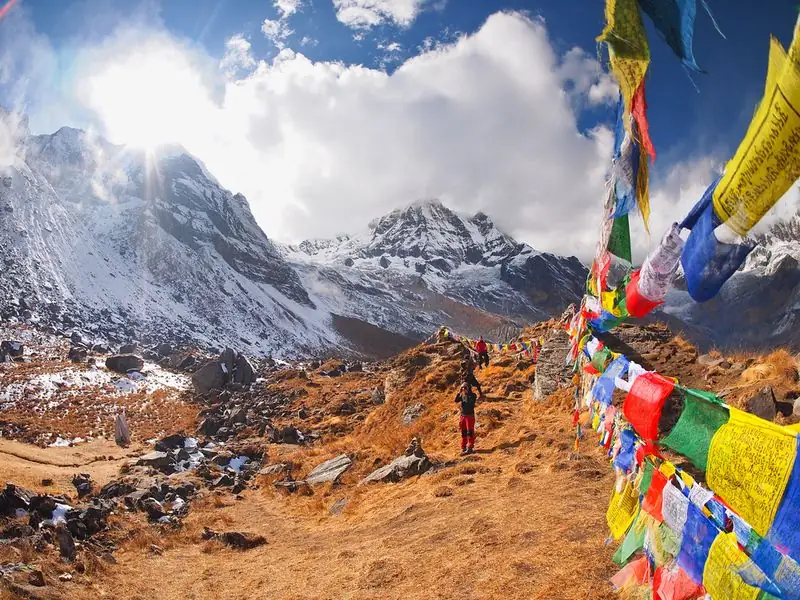
Annapurna Base Camp, at about 4,130 m, and Everest Base Camp, at about 5,364 m, are possible for fit older trekkers, but they ask more of the body. Our Annapurna Base Camp trek runs 10 or 14 days, and the longer plan leaves more time to adapt. Our Everest Base Camp trek is 14 days. A helicopter return from higher points is sometimes arranged to avoid the long walk back, though flights depend on weather and availability, and cost is confirmed with us before you book. Treat a flight as a convenience, not as a rescue plan, and descend early if symptoms of altitude illness appear.
Pace, pacing and who walks with you
Walk slowly enough to hold a conversation. A licensed guide sets the rhythm, watches for symptoms like headache, nausea, dizziness or breathlessness at rest, and decides when to stop or descend. A porter carries the heavy bag, so you walk with only a daypack. Build in extra days for rest and weather. Indian travellers do not need a visa for Nepal but should carry valid photo ID such as a passport or voter ID, and should check current currency rules for Indian notes. Rules change, so confirm before you travel. Also buy travel insurance that covers trekking at altitude and evacuation, and read what it excludes.
Common questions
Is it safe to trek in Nepal at 60 or 70?
Many older trekkers do it safely with good preparation, a medical check, a slow pace and a guide. Risk depends on health and altitude, not age alone. Keep routes moderate and be ready to turn back.
What is the easiest Nepal trek for seniors?
Poon Hill and the Ghandruk area are usually the gentlest, with modest altitude and established lodges. Stairs are the main challenge, so use poles and take your time. Choose by your own fitness and doctor's advice.
Can I return from Everest Base Camp by helicopter?
Often yes, subject to weather, availability and rules that change, so confirm before you travel. It saves the long walk back down. It is not an emergency guarantee, and costs are confirmed with us before booking.