




The best beginner treks in Nepal are the Poon Hill (Ghorepani) trek, Mardi Himal for those who want a little more, and a short Langtang route. All stay mostly below about 4,000 m, use teahouses and need no climbing skill. Everest Base Camp can suit a fit beginner who is patient with altitude, but it is harder. Choose by days available and your fitness.
What makes a trek beginner friendly
A beginner friendly trek keeps altitude moderate, daily walking manageable and help close at hand. Look for these traits:
- Highest point under about 4,000 m, or a gentle climb to reach it
- Walking days of roughly four to six hours, varying with pace and trail conditions
- Teahouses every few hours, so you never carry camping gear
- Road or flight access in case you need to leave early
No technical skill is needed on any route below. Stairs are the real work: Nepali trails use many stone steps, so leg strength matters more than running fitness.
Poon Hill and Ghorepani, the usual first choice
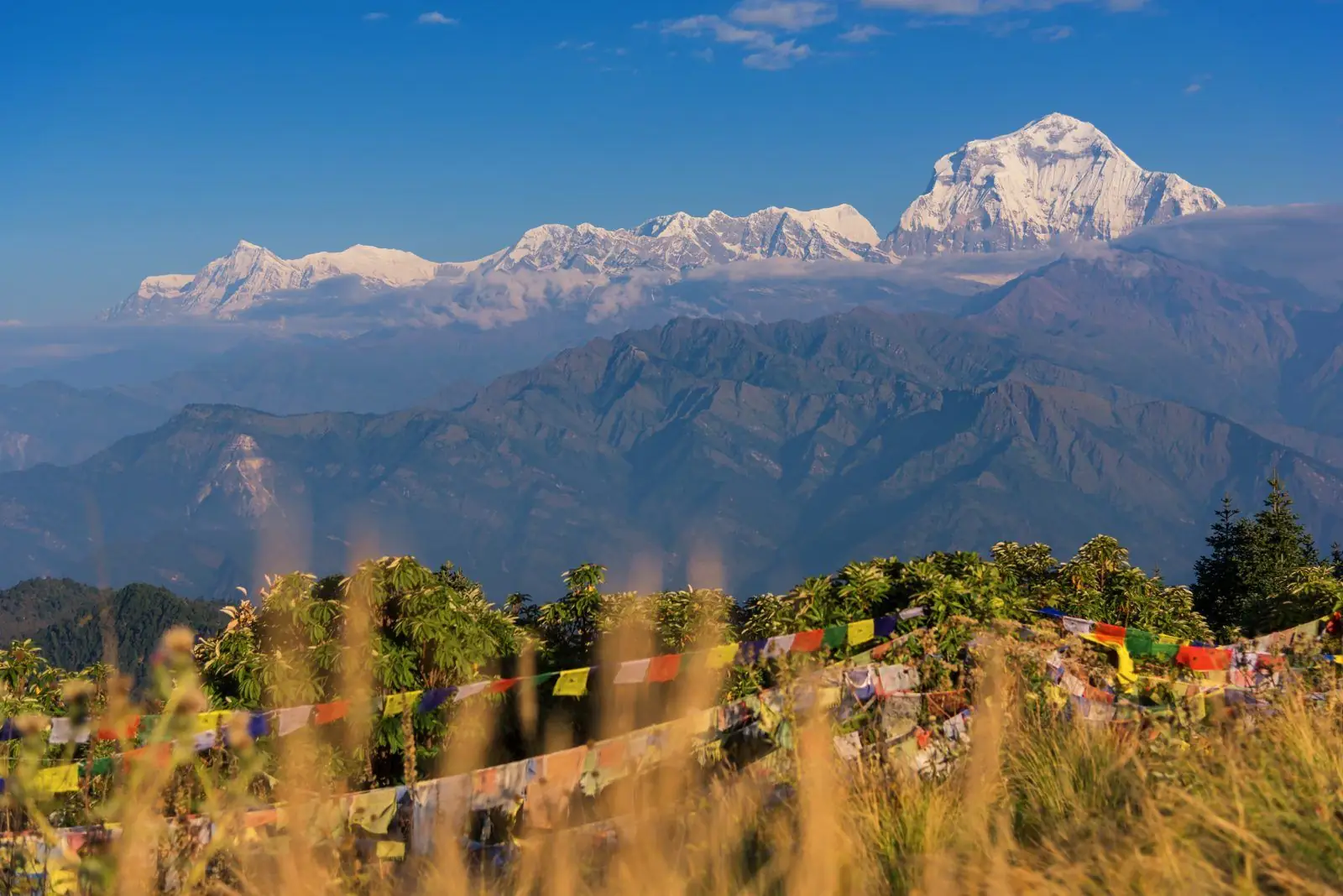
Poon Hill sits at about 3,210 m, and Ghorepani village at about 2,860 m. The route climbs through rhododendron forest and villages, then rewards you with a sunrise view over Dhaulagiri and Annapurna ranges on a clear morning. It is short, the lodges are well established, and the altitude is low enough that serious altitude illness is uncommon, though not impossible. Our Poon Hill trek runs 9 days including transfers and rest, which leaves room for a slow pace. The main difficulty is the long staircase sections, particularly on the descent, so poles can help the knees.
Mardi Himal and short Langtang options
Mardi Himal is a good step up for someone who wants a ridge walk and closer mountain views without a crowded trail. The high camp area sits around 3,500 m and the upper viewpoints go higher, so go slowly and allow time to adapt. Our Mardi Himal trek takes 11 days. Langtang is reachable by road from Kathmandu, and Kyanjin Gompa, at about 3,800 m, is the usual turning point. Our Langtang trek takes 10 days. Both climb gradually, but nights above 3,000 m deserve respect, so build in an acclimatisation day. General information only, not medical advice.
Everest Base Camp for a first trek, with caution
Many first timers do choose Everest Base Camp, and many complete it, but it is a different level of commitment. The base camp area is at about 5,364 m, well into the zone where altitude illness is common even for fit people. Our standard trek is 14 days, with rest days built in, and it can work for a beginner who trains in advance and accepts that some days will be hard. If you are unsure, start with Poon Hill or Mardi Himal and build experience. Headache, nausea or unusual breathlessness are signs to stop climbing and tell your guide; descending is the safest response.
How to choose and prepare
Start with the days you can spare, then match fitness and comfort. Under ten days points to Poon Hill; ten to eleven days opens Langtang or Mardi Himal. Add a buffer day for weather, since flights and roads can be delayed. Begin training six to eight weeks ahead with stair climbing and long walks carrying a daypack. Indian travellers do not need a visa for Nepal but should carry valid photo ID such as a passport or voter ID, and should check current currency rules for Indian notes before travel. Rules change, so confirm before you travel. Our packages include permits, licensed guide, porters and transfers.
Common questions
Which is the easiest trek in Nepal?
Poon Hill (Ghorepani) is usually considered the easiest popular route. It reaches about 3,210 m, has comfortable teahouses and takes a few days of walking. Stairs are tiring, but the altitude is moderate for most healthy people.
Can a complete beginner do Everest Base Camp?
Yes, fit beginners do it, but it is demanding because of altitude, not technical difficulty. Train beforehand, take rest days, and be willing to turn back. Starting with a shorter trek first is a safer way to learn how you react to height.
Do I need a guide for a beginner trek?
Rules differ by region and change over time, so confirm before you travel. For a first trek we strongly suggest a licensed guide, who handles route finding, pacing and any health concerns, and arranges the permits.


