




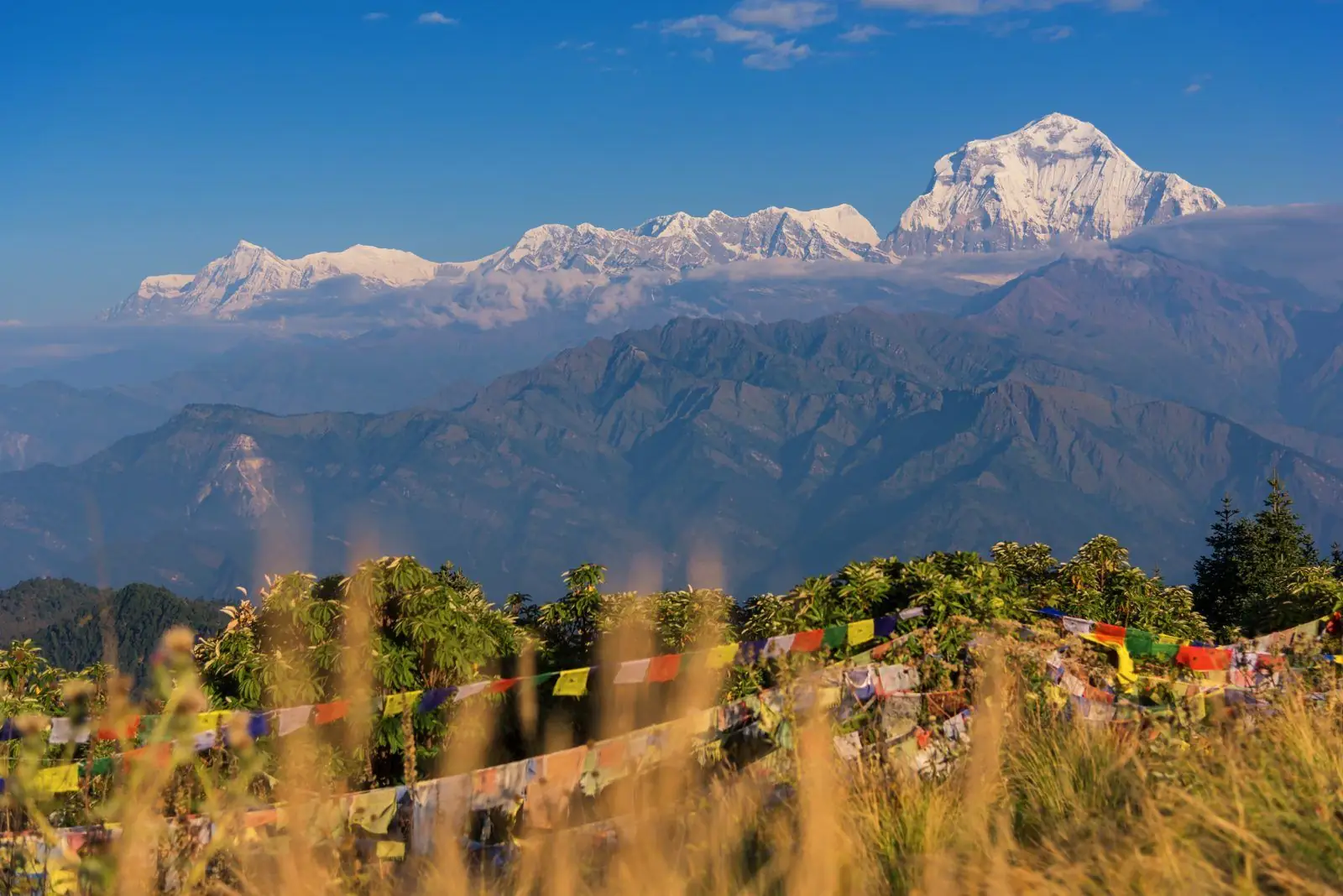
The strongest cultural treks are the Tamang Heritage Trail, Upper Mustang, Tsum Valley, Helambu, and the remote Limi and Nar Phu valleys. You see monasteries, mani walls, old villages and daily life shaped by Tibetan Buddhism. Several are restricted areas needing a special permit and a licensed guide, and respectful behaviour matters everywhere.
Tamang Heritage Trail and Helambu
The Tamang Heritage Trail is the easiest cultural walk, close to Kathmandu. It passes Tamang villages with carved wooden houses, prayer flags and hot springs, and lodges are often family run homestyle places.
Helambu is similarly close and mixes forest ridges with Sherpa and Tamang communities. Both are good for travellers who want culture without extreme altitude, and both suit shoulder seasons, when the air is clearer and the days are mild.
Facilities are simpler than on the big routes, so bring flexible expectations. Highest points vary by route, so ask us about the exact plan.
Upper Mustang
Upper Mustang is a dry, high desert that kept Tibetan traditions largely intact. You walk past red cliffs, cave dwellings and monasteries toward the walled town of Lo Manthang, at about 3,800 m. Our trek is 18 days.
It is a restricted area, so it needs a special permit and a licensed guide through a registered agency. We handle this in our packages. Rules change, so confirm before you travel.
The festival season brings colourful events, but dates change each year. Afternoon winds are strong, so walking happens mostly in the morning.
Tsum Valley, Nar Phu and Limi
Tsum Valley, near the Manaslu region, has monasteries, nunneries and a gentle, devout atmosphere. Nar Phu is a hidden Tibetan-style valley with stone villages and long, demanding days. Limi, in the far northwest, is one of the most remote cultural routes in Nepal.
All three are restricted areas needing a special permit and a licensed guide through a registered agency. Lodges are basic and services thin, so these treks suit experienced, flexible walkers.
Routes and rules change, so confirm before you travel. Weather and landslides can alter timing, and we recommend adding spare days.
Cultural etiquette on the trail
Customs vary between communities, but a few habits are widely appreciated:
- Walk clockwise around mani walls, stupas and prayer wheels
- Ask before photographing people or inside monasteries
- Dress modestly, with shoulders and knees covered
- Remove shoes before entering homes and temples when asked
- Do not touch religious objects or step over offerings
- Use your right hand, or both hands, to give and receive
When unsure, watch what locals do or ask your guide. A smile and a few words of greeting go a long way.
Choosing the right route
Start with how much time and trail experience you have. The Tamang Heritage Trail and Helambu are good for a shorter first cultural trek. Upper Mustang suits those who want a landscape unlike the rest of Nepal and can spare 18 days.
Tsum, Nar Phu and Limi suit those who accept simple lodges and long days. Season matters, since monastery festivals, rain and snow all change the experience. Ask your guide about local events, which are not fixed from year to year.
Fees change, so confirm the current figure with us before you book.
Common questions
Which is the best cultural trek in Nepal?
Upper Mustang is the best known for living Tibetan culture, while the Tamang Heritage Trail is easiest. Tsum Valley is excellent for monasteries. The best choice depends on time, fitness and season.
Do cultural treks need special permits?
Upper Mustang, Tsum, Nar Phu and Limi are restricted areas needing a special permit and a licensed guide through a registered agency. Rules change, so confirm before you travel.
How should I behave at monasteries?
Dress modestly, remove shoes if asked, walk clockwise around sacred structures, and ask before taking photographs. Customs vary by place, so follow your guide's advice and local signs.


