




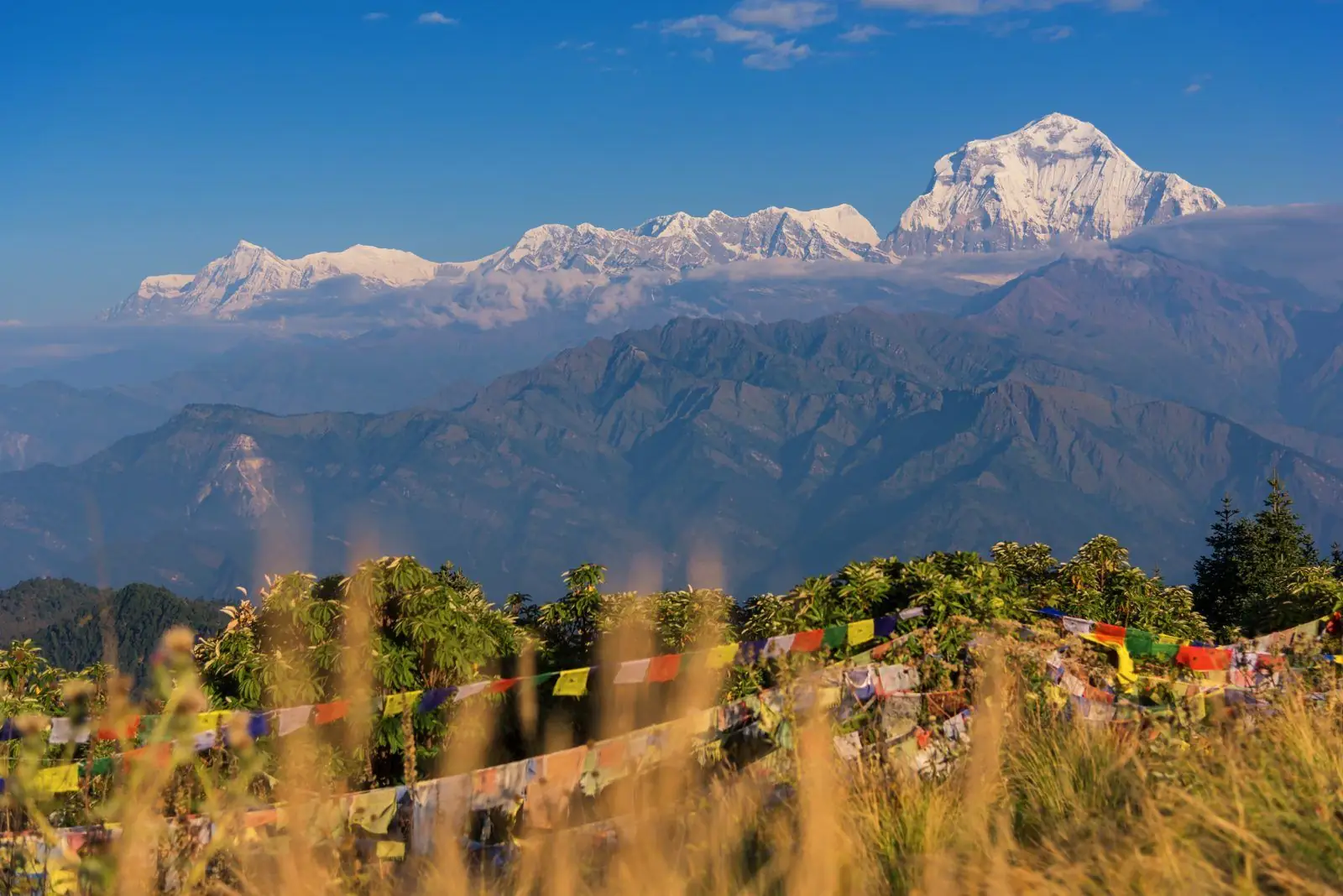
Treks that mostly stay below about 4,000 m include Poon Hill, Ghandruk, Helambu, the Tamang Heritage Trail, Panchase and parts of Lower Mustang. They suit people who are nervous about altitude, though lower does not mean risk free. Heights vary by route and viewpoint, so ascend slowly, drink well, and tell your guide about any symptoms.
What below 4,000 metres means
Altitude illness is uncommon below about 2,500 m and becomes more likely as you go higher and faster. Staying under roughly 4,000 m reduces the chance of serious problems, but does not remove it. Some people feel headaches or poor sleep at 3,000 m.
Heights quoted for treks are approximate. A trail may pass a viewpoint or pass above the number you expect, so treat figures as a guide only.
Ascend slowly, avoid big jumps in sleeping height, and rest when you feel unwell. This is general information, not medical advice. If symptoms worsen, descend.
Poon Hill and Ghandruk
Poon Hill, at about 3,210 m, is the best known low altitude trek. Our standard route takes 9 days, passing rhododendron forest, stone stairways and Gurung villages such as Ghandruk, which sits around 2,000 m.
The sunrise from Poon Hill shows Annapurna and Dhaulagiri on a clear day. Lodges are frequent and food choices are wide, so it is gentle for first timers and for families with older children.
The trail has many steps, so expect tired legs on descents. Cold mornings in winter need warm layers, and spring brings rhododendron blossom on the lower slopes.
Helambu, Tamang Heritage and Panchase
Helambu lies close to Kathmandu and reaches roughly 3,500 m or a little higher at its highest ridges, depending on the route. It combines forest, villages and Sherpa and Tamang culture.
The Tamang Heritage Trail runs through Tamang villages with hot springs and old monasteries, with a high point near 3,000 m. Panchase, near Pokhara, stays lower, around 2,500 m, and gives wide views with short days.
Some parts of these routes may be remote, so lodges can be simple. Route choices change the highest point, so ask us for the exact plan.
Lower Mustang
Lower Mustang follows the Kali Gandaki valley, with Jomsom at about 2,700 m and villages below Muktinath at roughly 3,710 m. It has a dry, windy landscape and old Thakali villages.
Upper Mustang, beyond the checkpoint, is a different thing entirely: a restricted area requiring a special permit and a licensed guide through a registered agency, and its high points reach above 4,000 m. Rules change, so confirm before you travel.
Wind in the afternoon can be strong, so walk in the morning. Flights to Jomsom depend on weather, so allow a spare day, and we can add one if needed.
Common questions
Which trek below 4,000 m is best for beginners?
Poon Hill is the usual choice. It reaches about 3,210 m, has frequent lodges, and takes 9 days in our standard plan. Heights are approximate, and you should still ascend slowly.
Can I get altitude sickness below 4,000 metres?
Yes, though it is less common. Some people feel symptoms from about 2,500 m or 3,000 m. Headache, nausea or unusual tiredness are warning signs, and descending helps. This is general information, not medical advice.
Do low altitude treks need special permits?
Most do not need a restricted area permit, but park or conservation area permits usually apply. Rules change, so confirm before you travel. Our packages include permits.


