




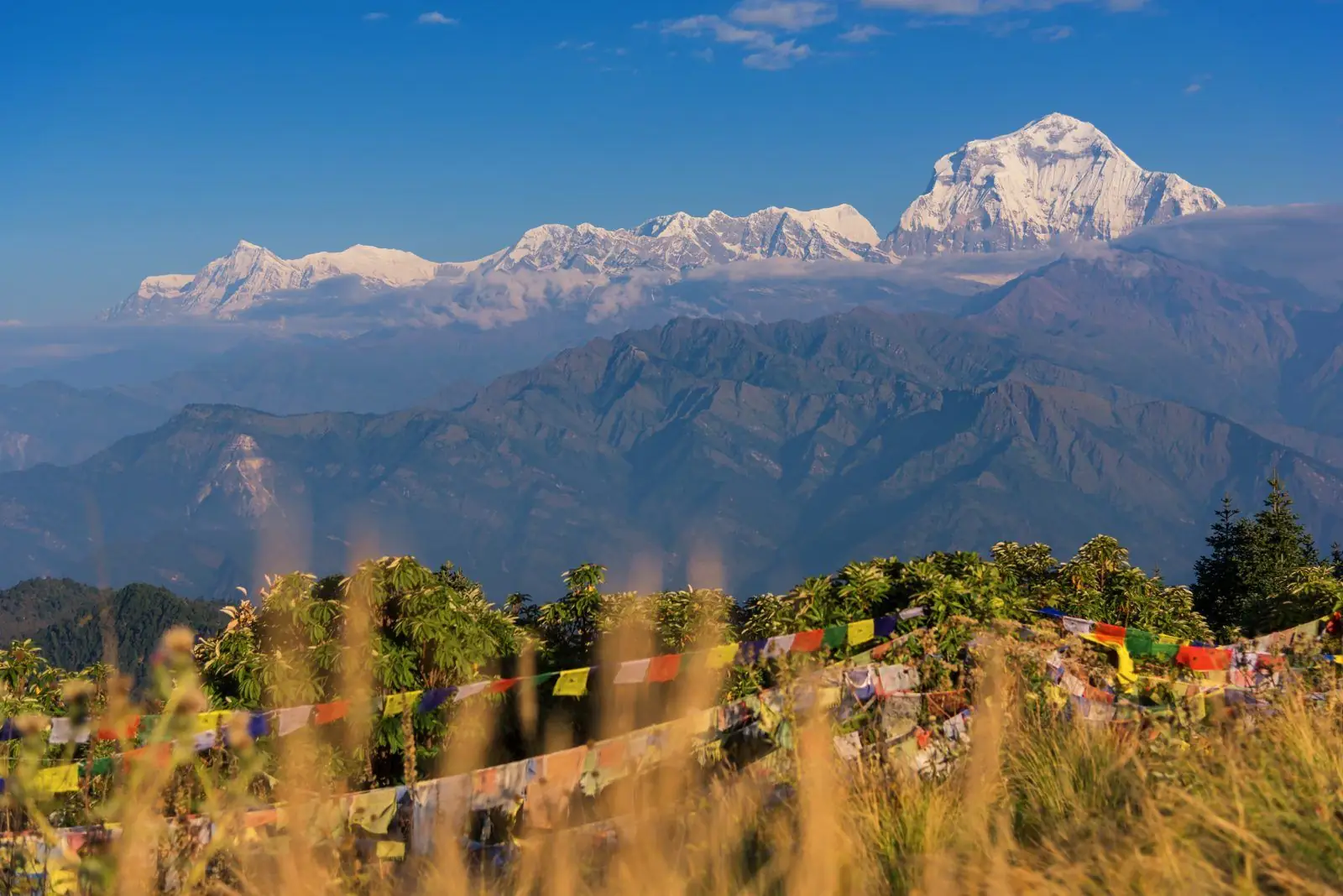
Solo travellers do best on busy teahouse routes such as Everest Base Camp, Annapurna Base Camp and Poon Hill, where lodges are close together and other trekkers are always around. Joining a group departure gives you company and shares the cost of a guide. Trekking with a guide, even on easy routes, is the sensible choice for safety.
Why busy routes suit solo trekkers
On popular trails you pass other walkers every day, villages have lodges at regular intervals, and help is never far. That matters if you feel unwell or lose your way.
Everest Base Camp, Annapurna Base Camp and Poon Hill are the usual first choices. Poon Hill is gentler, our 9 day itinerary suits first time trekkers, and Annapurna Base Camp runs 10 or 14 days. Everest Base Camp runs 14 days and is the busiest of all.
Quiet routes are rewarding but isolating if you are alone, and some require group size minimums for permits. Start with a busy trail, then try a quieter one once you know your own pace.
Joining a group departure
A group departure on fixed dates is the easiest way to travel alone without trekking alone. You meet people at the first dinner, share the walking days and have a built in circle in the evening. We run fixed date group departures for routes such as Everest Base Camp, and you can ask us which dates are open.
Groups also spread the cost of the guide and porter across several people. Pace matters, though, so tell us your fitness honestly and we can suggest a group whose speed matches yours.
If you prefer privacy, a small private trek is possible, and the price depends on group size. Fees change, so confirm the current figure with us before you book.
Safety basics when alone
Hire a licensed guide. Independent trekking rules for some areas have changed over the years, and restricted areas always require a guide through a registered agency. Rules change, so confirm before you travel.
- Share your itinerary and check in with family regularly
- Carry travel insurance that covers trekking at your highest altitude
- Walk at an even pace and rest when tired
- Tell your guide at once about headache, nausea or breathlessness
- Keep copies of your passport and emergency contacts
Altitude illness can affect anyone. If symptoms get worse, descend. This is general information, not medical advice.
Single supplements and room sharing
Teahouses mostly offer twin rooms with shared bathrooms. A solo traveller may be asked to pay for a room alone, or may be paired with another trekker, depending on the lodge and season. In busy periods rooms can be full, so advance booking helps.
Some packages carry a single room supplement in cities and where private rooms are arranged. Amounts change by season, so confirm the current figure with us before you book.
If you are travelling from India, carry valid photo ID such as a passport or voter ID, and check the current rules on Indian currency in Nepal before you leave.
Common questions
Is it safe to trek alone in Nepal?
On busy routes with a licensed guide it is generally safe, with normal precautions. Weather, altitude and trail conditions still need respect. Restricted areas legally require a guide, and rules change, so confirm before you travel.
Do I need a guide as a solo trekker?
We recommend one. A guide handles navigation, lodge booking and early warning of altitude problems, and is required in restricted areas. Rules for other areas change, so confirm current requirements before you travel.
Can solo travellers join a group trek?
Yes. We run fixed date group departures on routes like Everest Base Camp. Tell us your fitness and dates, and we can suggest a departure with a pace that suits you.


