




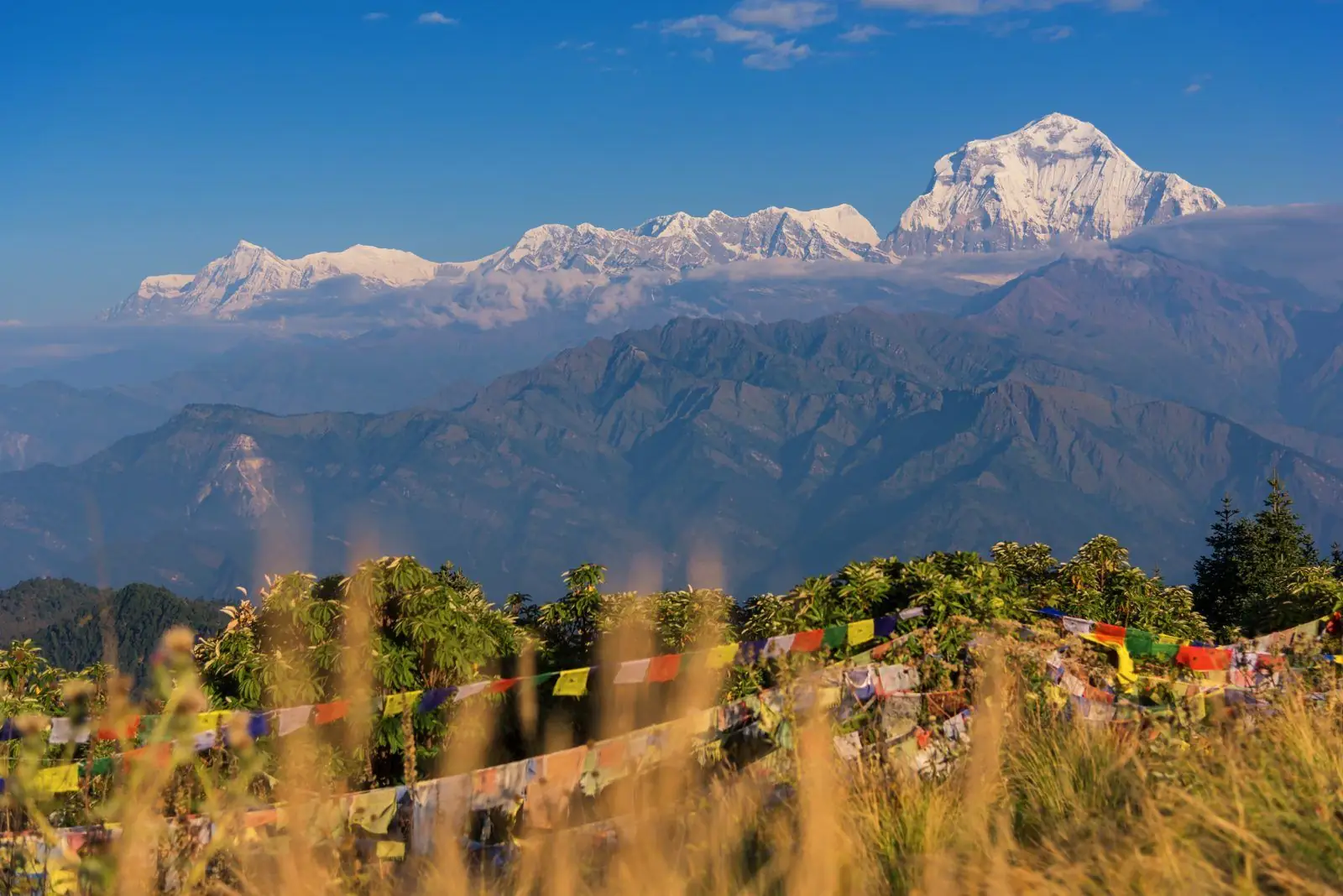
The best monsoon treks are in the rain shadow, north of the main Himalayan range: Upper Mustang, Nar Phu and Dolpo. They get far less rain than the rest of Nepal. Even so, the journey there can be disrupted by wet roads and cancelled flights, so this season suits flexible travellers who are comfortable with uncertainty.
What the monsoon means for trekking
The monsoon usually runs from about June to September, though timing varies. Most of Nepal sees heavy afternoon and night rain, cloud that hides the mountains, and slippery trails. Leeches appear in warm, wet forest at lower altitude, and landslides can block roads and paths.
The upside is green hills, fewer trekkers, and quieter lodges. Dust is gone and the air feels fresh between showers.
Popular routes such as Everest Base Camp and the Annapurna Circuit are possible in this season by some trekkers, but views are often poor and travel disruption is more likely. We usually suggest other months for them.
Rain shadow regions
The rain shadow areas sit behind high ranges that block much of the moisture. Upper Mustang is the best known: a dry, desert-like landscape with eroded cliffs, old monasteries and the walled town of Lo Manthang. Our Upper Mustang trek is 18 days.
Nar Phu and Dolpo are wilder and more remote, with long days and basic facilities. All of these are restricted areas, so they need a special permit and a licensed guide through a registered agency. We handle this for our packages. Rules change, so confirm before you travel.
Even in the rain shadow, you can get showers, and the approach routes can be wet.
Leeches, mud and trail safety
Leeches are a nuisance rather than a danger. Wear long trousers tucked into socks, use a repellent suited to skin, and check your legs at breaks. Salt or a gentle flick removes them, and the bite should be cleaned afterwards.
Trails get muddy and stone steps become slippery, so trekking poles and shoes with good grip matter. River crossings can rise quickly after heavy rain, and your guide may change the plan or wait.
Carry a waterproof pack cover and keep electronics and spare clothes in sealed bags. Altitude illness does not stop in the rain, so watch for headache, nausea or unusual tiredness and descend if symptoms worsen. This is general information, not medical advice.
Flights, roads and flexible plans
Transport is the biggest monsoon risk. Flights to places like Jomsom or Lukla can be cancelled for cloud, and roads can be blocked by landslides for hours or days. Build spare days into your schedule on both ends of the trek.
Do not book tight onward flights, especially international ones, on the day your trek is due to finish. We can add a spare day to any itinerary, and your guide will watch weather and road reports.
If you travel from India, carry valid photo ID such as a passport or voter ID, and check the current rules on Indian currency in Nepal, since they change.
Common questions
Is it safe to trek in Nepal during the monsoon?
It can be, with care. Rain shadow regions are drier, but landslides, slippery trails and flight cancellations are real risks. Go with a licensed guide, keep spare days, and accept that plans may change.
Which trek is driest in the monsoon?
Upper Mustang is usually the best choice, as it lies in the rain shadow. It still sees some showers, and the journey in can be affected by weather, so allow flexibility.
Do I need special permits for monsoon treks like Dolpo?
Yes. Upper Mustang, Nar Phu and Dolpo are restricted areas needing a special permit and a licensed guide through a registered agency. Rules change, so confirm before you travel.


