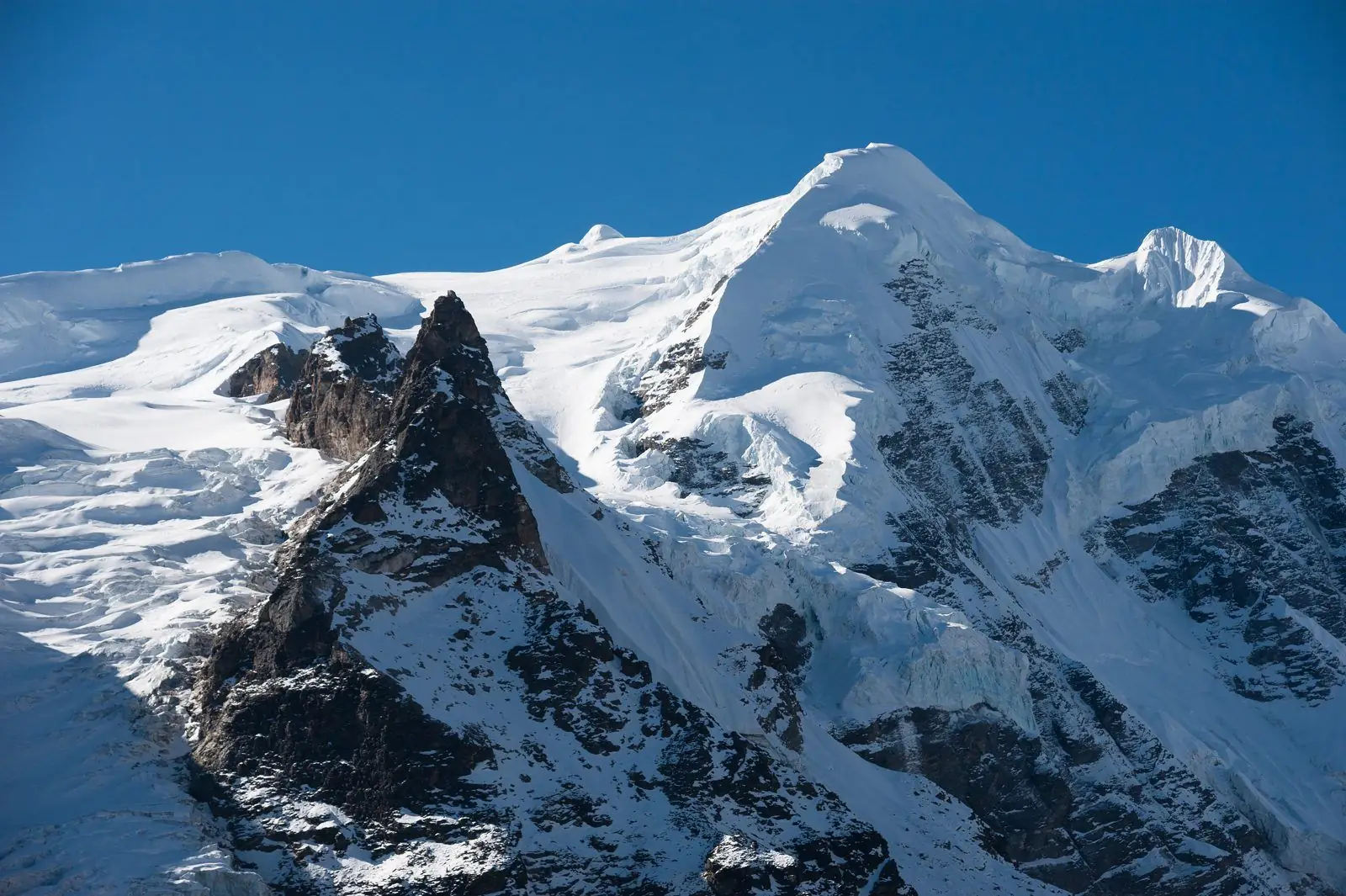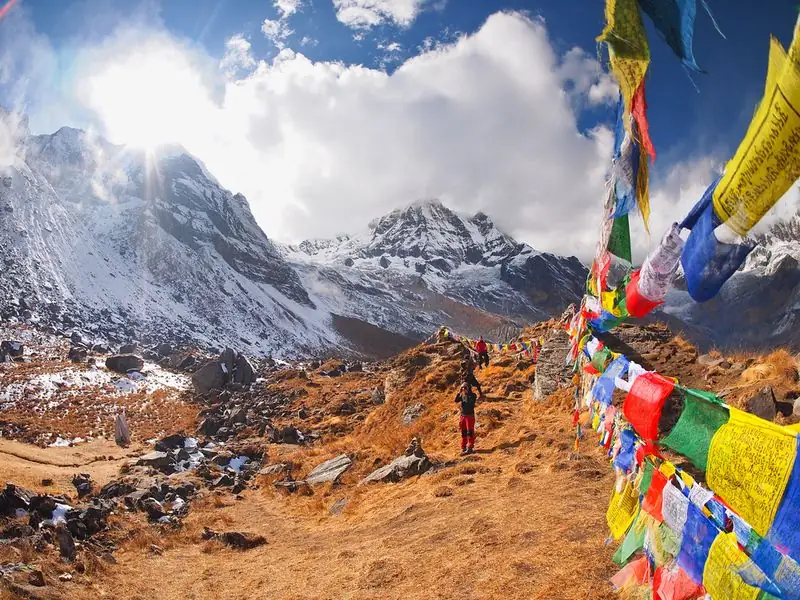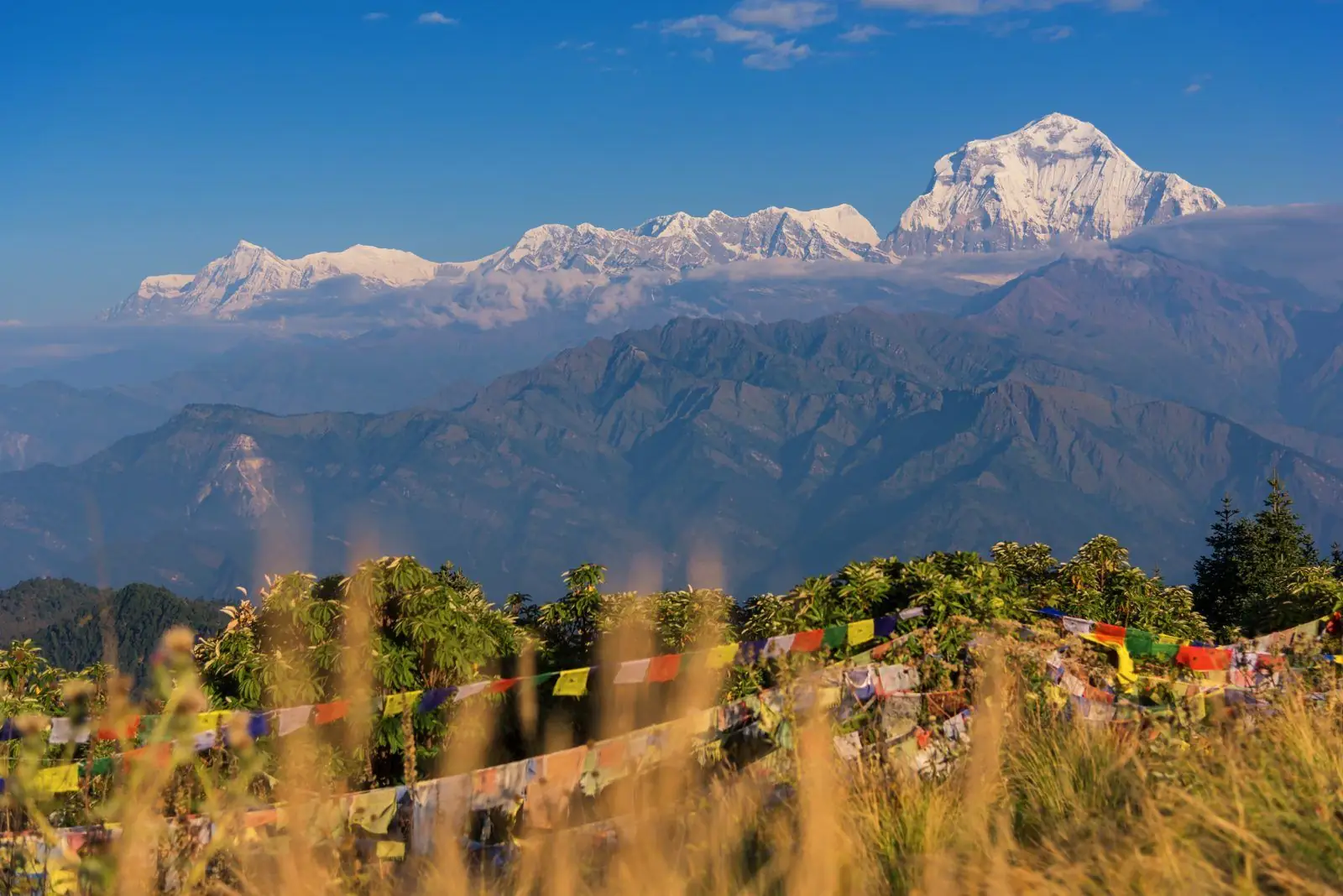
For mountain photographs, the strongest treks are Everest (Kala Patthar and Gokyo Ri) and Poon Hill for easy sunrise shots. Culture and village portraits are richest on Mustang, Langtang and Manaslu routes. October, November, March and April give the most reliable light, while winter mornings can be crisp and clear. Bring spare batteries and keep them warm.
Sunrise and sunset viewpoints
Kala Patthar, at about 5,545 m, is the classic Everest viewpoint, with Everest, Nuptse and Pumori in one frame. It is a cold, early climb and hard at that height, so plan acclimatisation well.
Gokyo Ri, at about 5,357 m, looks over turquoise lakes and the huge Ngozumpa glacier, with Everest in the distance. Our Everest Base Camp with Gokyo trek runs 17 days, which gives time to reach it rested.
Poon Hill, at about 3,210 m, is easier and works well for first timers. Crowds gather on the viewing platform, so arrive early to get a good spot. Heights are approximate.
Culture and village photography
People pictures are often what trekkers value most. The Upper Mustang trail has whitewashed monasteries, prayer walls and weathered faces against dry cliffs. Langtang and Manaslu show Tibetan-influenced villages, mani walls and yaks.
Always ask before photographing a person, a monk, or a family at home, and offer to show the picture. Some monasteries restrict photography inside, so ask your guide before raising a camera. Never photograph during ceremonies unless you are clearly welcome.
Upper Mustang and Manaslu are restricted areas needing a special permit and a licensed guide through a registered agency. Rules change, so confirm before you travel.
Seasons and light
Autumn, from about October to November, usually brings clear air and stable weather, and it is the busiest time. Spring, from March to May, adds rhododendron blooms at lower altitude but more afternoon haze.
Winter gives sharp light and few people but bitter cold, and some lodges close. The monsoon offers green hills and dramatic clouds, with fewer clear mountain views.
For most scenes, the best light comes in the first hour after sunrise and the hour before sunset. Mountains often cloud over by late morning, so plan big viewpoints for early starts.
Practical tips for carrying and protecting gear
Cold drains batteries fast, so sleep with spares inside your sleeping bag. Lodge charging is limited and may cost extra, so a power bank helps.
- Pack lenses and bodies in a padded, water resistant bag
- Carry lens cloths and silica packets for damp days
- Keep a light tripod for pre-dawn shots
- Back up memory cards every evening
- Let porters carry bulky gear, but keep your camera with you
Do not rush for the shot at height. Altitude illness can happen to anyone, so stop and descend if headache or nausea worsen. Walking at a slow pace also leaves more time to compose.
Common questions
Which Nepal trek is best for photography?
Everest with Gokyo gives the widest range, from Kala Patthar and Gokyo Ri to glaciers and lakes. For an easier option, Poon Hill offers a quick sunrise, and Upper Mustang gives strong culture images.
When is the best season for trek photography?
October, November, March and April are usually the most reliable for clear light. Winter mornings can be very sharp, though cold. Mountain views often cloud over by late morning in any season.
Can I photograph monks and villagers freely?
Ask first, always. Some monasteries and ceremonies restrict photography, and many people appreciate being shown the picture afterwards. Your guide can advise on local custom, which varies by village.