




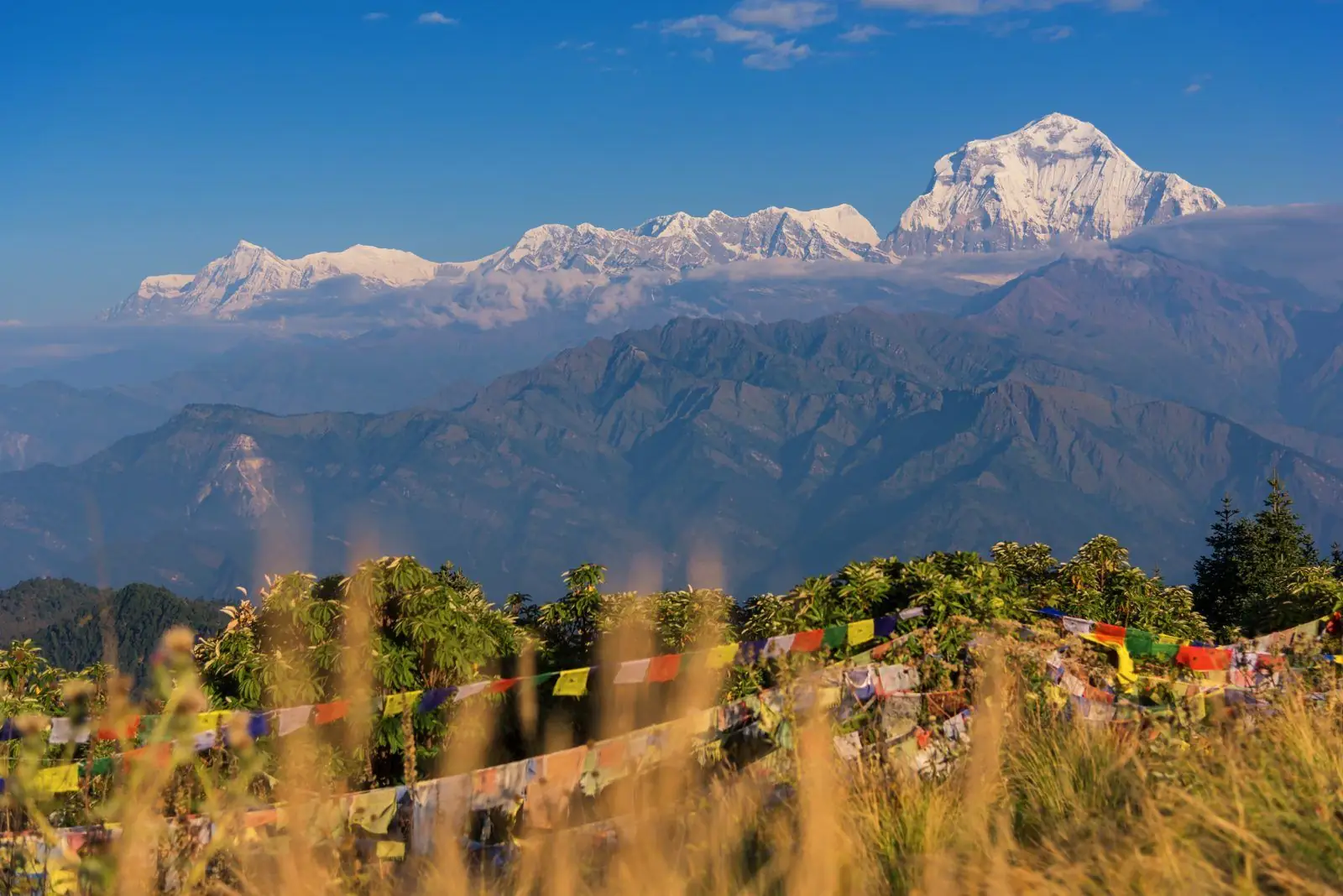
The best treks in Nepal above 5,000 m are Everest Base Camp with Kala Patthar (5,545 m), the Gokyo Lakes with Gokyo Ri (5,357 m), the Annapurna Circuit over the Thorong La (5,416 m) and the Manaslu Circuit over the Larkya La (5,106 m). Harder options are the Everest Three Passes, Nar Phu, Dolpo and the Dhaulagiri Circuit. None needs climbing skills, but all need acclimatisation.
The short list
- Annapurna Circuit: 12 to 16 days, high point Thorong La, 5,416 m. The best first 5,000 m trek.
- Everest Base Camp: 12 to 14 days, high point Kala Patthar, 5,545 m. The highest point most trekkers ever reach.
- Gokyo Lakes and Gokyo Ri: 11 to 13 days, high point 5,357 m. High lakes and a great viewpoint.
- Manaslu Circuit: 12 to 16 days, high point Larkya La, 5,106 m. A lower pass, a wilder trek.
- Everest Three Passes: 18 to 21 days, high point Kongma La, about 5,535 m. Three passes above 5,300 m plus Kala Patthar and Gokyo Ri.
- Nar Phu and the Kang La: 9 to 12 days, high point about 5,300 m. A hidden valley and a steep pass.
- Lower Dolpo: 16 to 18 days, high point Numa La, about 5,190 m. Two passes on a camping trek.
- Dhaulagiri Circuit: 16 to 20 days, high point French Pass, about 5,360 m. The hardest.
The treks in detail
Annapurna Circuit. One pass day above 5,000 m, with excellent acclimatisation at Manang, health posts, good lodges and road access on both sides. You are above 5,000 m for only a few hours, which keeps the risk low.
Everest Base Camp. You sleep at 5,164 m in Gorak Shep, which is the hard part: a cold, restless night. Two rest days on the way up are essential.
Gokyo Lakes and Gokyo Ri. Quieter than the base camp trail, with a quick gain of height that needs care.
Manaslu Circuit. Long pass day on moraine in a restricted area.
Everest Three Passes. The most complete trek in Khumbu, for fit and experienced trekkers.
Nar Phu and the Kang La. Often combined with the Thorong La for two 5,000 m passes in one trip.
Lower Dolpo. Remote, dry and beautiful.
Dhaulagiri Circuit. Several nights above 4,700 m, a glacier and two passes.
What changes above 5,000 m
At 5,000 m each breath contains about half the oxygen it does at sea level. Walking pace drops to a slow plod, sleep is broken, appetite fades and the cold is sharp even in sunshine. Almost everyone notices some effect. Serious altitude illness, affecting the lungs or the brain, is uncommon when the ascent is gradual and is the reason every sound itinerary has rest days built in.
The rules that keep people safe
Above 3,000 m, raise your sleeping height by no more than 300 to 500 m a night and take a rest day for every 1,000 m gained. Climb high during the day and sleep lower when you can. Drink three to four litres a day, avoid alcohol, and eat even when you do not feel like it. Tell your guide about any headache. If symptoms get worse, do not go higher; if they get worse at rest, go down. Many trekkers also discuss acetazolamide with their doctor before travelling.
Pass, peak or base camp?
A high pass keeps you above 5,000 m for only a few hours. A base camp trek such as Everest means sleeping there, which is harder on the body. A trekking peak such as Island Peak or Mera Peak goes above 6,000 m and needs basic mountaineering skills and a climbing guide.
Equipment
A down jacket rated for minus 15 C or lower, a four-season sleeping bag, insulated gloves, a warm hat, sunglasses with full UV protection and broken-in boots. Microspikes are worth carrying for any pass from November to April.
Season
October to November and April to May are the best windows for crossing passes. In winter many are closed by snow, and in the monsoon cloud and rain make them unpleasant, except in the rain-shadow regions.
Common questions
Which is the easiest trek above 5,000 m?
The Annapurna Circuit over the Thorong La, because of its facilities and gradual approach.
Do I need climbing experience?
No. These are walking routes. Good fitness and acclimatisation are what matter.
What is the highest point reached on a trek in Nepal?
Kala Patthar at 5,545 m is the usual answer; some viewpoints such as Chhukung Ri are similar.
Is altitude sickness common?
Mild symptoms are common. Serious illness is rare when the itinerary is sensible.
Heights, days, fees and rules are approximate and can change, so confirm the current details with us before you book.


