The best treks in Nepal below 3,000 m are the Ghandruk loop, Australian Camp and Dhampus near Pokhara, the Chisapani to Nagarkot walk on the rim of the Kathmandu valley, the lower Helambu villages and the royal trek east of Pokhara. They take one to five days, carry no altitude risk and still give clear views of the Himalaya.
The short list
- Ghandruk loop: 2 to 4 days, high point about 2,000 m; 2,600 m with Tadapani. Villages under Annapurna South.
- Australian Camp and Dhampus: 1 to 2 days, high point about 2,060 m. The easiest mountain sunrise.
- Chisapani and Nagarkot: 2 to 3 days, high point about 2,200 m. On the edge of Kathmandu.
- Lower Helambu: 3 to 5 days, high point about 2,600 m if you turn back at Kutumsang or visit Sermathang. Hyolmo villages.
- Tamang Heritage Trail (lower loop): 4 to 5 days, high point about 2,600 m, or 3,165 m with Nagthali. Homestays.
- Ghorepani without Poon Hill: 3 to 4 days, high point 2,860 m. Rhododendron forest.
The treks in detail
Ghandruk loop. Stone-paved trails through Gurung villages with Machapuchare and Annapurna South close above. The best all-round low trek.
Australian Camp and Dhampus. A short forest climb to a meadow facing the Annapurna range.
Chisapani and Nagarkot. A ridge walk through Shivapuri forest with a long skyline of peaks from Langtang to the Everest side.
Lower Helambu. Monasteries, orchards and forest without going to the high ridge.
Tamang Heritage Trail (lower loop). Village stays around Gatlang and Briddim. Skip Nagthali to stay lower.
Ghorepani without Poon Hill. Ghorepani village is just under 2,900 m, and the view from its edge is excellent even without the climb to 3,210 m.
Who low treks suit
Families with young children, older walkers, people with heart or lung conditions who have been advised to avoid altitude, and anyone short of time. They also suit winter travel, when higher trails are cold and snowy, and they make a gentle first step for people unsure whether they will enjoy trekking.
What you still get
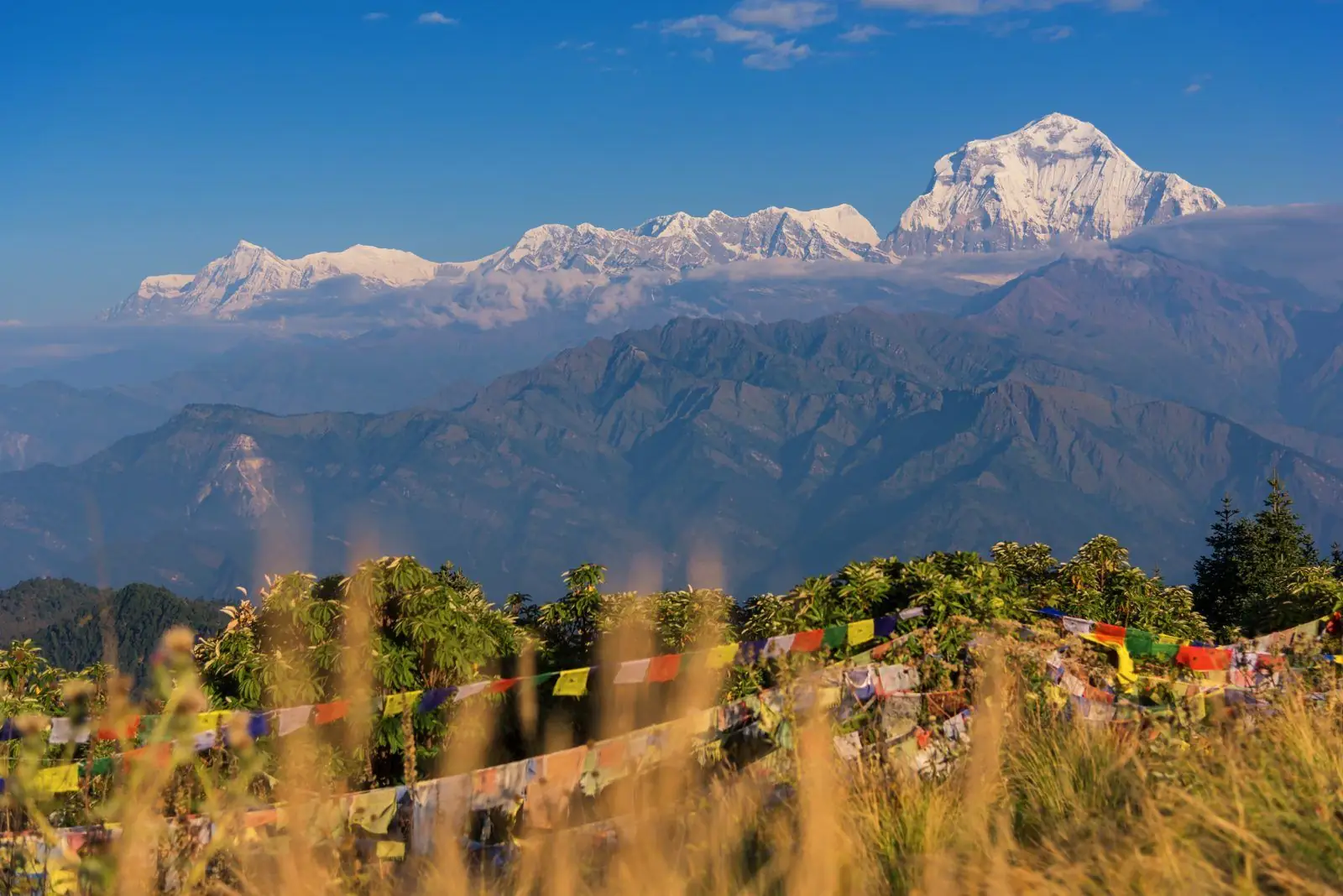
Height is not needed for a view. The hills between 1,500 and 2,500 m look directly across deep valleys to peaks of 7,000 and 8,000 m, and at sunrise the effect is as strong as from any high camp. You also see more of ordinary Nepali life: terraced fields, village schools, water buffalo and tea shops.
Is there any altitude risk?
Below about 2,500 m altitude illness is very unusual. Between 2,500 and 3,000 m a few people notice a mild headache. If you need to stay strictly low for medical reasons, choose the Ghandruk loop, Australian Camp or the Kathmandu valley rim, and ask your doctor first.
Season
October to April is ideal. Winter is the best season of all for low treks, with clear air and mild days. From May the lower hills are hot, and in the monsoon they are wet and leechy. See treks below 4,000 m for slightly higher options.
A sample three-day plan
Day one: drive from Pokhara to Kimche and walk an hour to Ghandruk, with the afternoon in the village. Day two: walk down to the Modi Khola and up to Landruk, then on to Tolka or Pothana, five to six hours. Day three: a short walk to Australian Camp for the view, down to Kande and back to Pokhara by lunchtime.
Comfort and lodges
Low-altitude lodges are the most comfortable in the trekking regions, since supplies arrive by road. Expect private rooms, hot showers, charging points and in many places attached bathrooms. Some villages, including Ghandruk and Dhampus, also have boutique lodges for those who want more comfort.
With children and older walkers
Keep stages to three or four hours, start after breakfast and build in long lunch stops. A porter can carry a small child in a basket seat on steeper sections if needed, which is a normal arrangement locally. Check that everyone has shoes with good grip, since stone steps are slippery when wet.
Common questions
Can you see the Himalaya without going high?
Yes. Views from 2,000 m are often clearer than from higher up.
Which is the easiest trek in Nepal?
Australian Camp, followed by the Ghandruk loop.
Are low treks suitable for children?
Yes, from about five or six years old on the shortest routes.
Do I still need a guide and permit?
Yes, in conservation and national park areas.
Heights, days, fees and rules are approximate and can change, so confirm the current details with us before you book.