




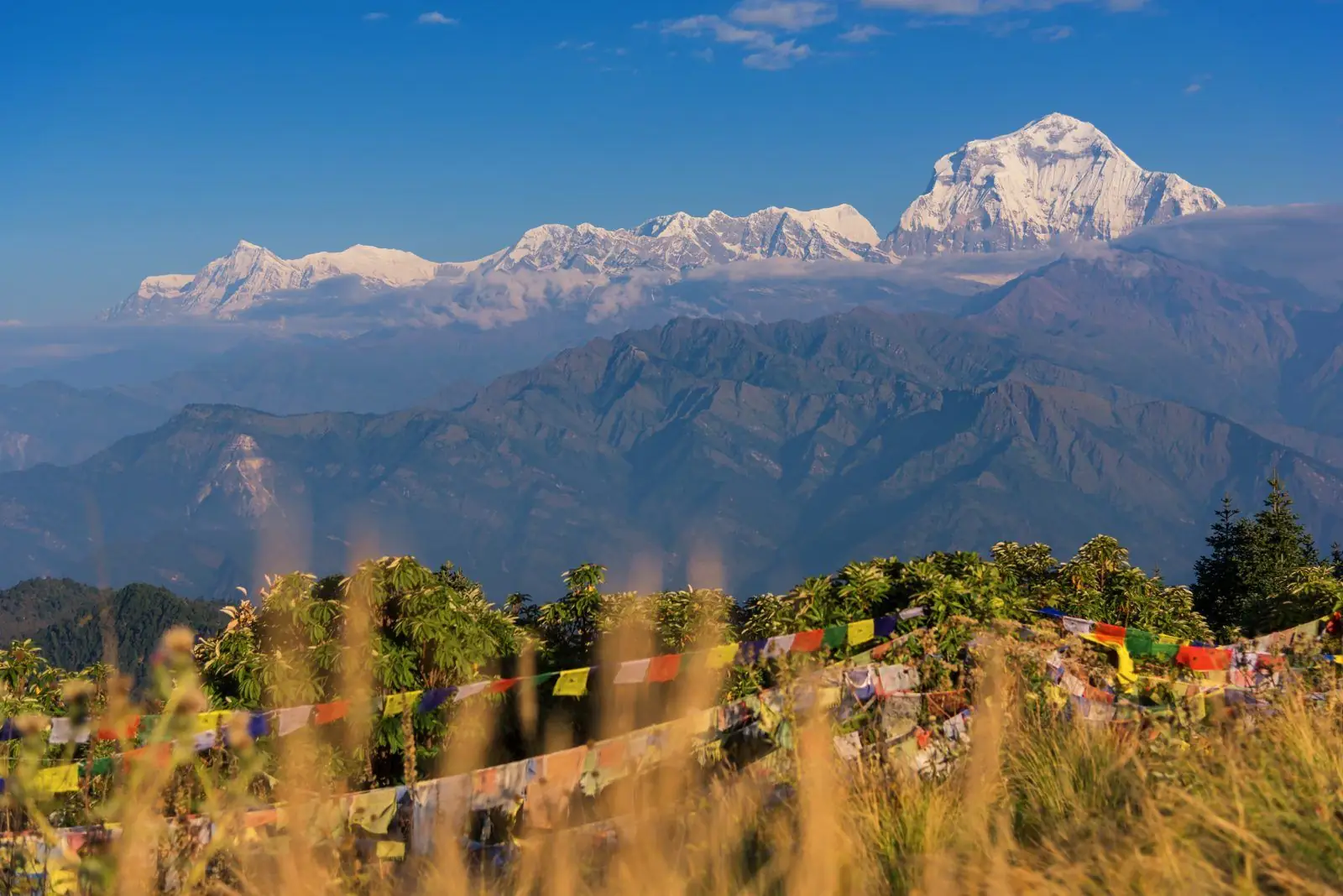
The best winter treks in Nepal are the lower ones: Poon Hill, the Ghandruk loop and Australian Camp near Pokhara, Helambu and the Tamang Heritage Trail near Kathmandu, and the Everest View trek to Namche. Annapurna Base Camp, Langtang and Everest Base Camp are possible with proper gear. High passes above 5,000 m are usually closed.
The short list
- Poon Hill: 4 to 5 days, high point 3,210 m. The best all-round winter trek.
- Ghandruk and Australian Camp: 2 to 4 days, high point about 2,000 m. Mild and sunny.
- Everest View trek: 6 to 8 days, high point about 3,880 m. Everest in winter light.
- Helambu: 5 to 7 days, high point about 3,690 m. Close to Kathmandu.
- Langtang Valley: 7 to 8 days, high point 3,870 m. A high valley in winter.
- Mardi Himal: 5 to 7 days, high point High Camp 3,550 m. To High Camp, and beyond if conditions allow.
- Annapurna Base Camp: 7 to 10 days, high point 4,130 m. Possible, with avalanche awareness.
- Everest Base Camp: 12 to 14 days, high point 5,364 m. For the well equipped.
The treks in detail
Poon Hill. Clear skies, quiet lodges and often a dusting of snow on the hill. Steps can be icy at dawn.
Ghandruk and Australian Camp. Low enough to be comfortable by day even in January.
Everest View trek. Cold, crisp and uncrowded, with flights generally reliable in stable winter weather.
Helambu. Snow is possible at Tharepati; the villages below are fine.
Langtang Valley. Open, with fewer lodges operating at Kyanjin and very cold nights.
Mardi Himal. The upper ridge holds snow, so the viewpoint depends on the day.
Annapurna Base Camp. The section above Deurali is closed or timed carefully after heavy snowfall.
Everest Base Camp. Night temperatures at Gorak Shep can fall below minus 20 C, but skies are often brilliantly clear.
What winter is like
Winter in Nepal is the dry season. Days are short and usually sunny, the air is the clearest of the year and the trails are quiet. Nights are cold everywhere above 2,500 m and very cold above 4,000 m. Snow falls occasionally, more in late January and February, and when it does it can close high trails for a few days.
What is usually closed
The Thorong La, Larkya La, Cho La, Renjo La, Kongma La and the passes of Dolpo and Kanchenjunga are normally snowbound from mid-December to February. Lodges at Tilicho Base Camp, upper Manaslu and other high places may shut. Plan around out-and-back valley treks, not circuits.
Advantages of winter
Lower prices, empty trails, lodges glad to see you and the sharpest mountain views of the year. For Indian travellers the Christmas and New Year holidays fall in this window. Wildlife viewing in Chitwan and Bardia is also at its best, which makes a trek and safari combination attractive.
What to pack
A sleeping bag rated to minus 15 C for treks above 3,000 m, a thick down jacket, thermal base layers, insulated gloves, a warm hat, microspikes and a flask. Lodges provide blankets and a stove in the dining room, but bedrooms are unheated.
Short days
Daylight runs from about 6.45 am to 5.15 pm in mid-winter. Start walking early and plan to be in a lodge by mid-afternoon.
A winter trek and safari
A popular winter plan pairs a short trek with the lowlands: four days on the Poon Hill loop, two nights in Pokhara and two nights in Chitwan National Park, where cool, dry weather is ideal for seeing rhinos and birds. It makes a varied ten days with no extreme cold.
Flights in winter
Mountain flights to Lukla and Jomsom are often reliable in the settled high pressure of early winter. Morning fog in Kathmandu and the Terai can delay departures in December and January, so keep a spare day before an international connection.
Common questions
Can you trek in Nepal in December?
Yes. Early December is one of the clearest and quietest times of the year.
Does it snow on the trekking trails?
Occasionally above 2,500 to 3,000 m, more often in January and February.
Is Everest Base Camp possible in January?
Yes, for well-equipped trekkers with a flexible schedule. It is very cold.
Which trek is warmest in winter?
The Ghandruk loop and other routes below 2,500 m.
Heights, days, fees and rules are approximate and can change, so confirm the current details with us before you book.


