The short version: three of the most asked questions, answered in a line each. The rest of the page goes into detail.
- How do I get to Lukla, and what can go wrong? You fly from Kathmandu to Lukla, at about 2,860 m, which already skips roughly a week of walking from the roadhead.
- How should I plan for flight delays on the way home? Keep at least one spare day before any onward international flight.
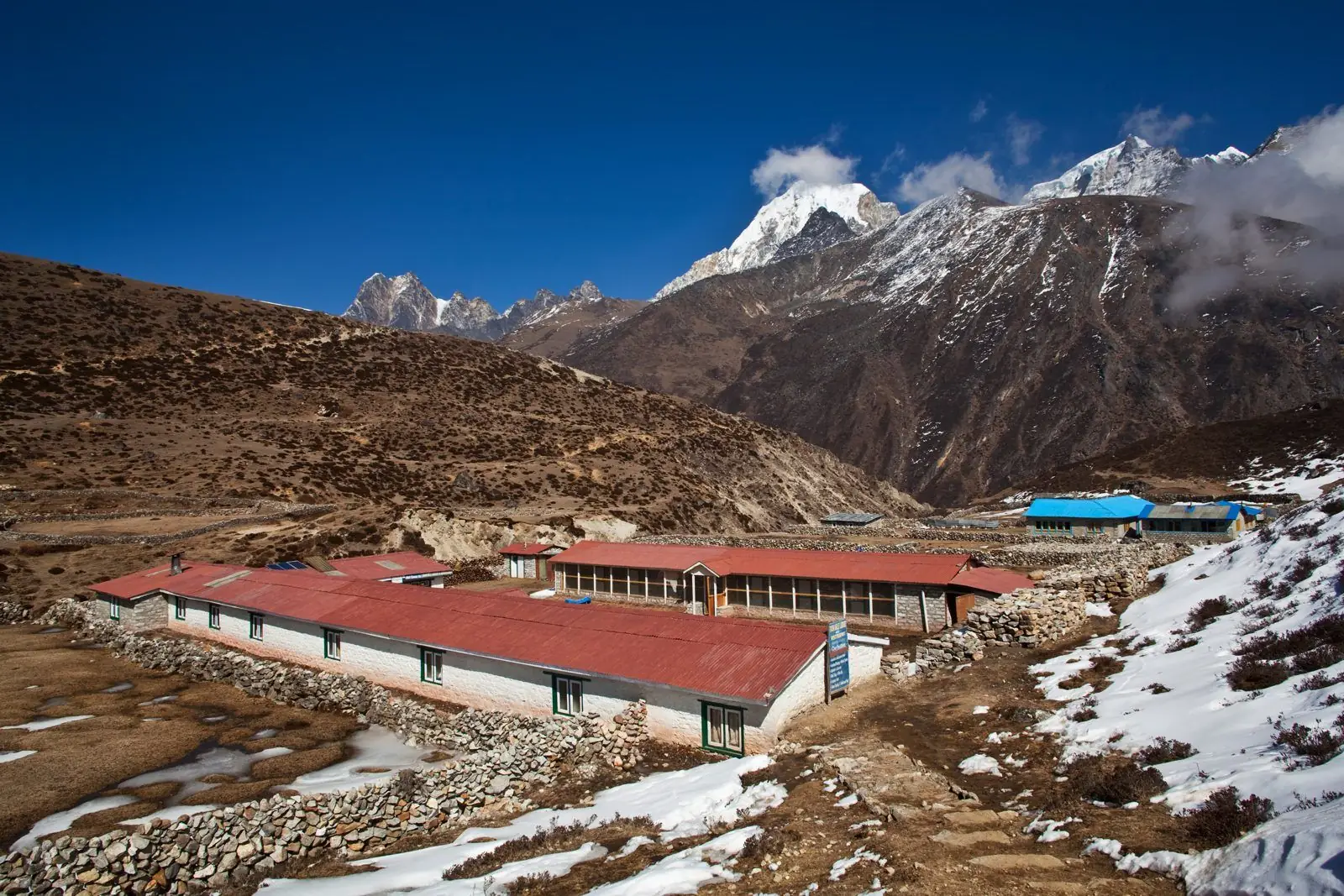
- What are lodges like on the way up? Expect simple teahouse lodges with basic rooms, shared toilets and dining rooms that are the warmest spot, usually with a menu of rice, noodles and soups.
How do I get to Lukla, and what can go wrong?
You fly from Kathmandu to Lukla, at about 2,860 m, which already skips roughly a week of walking from the roadhead. Flights depend on weather, and delays are common, so leave a spare day at both ends. Your operator will book the flights and advise on the schedule.
How should I plan for flight delays on the way home?
Keep at least one spare day before any onward international flight. Lower-valley weather is what usually disrupts return flights, and a helicopter return can reduce that exposure, though it also depends on weather. Ask your operator what the backup plan is if nothing flies.
What are lodges like on the way up?
Expect simple teahouse lodges with basic rooms, shared toilets and dining rooms that are the warmest spot, usually with a menu of rice, noodles and soups. Facilities become more basic and expensive as you climb. Confirm the arrangements with your operator before you go.
What should I pack for a quick trip to base camp?
Bring warm layers, a down jacket, a windproof shell, a warm hat and gloves, sturdy broken-in boots and a sleeping bag suited to sub-zero nights. Keep your pack light, because the Lukla flight has strict baggage limits, and leave spare luggage in Kathmandu.
How much cash should I carry on the trail?
Carry Nepali rupees in small notes, because teahouses are cash businesses, and charges for hot showers, charging and Wi-Fi add up. Bank machines on the trail are limited and unreliable, so withdraw most of what you need in Kathmandu. Your operator can advise on a sensible amount.
Will I have phone signal and charging on the trail?
Signal can be patchy and Wi-Fi is usually paid and slow. Charging is available in lodges for a fee. Carry a power bank and keep it warm, because cold drains batteries quickly, and tell family not to worry if you are silent for a day.
What permits and paperwork do I need?
The details are not set out here, and rules and fees change. Your operator should arrange the entry permits and registrations for the Everest region and tell you what to carry. Bring your passport and a few passport-size photographs, and check the requirements shortly before you travel.