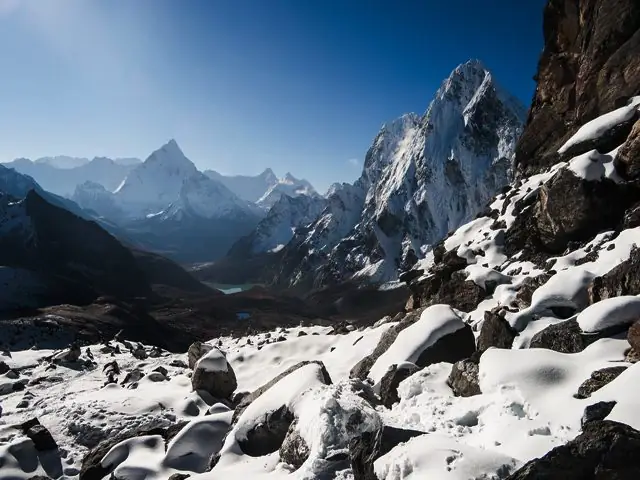
The Cho La is a real mountain pass, not just a high trail. It is crossed by many trekkers each season, but it needs good conditions and a calm decision.
Risks
- Fresh snow that hides the route and makes the descent slippery.
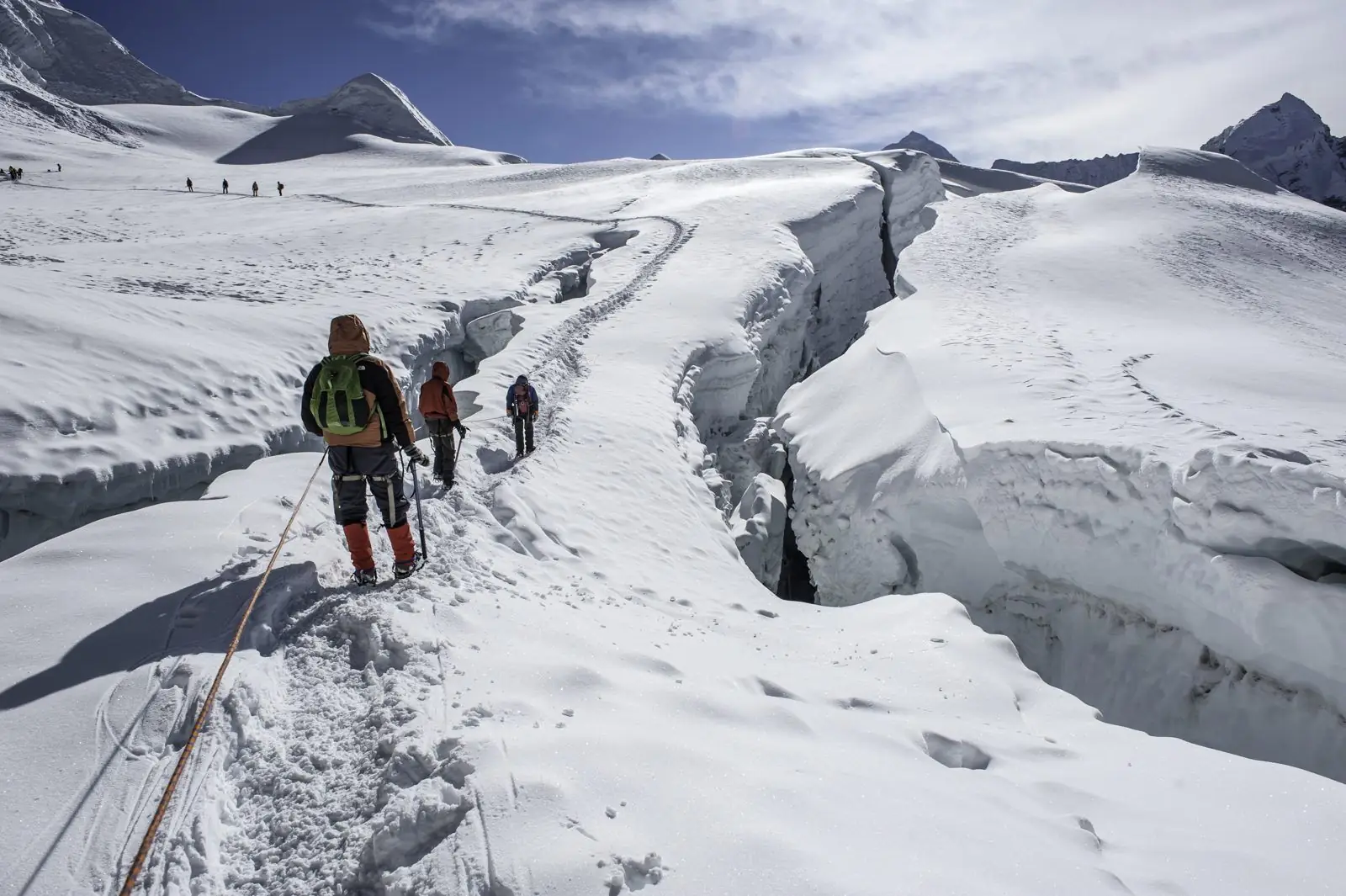
- A short glacier section with crevasses, often snow-covered.
- Rockfall in the steep upper section.
- Altitude of about 5,420 m, for a long day.
- Poor visibility and cold winds.
How guides decide
They check recent snowfall, the state of the glacier, the weather forecast and how the group looks that morning. A late start, a worsening forecast or a sick trekker is a reason to turn back. This is the right call, not a failure.
Equipment
- Sturdy boots with good grip.
- Trekking poles.
- Microspikes or crampons, if your guide advises.
- Warm layers, goggles and sun protection.
- A rope for the glacier section if conditions need it.
Alternative without the pass
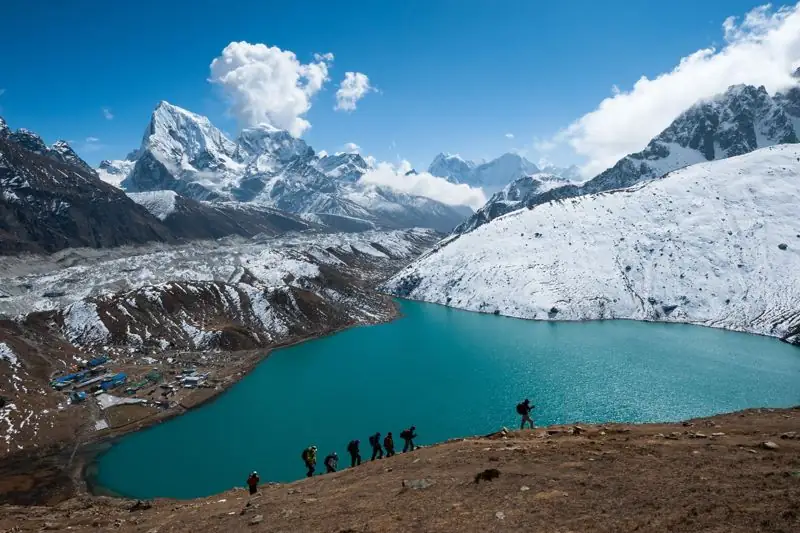
Walk back from Gokyo to Namche, then follow the standard route. It adds two or three days but avoids the pass. See the standard itinerary.
Seasons
Autumn and spring have the best odds of stable weather. Winter snow often closes the pass. See best time for Everest Base Camp.
Signs the pass is not safe
- Heavy fresh snow within the last day or two.
- Strong wind and low cloud at breakfast time.
- A group member with symptoms of altitude illness.
- Late departure of more than an hour from the planned start.
What a turnaround looks like
Returning from Thangnak to Gokyo and down the valley is straightforward and keeps the team safe. It adds two or three days if you still want base camp, which is why we always recommend a spare-day buffer on this route.
Common questions
Is the Cho La dangerous?
It is a serious but common crossing. Risk depends on snow, weather and guide judgment.
Do I need crampons?
Sometimes. Your guide will check conditions on the day.
What if the pass is closed?
You return via Namche and follow the standard route to base camp.
Alternatives to the Cho La crossing
If conditions are poor, you can reach Gokyo and Everest Base Camp by retracing your steps via Namche. Another option is to go up to Everest Base Camp first, return to Lobuche or Dingboche, then cross a different pass or end the trek. Talk to your guide before you commit.
What a turn-around looks like
A good guide will stop at a pre-agreed time even if the group feels strong. Getting stuck on the far side of the pass after dark is far worse than a long walk back.