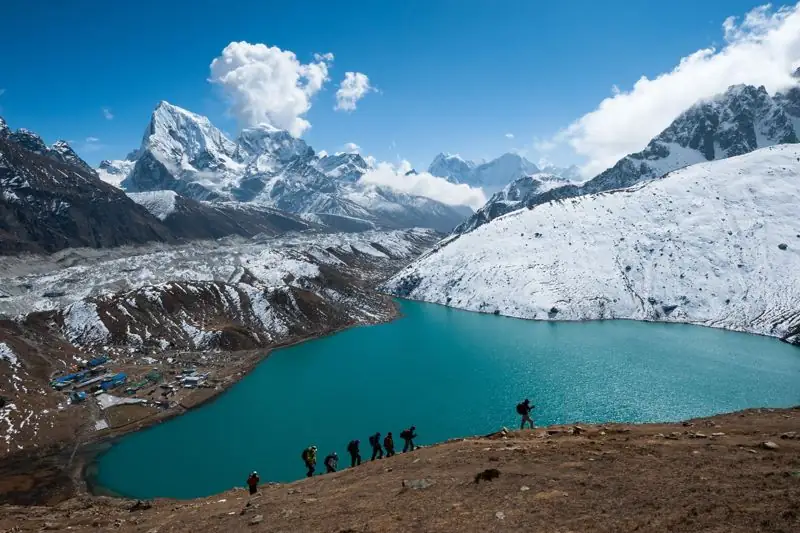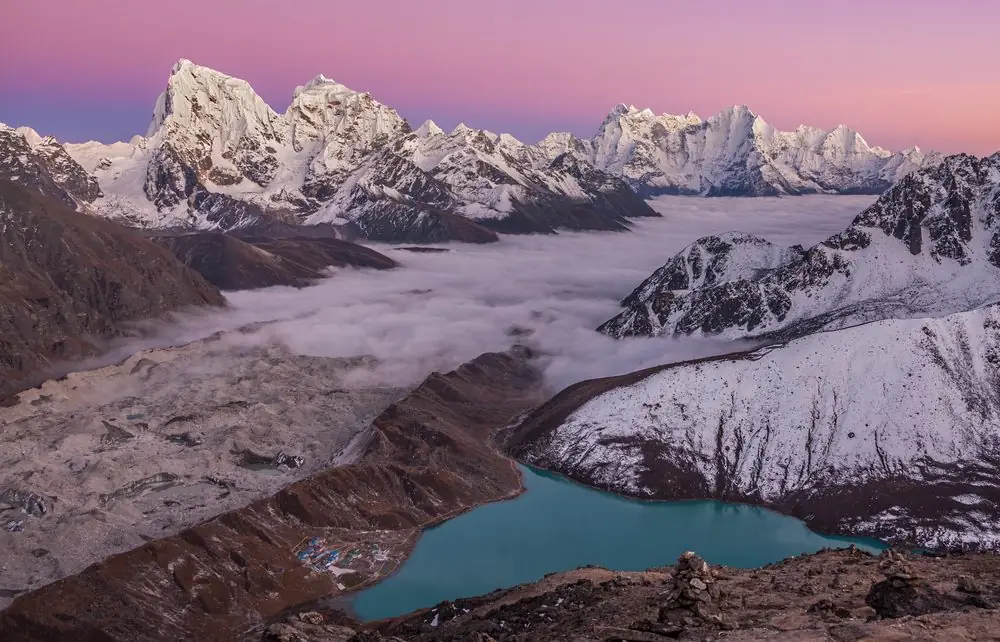
Temperature on the Everest trail depends on two things: the month and the altitude. As a rough rule the air cools by about 6 degrees Celsius for every 1,000 m you climb, so Gorak Shep is far colder than Lukla in every month. The figures below are approximate and vary by year.
Altitude matters as much as the month
The trek climbs from Lukla at about 2,860 m to Gorak Shep at about 5,160 m and base camp at about 5,364 m. A walk of nine days takes you through several climates. A pleasant afternoon in Lukla can sit alongside a freezing night at Lobuche. The sun is strong in the day, but shade and the evening feel cold quickly.
By altitude, in the main seasons
- Lukla (about 2,860 m): days around 15 to 20 degrees in spring and autumn, nights near 5 degrees.
- Namche Bazaar (about 3,440 m): cool days, often 10 to 15 degrees in sun, and nights around freezing.
- Dingboche (about 4,410 m): daytime in the sun may reach 5 to 10 degrees, with nights well below freezing.
- Gorak Shep and base camp (about 5,160 to 5,364 m): daytime highs near 5 degrees at best, and nights between zero and minus 10 or colder.
These are broad ranges, not forecasts. Wind and cloud change the feel quickly.
By month
- March: still cold at height, with hard frosts in the early weeks. See Everest Base Camp in March.
- April: milder, the warmest of the clear spring weeks begin. See April.
- May: the warmest trekking month, but cloud and haze build. See May.
- October: mild days and cold, clear nights. See October.
- November: colder, with nights that can fall to minus 10 or lower at the top. See November.
- December to February: the coldest weeks, with minus 25 to minus 30 possible near base camp in the harshest spells. See trekking in winter.
What it means for your kit
Night temperature decides your sleeping bag; daytime sun and wind decide your layers. For spring and autumn most trekkers use a bag rated to about minus 10 degrees comfort or colder, and for winter a lower rating. Teahouse rooms are not heated, so the night rating matters. See how to keep warm at night and the overview in temperatures by season.
Layers beat one big coat
Start cool, because you warm up within ten minutes of walking. Add a warm hat and gloves in the shade and at dawn, and carry a windproof shell. Wind chill makes the same temperature feel much colder on the high days.
What our guests say
Excerpts from trekker reviews on our reviews page.
“Everything was handled professionally and with great attention to detail, from permits to on-ground support.”