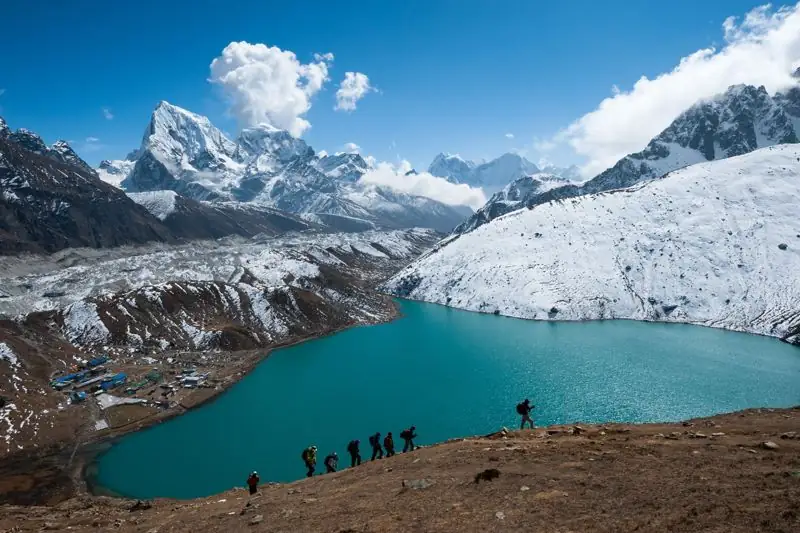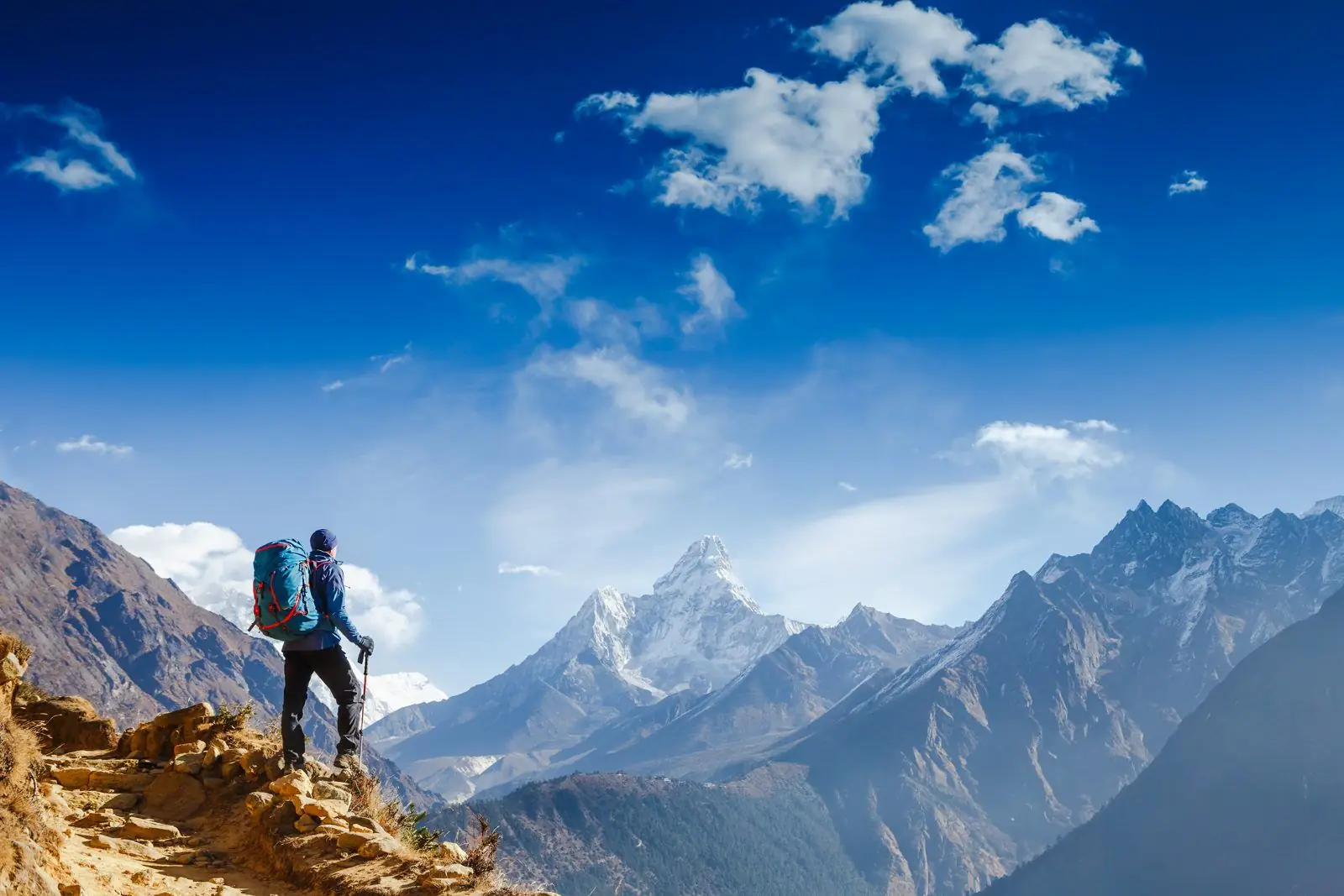
Temperatures change a lot between the first day and the last high stop, so one set of numbers is never enough. The figures below are approximate and vary by year, but they show the pattern clearly.
Spring and autumn
In March to May and September to October, Lukla is pleasant, with daytime highs around 15 to 20 degrees Celsius and nights near 5 degrees. Many trekkers walk in a t-shirt for the first couple of days. By Base Camp the highs drop to around 5 degrees, and nights fall to somewhere between 0 and minus 10.
Winter
From November to February, Lukla's days reach about 15 degrees, with nights close to freezing. Near Base Camp the daytime high is around zero, and nights can drop to minus 10 or much lower, with minus 25 to minus 30 possible in the coldest weeks. The coldest months overall run from November to February.
Layers, not just a big jacket
Because mornings, afternoons and evenings feel so different, many thin layers beat one heavy coat. Wear a warm hat and a buff as soon as the sun goes down, and keep gloves in your day pack even on a clear morning.
Sleeping bag choice
For most of the year, a bag rated for about minus 10 degrees is enough. From mid-November to mid-February, a bag rated to about minus 20 is safer. A thin liner adds warmth, and a bottle of hot water placed inside the bag at bedtime keeps your feet comfortable.
Why it feels colder than the number
- Wind chill on exposed ridges.
- Unheated bedrooms, because only the dining room has a stove.
- Slow, tired circulation at altitude.
Weather can turn quickly
A warm sunny morning can become windy, cloudy and cold within hours, with rain or snow at higher elevations. Always carry a waterproof layer and a warm jacket in your daypack.
Planning your layers by altitude
Think of the trek as three climates. In the lower valleys around Lukla and Phakding, days can be pleasantly warm, and a shirt may be enough in sunshine. Around Namche and Tengboche the mornings and evenings are cool, and you will want a fleece and a windproof layer. Above Dingboche, the nights are very cold, and inside the lodge it may be only slightly warmer than outside. Your layering system should cover all three situations without needing a different wardrobe.
The effect of wind and sun
Temperature readings do not tell the whole story. Wind at higher camps can make a mild day feel far colder, while strong sun at altitude can make you hot in a few minutes. Take off layers before you sweat, and put them on when you stop. Sunglasses, a hat and a neck buff protect against both wind and ultraviolet light. Good gloves with a thin liner glove make it easy to take photos without exposing your hands completely.
Cold in the lodge
Most lodges are not heated beyond the dining room stove. Bedrooms are basic and the walls are thin, so you should expect to sleep in a warm hat and thermal layers. A hot-water bottle in your sleeping bag helps a great deal, and many lodges can fill one for a small fee. Keep your boots and water bottles inside the sleeping bag area or at least off the cold floor to stop them freezing.
Check before you leave
- Look up the recent weather for your dates, and talk to your operator about what to expect.
- Make sure the comfort rating of your sleeping bag fits the season.
- Bring a spare pair of gloves and a warm hat, since items can be lost or damp.
- Remember that cold affects batteries as well as people.
What our guests say
Excerpts from guest reviews of Himalayan Wonders, our parent company, on Tripadvisor.
“Garba Rai was the best I could have hoped for.”