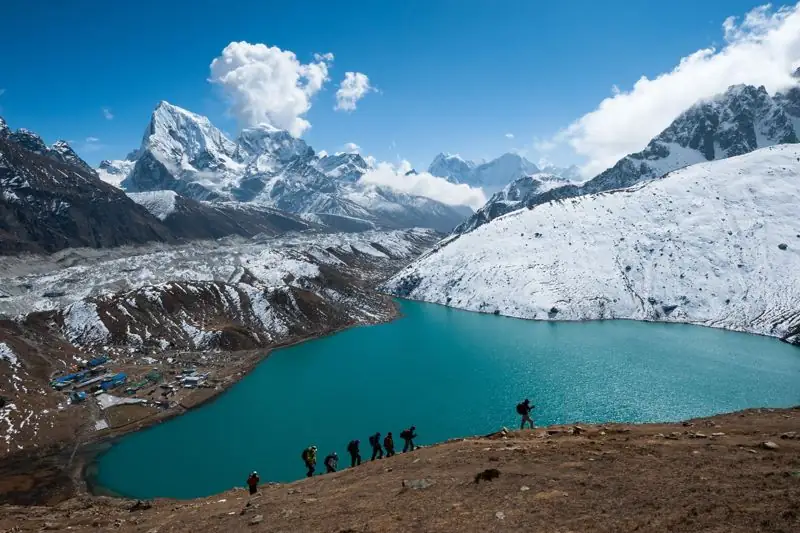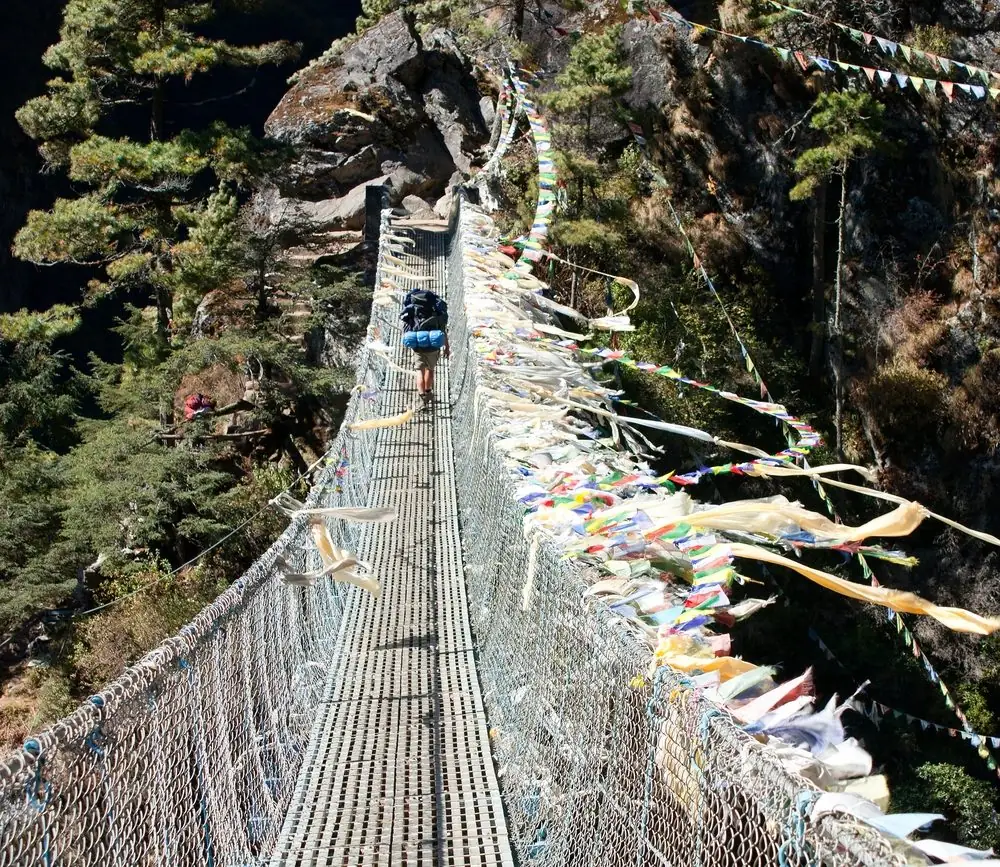
The full Everest Base Camp trek walks both ways and takes 12 to 14 days. A helicopter trek walks up to base camp and flies back from Gorak Shep, Pheriche or Lukla, saving three to four days. A one-day helicopter tour flies from Kathmandu, lands briefly near Kala Patthar and returns the same morning. Each suits a different amount of time and budget.
Full trek and Heli trek at a glance
- Days. Full trek: 12 to 14. Heli trek: 9 to 11, or one day for a tour.
- Walking. Full trek: up and down. Heli trek: up only, or none.
- Cost. Full trek: lowest. Heli trek: higher; the helicopter is the main cost.
- Altitude risk. Full trek: managed by slow ascent. Heli trek: the same on the way up; a one-day tour is brief exposure with no acclimatisation.
- What you miss. Full trek: nothing. Heli trek: the walk down, which is easy but long.
- Weather. Full trek: Lukla flights can be delayed. Heli trek: helicopters also need clear weather.
The three ways to do it
The first is the classic trek, on foot in both directions. The second is the heli trek: you walk up exactly as normal, with the same rest days, then a helicopter collects you after Kala Patthar and takes you to Lukla or all the way to Kathmandu. The third is the day tour, with no trekking: a flight from Kathmandu with a fuel stop at Lukla, a few minutes on the ground at high altitude, and usually breakfast at a hotel above Namche on the way back.
What the helicopter changes
On a heli trek nothing about the ascent changes, and it must not: the body still needs the same days to adapt. What you save is the three-day walk back down. For people short of leave, with tired knees, or who simply want the flight over the Khumbu, it is a good trade. Seats are often shared between trekkers to cut the price, so timing can depend on filling the aircraft.
The one-day tour
The day tour shows you Everest, the icefall and the glacier from the air, which is spectacular. It is not a substitute for the trek. You do not stand at base camp for long, and because you arrive at over 5,000 m without acclimatising, the landing is kept short. People with heart or lung conditions should ask a doctor first. See the helicopter return option.
Rules and limits
Helicopter landings inside the national park are regulated, and the rules on where sightseeing flights may land have been changed from time to time. Weight limits also apply at altitude, so a full aircraft may shuttle passengers in two loads from Pheriche. Ask for the current arrangements when you book.
Best season
Helicopters, like the Lukla planes, fly by sight, so the same months work best: October, November and March to May, with early morning the most reliable time of day. Winter can be very clear. In the monsoon cloud often prevents flying for days.
Insurance and rescue are a different matter
A planned helicopter return is something you pay for. An emergency evacuation for altitude illness or injury is a medical matter and is claimed on travel insurance that covers trekking to 5,500 m or higher. The two should not be confused. Insurers check that an evacuation was medically necessary, and a guide will not call one simply because someone is tired. See evacuation, cost and insurance paperwork.
What the walk down is like
If you are unsure whether to fly, it helps to know what you would miss. The descent takes three days, loses altitude fast and feels easy after the climb. Appetite and sleep return, and many trekkers enjoy these days most. The last climb back up to Lukla is the only real effort.
Choose Full trek if
- You have two weeks and a normal budget.
- You want the full experience, including the walk out.
- You would rather keep the cost down.
- You like the idea of finishing on foot in Lukla.
Choose Heli trek if
- You have about ten days.
- Your knees dislike long descents.
- You want an aerial view of the Khumbu as well.
- For the day tour: you cannot trek but still want to see Everest.
Plan it
Read the Everest Base Camp guides, then ask us for the trek, the heli trek and the day tour priced side by side.
Common questions
How many days does the helicopter return save?
Usually three to four days, compared with walking back to Lukla.
Is the helicopter trek easier?
Only on the way down. The climb to base camp is the same trek with the same altitude.
Can a helicopter land at Everest Base Camp?
Sightseeing flights normally land near Kala Patthar or Gorak Shep, subject to current park rules and weather.
Is a one-day helicopter tour safe?
It is routinely done. The stop at high altitude is brief because passengers are not acclimatised.
Heights, days, fees and rules are approximate and can change, so confirm the current details with us before you book.
What our guests say
Excerpts from trekker reviews on our reviews page.
“His professionalism, knowledge of the mountains, and calm attitude gave us so much confidence during the trek.”
Our itinerary builds in the rest days this advice depends on: see the 14-day Everest Base Camp trek with acclimatisation days.