The classic Everest Base Camp trek takes 12 to 14 days and goes up and down the same valley. Adding Gokyo Lakes makes a loop of 16 to 18 days over the Cho La pass at about 5,420 m. Choose the classic route if time is short or this is your first high trek; add Gokyo if you have the days and want more variety and fewer people.
Classic route and Via Gokyo at a glance
- Days from Kathmandu. Classic route: 12 to 14. Via Gokyo: 16 to 18.
- Highest point. Classic route: Kala Patthar, 5,545 m. Via Gokyo: Kala Patthar, 5,545 m, plus Cho La at about 5,420 m and Gokyo Ri at 5,357 m.
- Shape of the route. Classic route: out and back by the same trail. Via Gokyo: a loop through two valleys.
- Hardest day. Classic route: Lobuche to Gorak Shep and base camp. Via Gokyo: the Cho La crossing, with a glacier and loose rock.
- Crowds. Classic route: busy in October and April. Via Gokyo: quieter on the Gokyo side.
- Grade. Classic route: moderate to hard. Via Gokyo: hard.
How the two routes differ
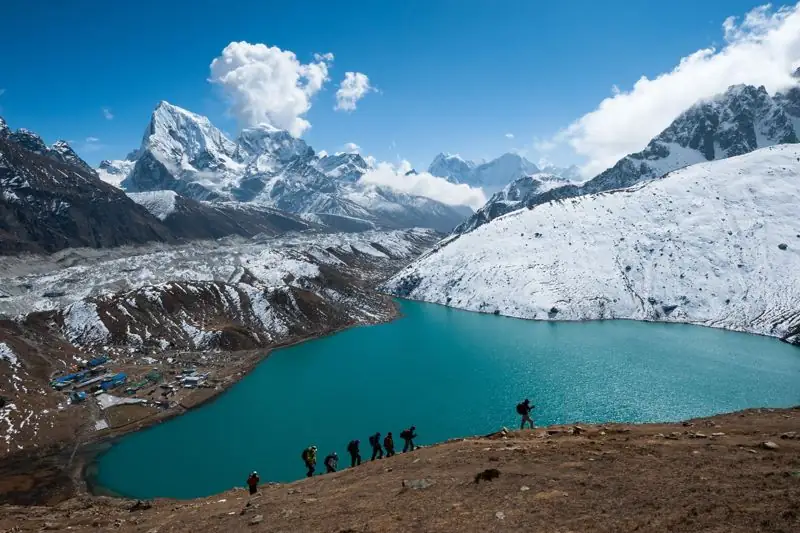
Both routes share the first days from Lukla to Namche Bazaar, and both end at base camp and Kala Patthar. The difference is the middle. The classic trail goes straight up the Imja and Khumbu valleys through Tengboche, Dingboche and Lobuche. The Gokyo version turns west after Namche, climbs the Dudh Kosi valley past a chain of turquoise lakes to Gokyo village at about 4,790 m, and then crosses the Cho La to rejoin the main trail near Lobuche. Some groups do it the other way round, base camp first and Gokyo second. See the Everest Base Camp via Gokyo Lakes guides.
Difficulty and altitude
The classic trek is a long, steady walk on a good trail. Its challenge is altitude, not terrain. The Gokyo loop adds a real mountain pass. The Cho La involves an early start, a steep climb on rock and scree, a short section across a glacier and a long descent. In fresh snow or ice it needs microspikes and a guide who knows the line, and after heavy snowfall it can close for days. You also spend more nights above 4,500 m, which is tiring but usually leaves you better acclimatised by the time you reach Kala Patthar.
Views
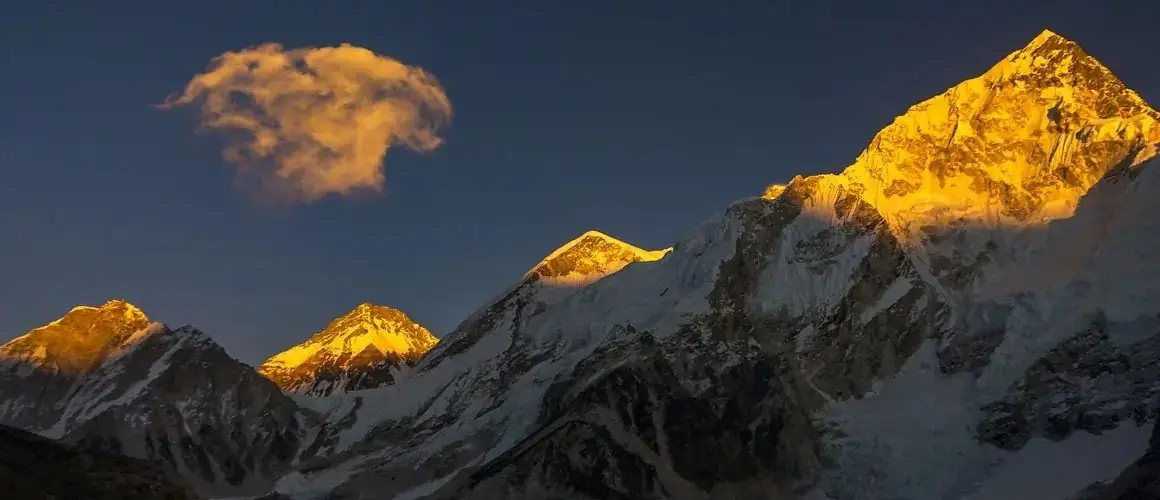
From the classic route the best view of Everest is from Kala Patthar. The Gokyo loop gives you that and adds Gokyo Ri, which many trekkers rate as the finer panorama: Everest, Lhotse, Makalu and Cho Oyu in one sweep, with the lakes and the Ngozumpa Glacier, the longest in Nepal, below. See Gokyo Ri vs Kala Patthar.
Time and cost
The loop needs four to five more days, and cost rises roughly in step with the days: more nights of food and lodging at high altitude and more guide and porter days. Flights, permits and the rest stay the same. If you cannot spare the days, do not squeeze the loop into a classic schedule. Cutting rest days is the commonest cause of altitude trouble on this route.
Best season for each
Both routes are at their best from late September to November and from March to May. The classic route stays open all year, and with warm gear it is walked in December, January and February. The Cho La is the limit on the Gokyo loop: after winter storms it can be buried, and in the first half of spring old ice on the glacier section makes it slippery. If you want the loop, aim for October, November, April or May.
Choose Classic route if
- You have two weeks or less.
- This is your first trek above 4,000 m.
- You want the best-supported trail, with lodges and help close by.
- You are trekking in winter, when the Cho La is often blocked.
Choose Via Gokyo if
- You have 16 days or more.
- You have trekked at altitude before and are steady on rough ground.
- You want quieter trails and dislike walking the same path twice.
- You want both Gokyo Ri and Kala Patthar.
Can you do both?
The Gokyo version is the "both" option. If the Cho La is closed on the day, the fallback is to walk back down the Gokyo valley and round to the main trail by Phortse, which costs about two extra days, so keep a spare day or two in the plan.
Plan it
Read the Everest Base Camp guides and the Cho La pass guide, or ask us for both itineraries with prices for your dates.
Common questions
Is Everest Base Camp via Gokyo harder than the normal route?
Yes. It is longer, it crosses the Cho La at about 5,420 m and it spends more nights high. Fit trekkers with some experience manage it well with a guide.
How many extra days does Gokyo add?
About four to five days, making 16 to 18 days from Kathmandu.
Can beginners do the Gokyo and Cho La route?
A fit, well-prepared beginner can, in good conditions and with a guide, but the classic route is the safer first choice.
Which direction is better?
Most groups go to Gokyo first, which gives a gentler build-up of altitude before the pass. Both directions work.
Heights, days, fees and rules are approximate and can change, so confirm the current details with us before you book.
What our guests say
Excerpts from trekker reviews on our reviews page.
“His professionalism, knowledge of the mountains, and calm attitude gave us so much confidence during the trek.”
Our itinerary builds in the rest days this advice depends on: see the 14-day Everest Base Camp trek with acclimatisation days.