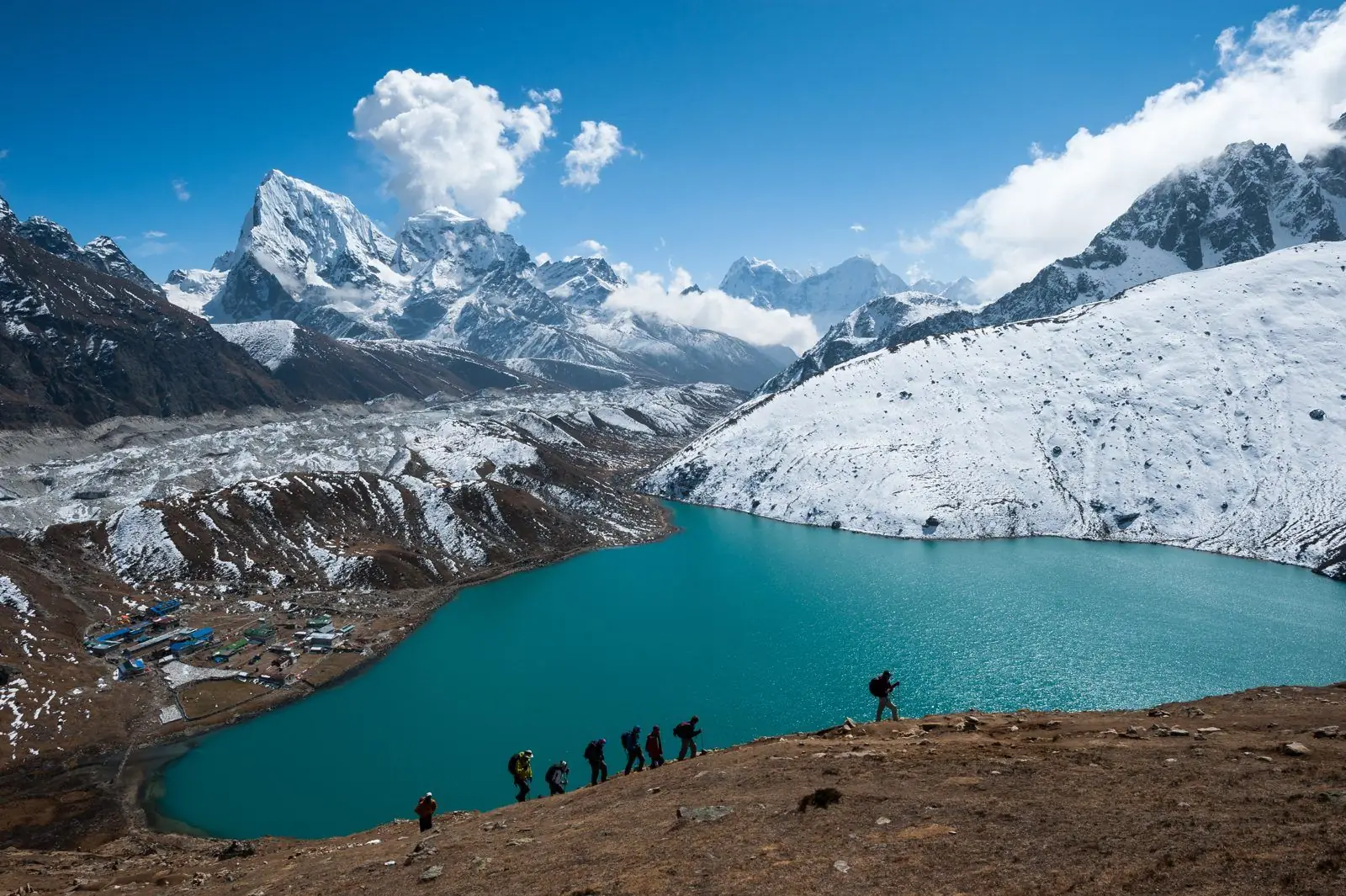
On the Everest Base Camp route, trekking completely alone is no longer an option. Under the revised TIMS provision in force since 31 March 2023, trekkers on the Everest routes must be accompanied by a licensed trekking guide and carry a TIMS card issued by a registered trekking agency. So the real choice is between a private guided trek and a group departure.
Private guided trek
You walk with your own licensed guide, and optionally a porter, at a pace and on dates that suit you. The guide handles permits through the agency, lodging, pacing and communication, and knows when a symptom needs action. This suits couples, families, older travellers and anyone who wants flexibility, and it costs more per person than a large group.
Group departure
Group treks spread the guide, transport and administration costs across more people and give you company on the trail, with fixed dates and a set itinerary. They suit solo travellers who want to share the experience. The drawbacks are less flexibility and a shared pace, so a fast walker may feel held back and a slower walker may feel rushed. Ask about maximum group size and what happens when someone needs to go down.
Solo travellers
You can still travel alone in the sense of booking on your own. Many solo travellers join an existing group, or book a guide for themselves. Either way, you walk with the guide, which is also a safety advantage when you are at altitude.
Questions to ask any operator
- Is the agency government registered, and is the guide licensed?
- What is the guide-to-client ratio?
- How are guides and porters paid, equipped and insured?
- What is the emergency plan, and who arranges evacuation?
- What happens if the group needs to split?
Which one to choose
Choose a private trek if you value flexibility and a pace set around you. Choose a group if you want to share costs and meet people. In both cases, book through a registered agency, and confirm that the TIMS card is included in the price.
How to compare the formats
The biggest differences between a private trek, a small group and a larger group are flexibility, cost and company. A private trek lets you set the pace and change the schedule, and it feels more personal, but it costs more per person. A group departure lowers the cost and gives you instant companions, while the pace is set by the slowest member and dates are fixed. A solo traveller can often join a group departure and enjoy independence on the trail while sharing the cost of the guide.
What makes a good group
Group size matters more than people expect. A small group, usually up to about ten, moves more smoothly, fits into lodges easily and gets more attention from the guide. Larger groups can be fun but face more waiting at meals and viewpoints. Ask how many guides and assistant guides are assigned, because a good ratio allows the group to split if someone needs to descend or walk more slowly.
Fit with your personality
Think honestly about what you want from the trip. If you value quiet time and are a strong walker, a private or very small group could suit you. If you like meeting people and want to share the experience, a group may be better. Families, couples and friends often choose private treks because they can set their own pace. There is no wrong choice, but choosing a format that matches your style makes the trip more enjoyable.
Good questions before you pay
- What is the maximum group size and how many guides are there?
- What happens if someone in the group needs to descend early?
- Can I upgrade to a private trek later, and what would that cost?
- How do you handle changes in dates or illness?
What our guests say
Excerpts from guest reviews of Himalayan Wonders, our parent company, on Tripadvisor.
“Garba Rai was the best I could have hoped for.”