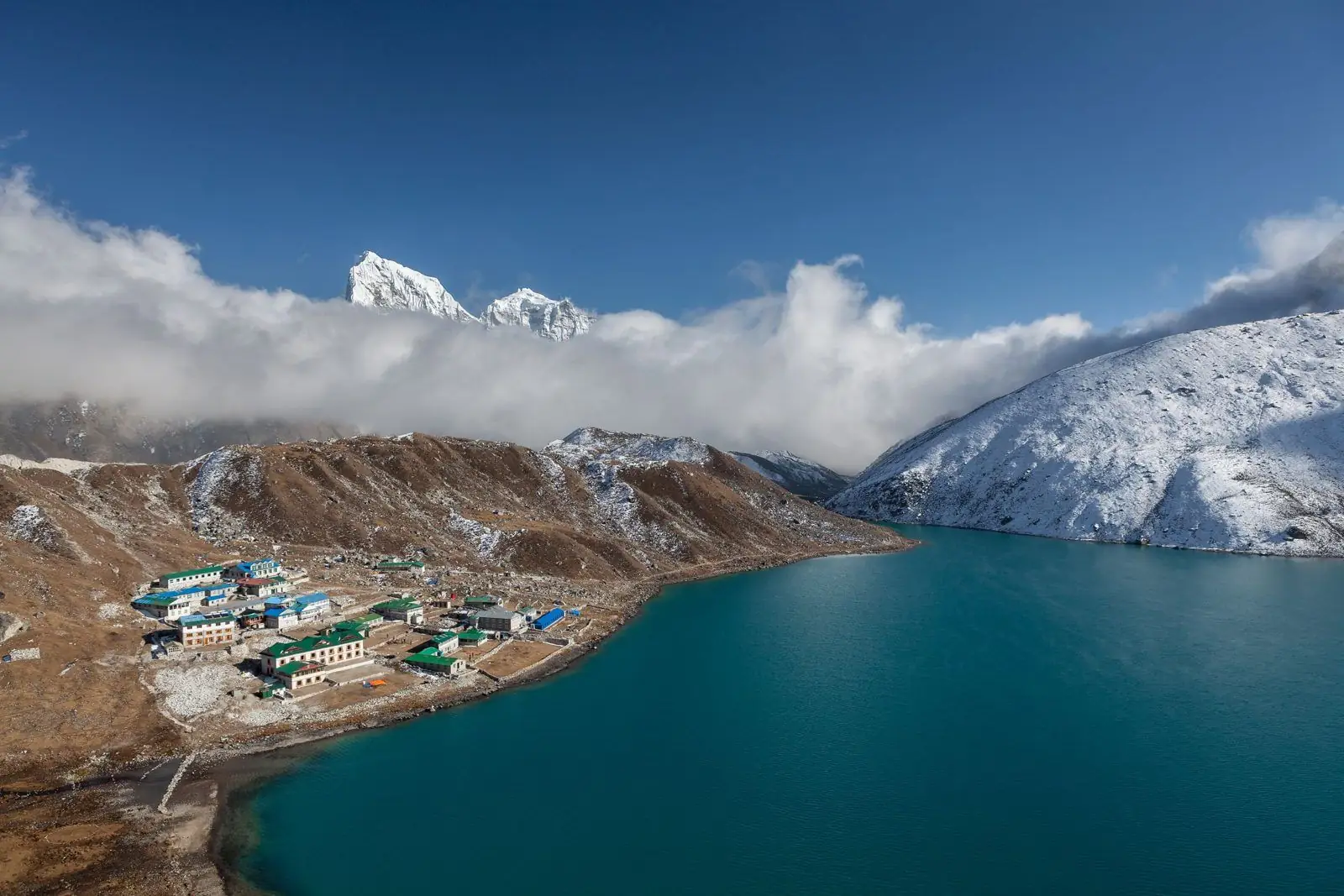
Altitude is the main risk on the Gokyo Lakes trek. The village is at about 4,790 m and the viewpoint at Gokyo Ri is at about 5,357 m. These heights are high enough to cause altitude illness in a significant number of trekkers, even if they are fit and young.
How the itinerary protects you
A good plan gains no more than about 400 to 500 m of sleeping altitude per night above 3,000 m, includes rest days at Namche and Gokyo and avoids rapid ascents. Use the rule of climbing high and sleeping low whenever you can, for example by climbing Gokyo Ri and then returning to Gokyo to sleep.
Normal responses to altitude
- Shortness of breath on climbs.
- Mild headaches in the evening.
- Disturbed sleep and vivid dreams.
- Reduced appetite.
These improve with rest, fluids and time. They are not signs of failure.
Warning signs
A severe or worsening headache, repeated vomiting, loss of coordination, confusion, extreme fatigue, breathlessness at rest or a persistent wet cough are signs of serious altitude illness. Descend without delay and seek medical help. Do not wait to see whether it improves overnight.
Daily habits
- Drink three to four litres of fluids a day.
- Avoid alcohol and sleeping pills.
- Eat regularly, focusing on carbohydrates.
- Walk slowly and take rest breaks without feeling rushed.
- Tell your guide how you feel each evening.
Medicines and equipment
Discuss preventive medicine with your doctor before you travel, since it does not replace a slow ascent. Bring pain relief, rehydration salts and personal medicines. Some groups carry a pulse oximeter, which helps guides track trends, but readings alone do not decide anything.
Insurance and evacuation
Check that your policy covers trekking above 5,000 m and includes helicopter evacuation. Share your policy number and emergency contact with your operator before the trek. Weather can delay helicopters, so early descent is always the safest first response.
Symptoms by altitude zone
Between 3,000 and 4,000 m, mild headaches and sleep problems are common. Between 4,000 and 5,000 m, breathlessness, loss of appetite and fatigue increase. Above 5,000 m, even simple tasks require effort. Keep track of how you feel each day and compare with your normal state, rather than comparing yourself with others.
A note on pulse oximeters
Pulse oximeters give oxygen saturation readings, which vary between people and are affected by cold fingers. A low reading is a prompt to check how you feel, not a reason on its own to panic or descend. Your guide will interpret it together with symptoms.
Descending to recover
If symptoms persist, descend at least 300 to 500 m and rest. Many trekkers recover rapidly and can continue after a day. Do not attempt to climb to sleep higher than the point where symptoms started.