The best months for the Gokyo Lakes trek are April and May, and October and November. These are the dry, stable seasons when the trails are clear, skies are bright and flights to Lukla run more reliably. Gokyo is high, so temperature and snow conditions matter more here than on lower treks.
Autumn: October and November
Autumn delivers the clearest mountain views, with crisp air and stable weather after the monsoon. October is the busiest month, and lodges in Gokyo and Namche can be full. By late November nights are very cold and the lakes begin to freeze at the edges. The Renjo La pass is usually clear in October and increasingly snowy as winter approaches.
Spring: April and May
Spring brings flowers in the lower valleys, longer days and slightly warmer temperatures. Afternoon cloud and wind are more frequent than in autumn, and the pass can hold more snow early in the season. Views are still excellent in the mornings. Spring is a good choice if you prefer greener scenery.
Winter: December to February
Winter is cold, dry and quiet. Nights at Gokyo can fall far below freezing and some lodges close. Snow may block Renjo La or Cho La. This season is only for well-equipped trekkers with flexible plans and warm gear.
Monsoon: June to September
Rain, cloud and landslide risk make the monsoon unsuitable for Gokyo. Flights to Lukla are often cancelled and views are poor. The upside is quiet trails, but most people regret choosing this time for their first visit.
Which month for which pass
- October is usually the safest month for Renjo La and Cho La.
- November has the clearest skies but the coldest conditions.
- April has good snow-free windows, with May warmer but hazier.
Weather tips
Mornings are the best time for views. Pack for cold nights even in warm months, and check pass conditions with your guide before the crossing day. Allow a spare day in the schedule because pass crossings depend on snow and wind. A good plan accepts that weather, not your calendar, decides when you cross.
Daylight and temperatures
Day length in October and November is around eleven hours, while in April and May it is around twelve to thirteen. Daytime temperatures at Gokyo hover around freezing or slightly above, and nights are well below. Mornings begin at minus 10 or colder in late autumn. Knowing these figures helps you decide how much warm clothing to carry.
Lake conditions
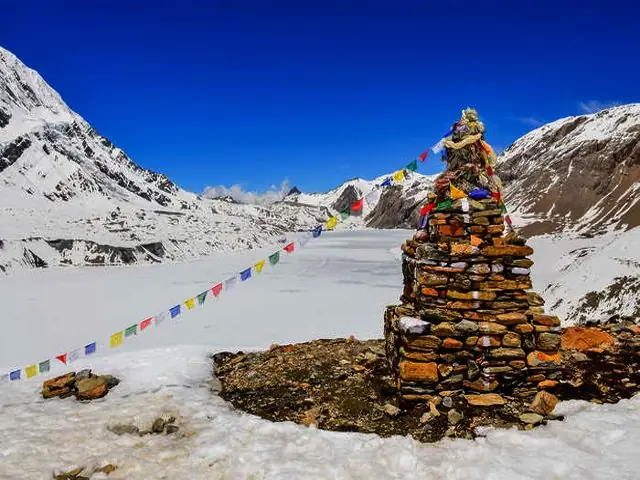
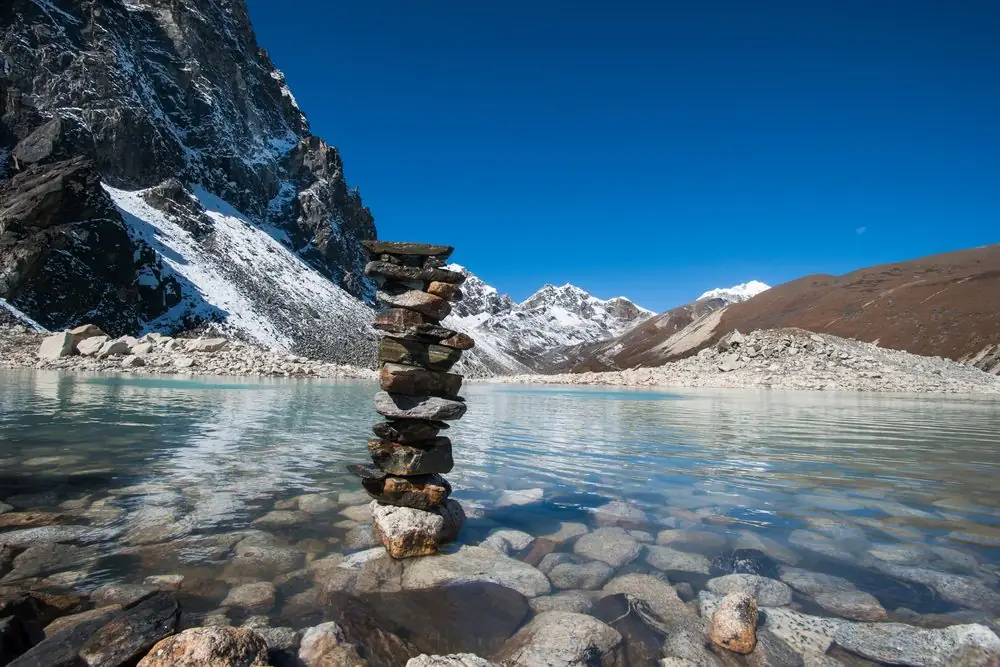
In autumn the lakes are usually ice-free or lightly frozen at the edges, showing deep blue and turquoise. In spring they may still be partly frozen, with snow on the shore. In winter they freeze solid. If you want the classic turquoise photo, October and May are the safest months.
Crowd planning
- Avoid the first two weeks of October if you want quieter lodges.
- Late April and early May are popular with Everest expeditions and trekkers.
- Early November is a good compromise of cold and quiet.