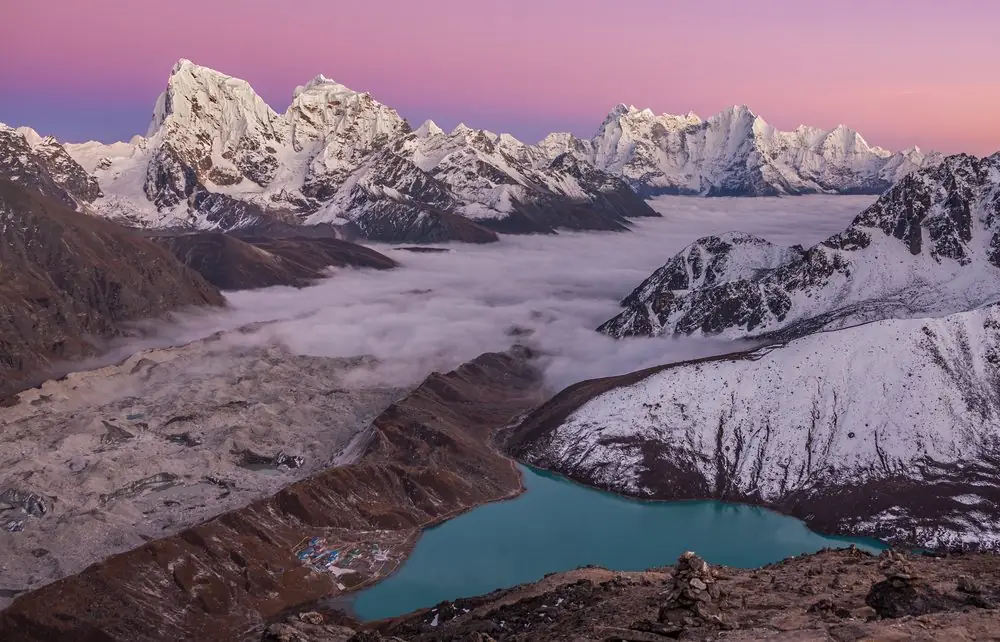
Cho La is a high pass at about 5,420 m that links the Gokyo valley with the Dzongla side of the Everest Base Camp route. It is the classic way to combine Gokyo Lakes and Everest Base Camp into a single loop without retracing steps. It is a spectacular crossing and also more serious than Renjo La.
The route
Most trekkers go from Thangnak (about 4,700 m) in the Gokyo valley up to the pass and down to Dzongla (about 4,830 m). The approach from the Gokyo side crosses a stretch of glacier with crevasses that are usually visible, then climbs steeply over rock and ice to the pass, and the descent to Dzongla is a steep, loose rocky slope. In fresh snow, the track can be hard to see. Guides decide whether it is safe each morning.
Why it is harder than it looks
The altitude is high, the climb is steep and the glacier section needs care. Ice and loose rock can cause slips, and mist can reduce visibility. Falls are rare but serious, so stay close to your guide and follow instructions. Some groups use microspikes and ropes, depending on conditions.
When to cross
- October is generally the safest month, with stable snow and rock conditions.
- April and early May can also work if the winter snowpack has melted.
- Avoid crossing after fresh snow or in strong winds.
Fitness and experience
You need good fitness, some previous altitude experience and comfort walking on uneven terrain. No technical skills are required in good conditions, but you should be comfortable with exposure and with using microspikes.
Packing for the crossing
Bring warm clothing, a windproof jacket, gloves, sunglasses, sun cream, poles and microspikes if your operator recommends them. Carry water and snacks, since there are no facilities on the pass.
Alternatives
If conditions are poor, return down the Gokyo valley and walk to Everest Base Camp via Namche instead. This costs time but not safety. A good operator will have a plan B, and you should ask what it is before you book.
Preparing the night before
Eat a hearty dinner, drink enough water, lay out your clothes and pack your bag. Check the weather forecast with your guide and decide whether to attempt the crossing. If you feel unwell, tell your guide and consider staying an extra day.
Using microspikes and poles
Microspikes help on icy sections, and poles provide stability on loose rock. Practise putting on microspikes before the pass, since fiddling with straps in cold wind is no fun. Carry them in an accessible pocket.
Descending to Dzongla
The descent is steep and loose, so take it slowly. Use your poles, keep your weight over your feet and watch for rocks dislodged by trekkers above. Dzongla is a small village with a stunning view of Cholatse and Taboche, and a hot meal waits.