




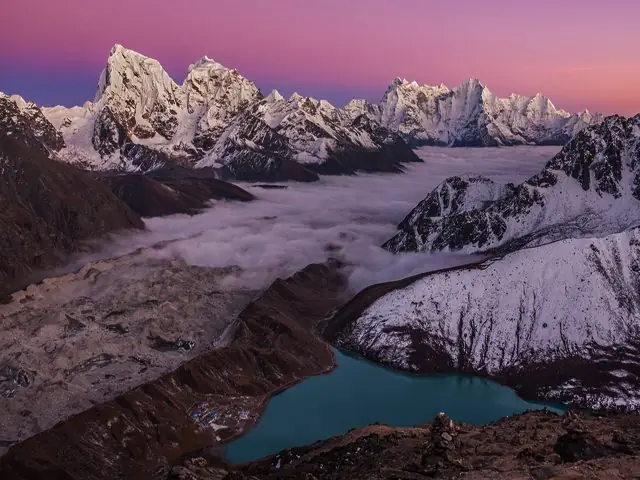
Most trekkers climb Gokyo Ri in the early morning, because the air is usually clear and still before clouds build up. Sunset can be beautiful too, but the descent happens in fading light and falling cold, so it needs more care.
Why the morning is the usual choice
Mountain weather in the Khumbu follows a pattern. Skies are often clear at first light, and cloud rises up the valleys during the day. A start before dawn gives the best chance of an open view of Everest, Lhotse, Makalu and Cho Oyu, and you are back in Gokyo for a late breakfast.
What a sunrise climb involves
Most people leave Gokyo in the dark, with a headtorch, and take two to three hours to reach the top. It is very cold at that hour, with wind on the ridge, so wear your warmest layers, a hat and good gloves. Start at a steady pace: going fast in the cold is a common cause of headaches and breathlessness.
The case for the afternoon
The sun lights the Ngozumpa glacier and the west faces of the high peaks more warmly late in the day, and photographers like that. If you have spare days at Gokyo, an afternoon climb after a clear morning is possible. Check the weather first, take a headtorch, and start the descent before the light fails.
Doing both
If you stay two nights, you can climb once at sunrise and walk by the lakes in the afternoon. A second visit to the top is only sensible if you feel well and the weather changes. Do not push for a second climb when you are tired or short of breath.
Cold, wind and clothing
Temperatures at the top are well below freezing before sunrise in spring and autumn, and the wind makes it feel colder. Carry a down jacket, a windproof shell, warm gloves and a thermos. Keep your phone and camera battery warm inside your clothes.
Safety
Stay on the main path, do not leave the group in the dark, and tell your guide at once if you have a severe headache, confusion or unsteady walking. Rest and a lower night are the cure for altitude illness, not a better view.
Plan it
Read how hard Gokyo Ri is for the effort, and the best time of year for season. The Gokyo Lakes guides cover the whole trek.


