




The short version: three of the most asked questions, answered in a line each. The rest of the page goes into detail.
- How should I acclimatise on the way to Gokyo? Take a rest day in Namche with a short walk higher, then keep the days above Dole short.
- Which symptoms mean I should not climb Gokyo Ri? A headache that will not go, nausea or vomiting, breathlessness at rest, unusual tiredness, confusion or trouble walking in a straight line are warning signs.
- How cold does it get at Gokyo? Autumn nights at Gokyo are often below minus 10 degrees Celsius, and the summit is colder in wind.
How should I acclimatise on the way to Gokyo?
Take a rest day in Namche with a short walk higher, then keep the days above Dole short. Machhermo is at about 4,470 m and Gokyo at about 4,790 m. Spend at least one full night in Gokyo before the climb, and ideally two.
Which symptoms mean I should not climb Gokyo Ri?
A headache that will not go, nausea or vomiting, breathlessness at rest, unusual tiredness, confusion or trouble walking in a straight line are warning signs. Tell your guide at once. Descending a few hundred metres usually helps, and the summit is optional.
Is it safe to walk on the Ngozumpa glacier?
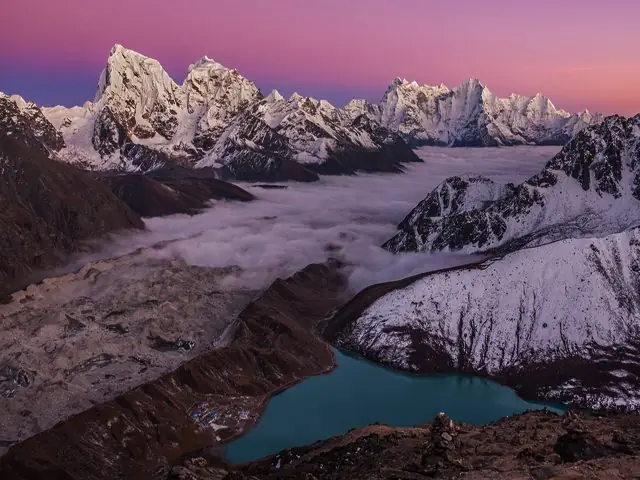
Do not walk on the glacier without a guide. The ice under the debris is unstable and crevasses can be hidden. Enjoy the view from the ridges instead, where you can see its grey, broken surface and small meltwater ponds.
How cold does it get at Gokyo?
Autumn nights at Gokyo are often below minus 10 degrees Celsius, and the summit is colder in wind. Lodge bedrooms are not heated, so bring a sleeping bag rated for cold nights, a hat and dry socks for bed.
Can I drink water in the Gokyo lodges?
Do not drink untreated tap or stream water. Boiled water is sold by the litre, and many trekkers use purification tablets, a filter or drops. Drink plenty, since dehydration makes altitude symptoms worse. Allow time to treat water before each walking day, and refill your bottle at the lodge so you start with plenty.
Is climbing Gokyo Ri at sunset a good idea?
It can be beautiful, but the descent happens in fading light and falling cold, so it needs more care. Check the weather first, take a headtorch and start down before the light fails. For most trekkers, a sunrise climb is the safer choice.
Do I need insurance for Gokyo Ri?
Yes. At this altitude you should have a policy covering trekking above 5,000 m and helicopter evacuation, as rescue can be costly. Read the exclusions carefully and check the details with your insurer or operator.


