




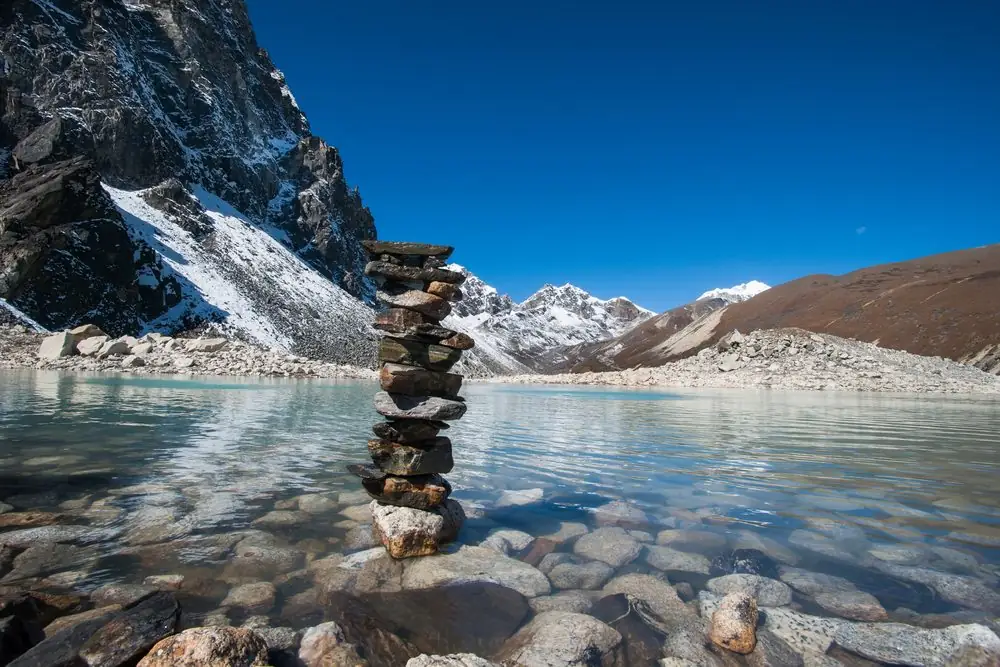
Gosaikunda is a group of alpine lakes at roughly 4,380 m in Langtang National Park, north of Kathmandu. It is sacred to Hindus and Buddhists, and it is reached on a trek of about a week that gains height quickly.
A lake that people walk to for reasons other than the view
Most Himalayan lakes are scenery. Gosaikunda is also a destination of faith. Every year, pilgrims climb to its shore to bathe, make offerings and, according to belief, wash away sins. The lake sits at roughly 4,380 m inside Langtang National Park, a little over a hundred kilometres by road from Kathmandu, which is why it has become both a holy site and one of the nearest real high-altitude experiences to the capital. Published heights differ by a few tens of metres from one source to another, so read 4,380 m as a good working figure rather than a surveyed one.
The lake cluster
Gosaikunda is not alone. A string of smaller lakes lies along the ridge to the south and west, among them Saraswati Kunda, Bhairav Kunda and Surya Kunda, and local guides will count anywhere from three to a hundred and eight depending on whom you ask and how generous the definition is. The main lake is the one you see first from the trail: a dark, irregular sheet of water in a stony bowl, with a small shrine and a few lodges on its edge. In winter it freezes over completely and stays under ice into the spring thaw.
The story behind the name
Hindu tradition says Shiva swallowed poison released during the churning of the cosmic ocean, and his throat burned. He struck the mountain with his trident, water gushed out, and the lake formed. That is why the name is often explained as a pool of the throat. A stone said to be a Shiva lingam lies under the water, and pilgrims look for it. Buddhists, especially people of Tamang and Sherpa heritage, also treat the lake as sacred, so the shore is shared by two traditions.
When pilgrims arrive
The big gathering falls on the full moon of Janai Purnima, in August by the Gregorian calendar. Thousands walk up from the Dhunche side, many in simple clothes and some barefoot, and priests perform rituals at dawn. If you want that atmosphere, go in August; if you want mountains, go in October. They are two different trips and it is wise to decide which one you are choosing before you book. See when to go for the comparison.
What the setting feels like
The landscape above Sing Gompa is open, windy and bare: low juniper, rhododendron thickets below, and a sweeping ridge of grey rock above. On clear days you can see across to the Langtang range and the Ganesh Himal, and the light on the water in the early morning is the reason photographers bother with the cold. Lodges are basic, rooms are unheated, and meals are the usual dal bhat, noodles and soup. Do not expect a view from your bed or a hot shower at the top.
How it fits with other trips
Gosaikunda is the sacred high point of two natural routes. You can go up and come back by the same road, or you can continue over the Laurebina La to the villages of Helambu. It also links to the Langtang valley by way of Syabrubesi. Read the day-by-day itinerary for the practical plan, and the difficulty guide before you decide on days.
Plan it
Our team plans Gosaikunda as part of the Holy Lakes of Gosainkunda package. Tell us your dates and whether you want the pilgrimage atmosphere or the quiet season, and we will shape the itinerary around that.


