




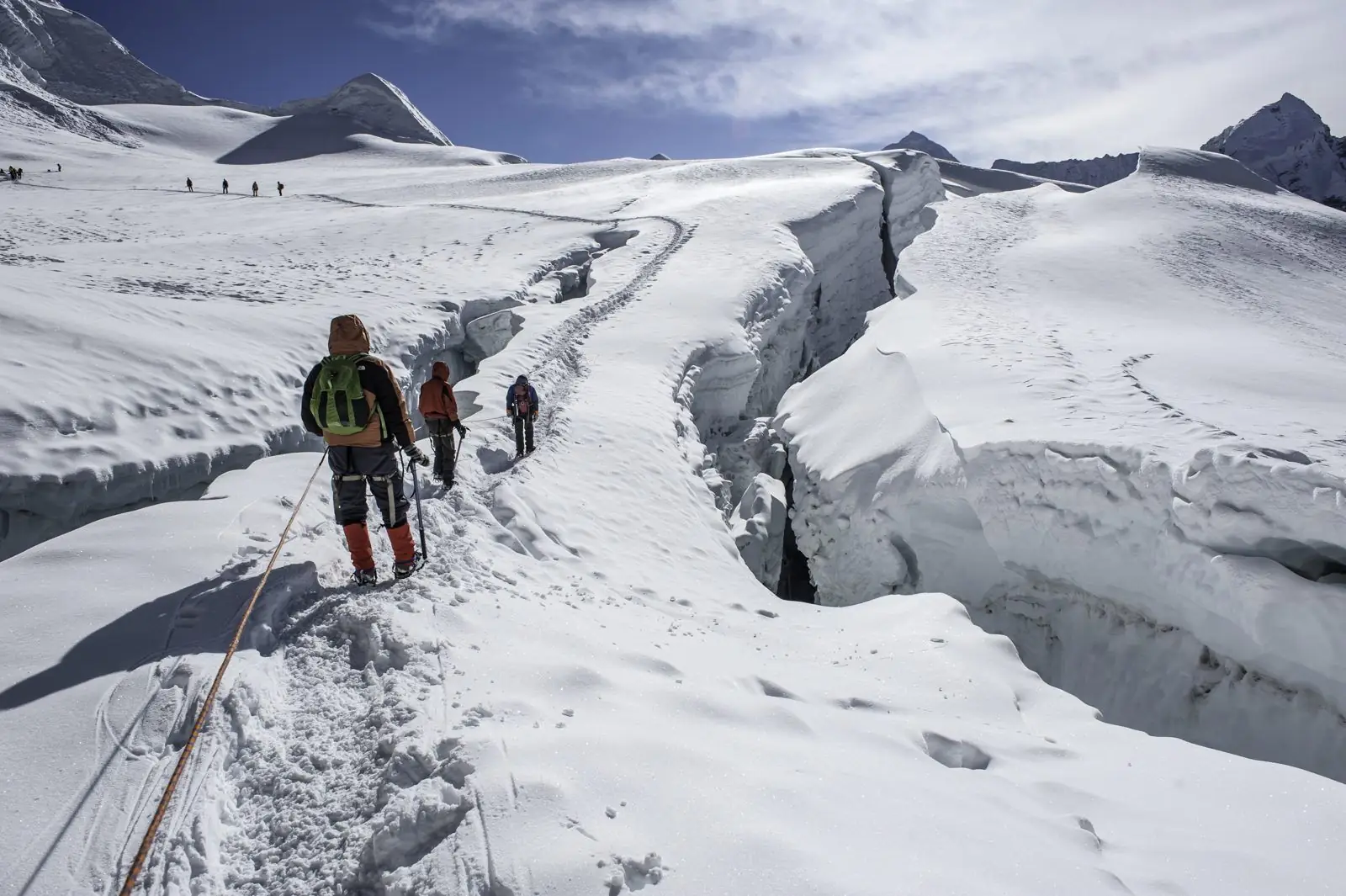
The short version: three of the most asked questions, answered in a line each. The rest of the page goes into detail.
- What experience do I need before Himlung Himal? Experience on trekking peaks like Island Peak or Mera Peak and a good level of fitness are the usual starting point.
- When should I aim for the summit within the season? Experienced teams aim for the middle of each window: the first two weeks of May in spring and the first half of October in autumn.
- Why do I need reserve days on Himlung Himal? A single storm can close the route for several days, and late October storms can bring heavy snow.
How long does a Himlung Himal expedition take?
Plan for about 28 to 30 days from Kathmandu. This allows a gradual approach to Nar and Phu, acclimatisation, base camp and higher camps, a summit push and spare days. Heights and timings are approximate, so confirm the plan with your operator.
What experience do I need before Himlung Himal?
Experience on trekking peaks like Island Peak or Mera Peak and a good level of fitness are the usual starting point. Himlung is a serious high-altitude climb, not a beginner mountain. A strong guide team is needed.
Which months are best for Himlung Himal?
April to May and September to October. The Nar Phu side is in a rain shadow, which allows some summer attempts, but winter is too cold and snowy. Each season has trade-offs, so ask your operator about your dates.
When should I aim for the summit within the season?
Experienced teams aim for the middle of each window: the first two weeks of May in spring and the first half of October in autumn. Always leave reserve days, because a single storm can close the route for several days.
Why do I need reserve days on Himlung Himal?
A single storm can close the route for several days, and late October storms can bring heavy snow. Reserve days also cover delays on the road and illness. The 28 to 30 day plan includes them, so do not trim them to save time.
Can I see Nar and Phu villages as part of the climb?
Yes. The approach passes stone villages, monasteries and mani walls, and you spend nights at villages like Phu or Nar to adjust to altitude. The people follow a Tibetan Buddhist tradition, so ask your guide about local etiquette.
Is Himlung a good choice as a first 7,000 m peak?
It is often chosen that way because the route is mainly snow and glacier rather than steep rock, and the approach is long and gradual. It still needs strong acclimatisation and previous experience, so treat it seriously.


