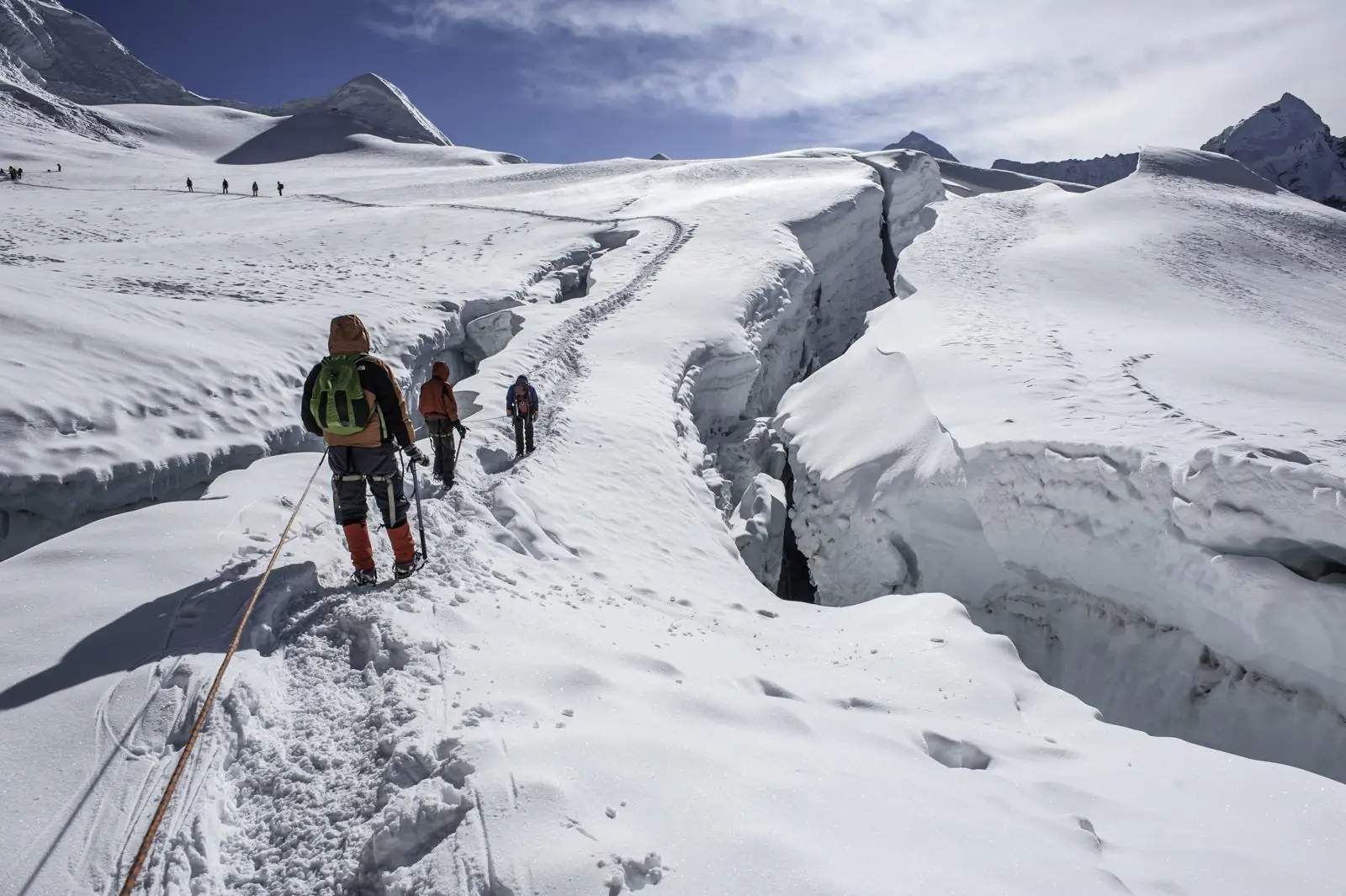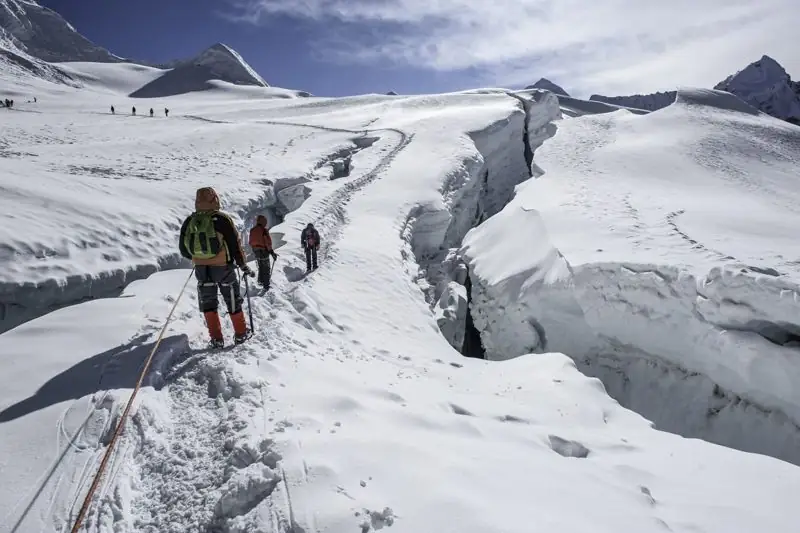
The mountain can be approached with one or two stages above the last village. Which option is used depends on the operator, the season and the group's condition.
Base camp
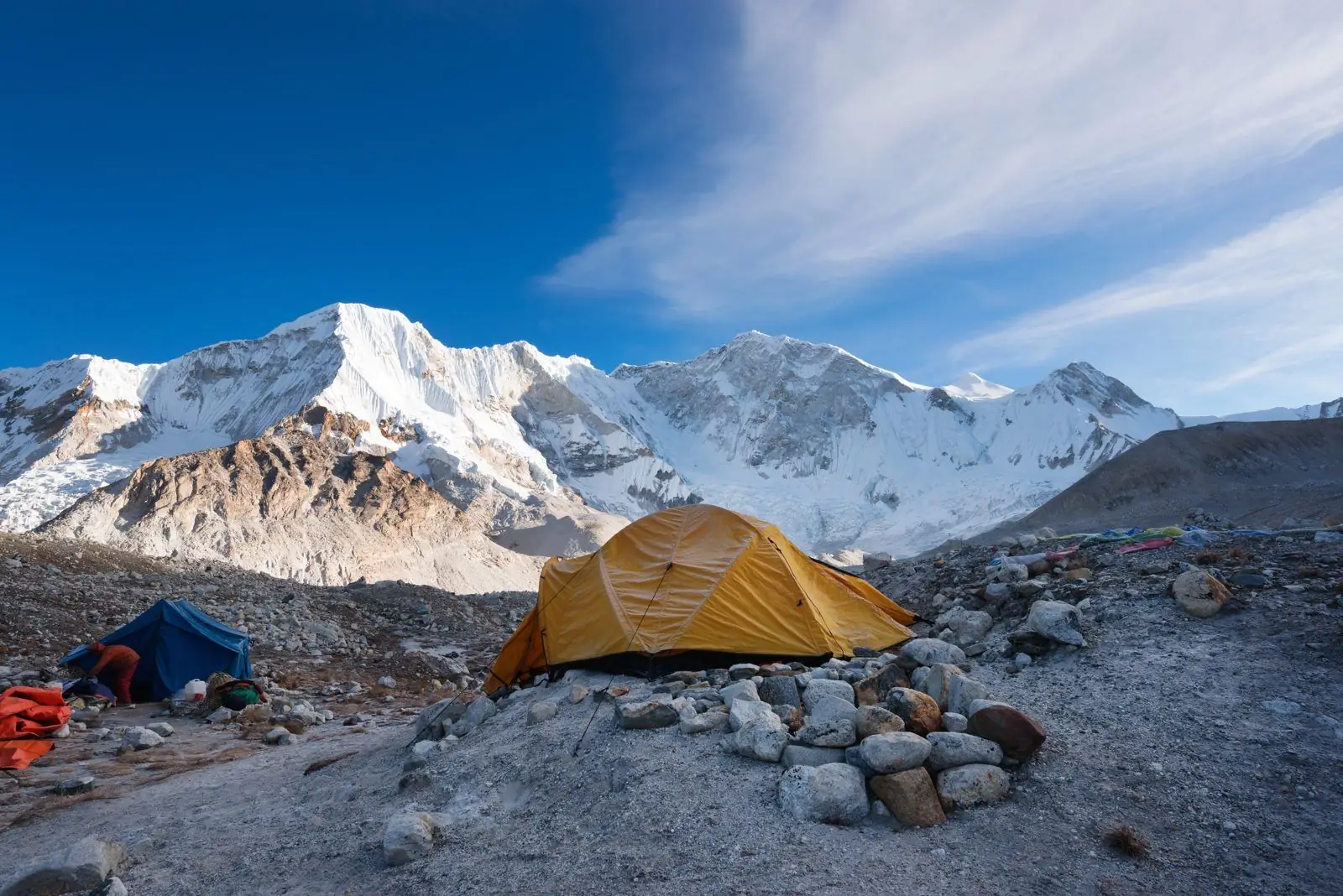
Island Peak base camp lies in a rocky valley, a few hours above Chhukhung. Tents and a kitchen tent are set up by your team, and a skills session is usually held here. It is a cold, bare place, but it is the standard point for preparation.
High camp
A higher camp sits on the rocky ridge above, closer to the glacier. Using it shortens the summit day, since you start higher and with less distance to cover. The downside is another night at a high and often windy camp, with poor sleep and limited comfort.
Which is better?
Many groups use a high camp in autumn and spring to improve the chance of success, while others go directly from base camp in a long, early push. The decision depends on experience, weather and the number of days available. Climbers who sleep poorly at altitude often prefer to start from base camp to limit nights at height.
What to expect at camp
- Tents shared with another climber, with sleeping mats provided in most arrangements.
- Hot meals and drinks prepared by the kitchen team.
- Cold nights, so keep warm clothing and a hot water bottle.
Staff
Sherpa guides and kitchen staff support the camps, and tips are customary at the end of the programme.
We explain the camp plan in your itinerary when you enquire.
Daily life at base camp
Base camp is a simple tented camp with a dining tent, sleeping tents and basic toilet arrangements. Days are short and quiet: a hot drink on waking, a briefing, gear checks, a skills session and early meals. You may share a tent with another climber and should bring a warm sleeping bag and a few comforts for cold evenings, such as a book or music.
Preparing for the push
The afternoon before the summit attempt is for packing, charging devices and resting. Lay out clothing so you can dress in the dark, check your harness, crampons and helmet and drink plenty of water. Early sleep may be hard because of excitement and altitude, but lying down and resting still helps.
Weather and the plan
The guide leader may adjust the departure time or even the day depending on wind, temperature and recent snowfall. This flexibility is a sign of good management, not indecision. If conditions are poor on your planned day, a spare day gives you another chance, which is why a bit of slack in the itinerary pays off.
High camp in more detail
High camp sits on a rocky ledge above base camp, a few hours' climb at about 5,500 metres. Tents are small, the ground is uneven and the night is cold and windy. Many climbers sleep poorly. The benefit is a shorter summit day. If you choose high camp, bring a warmer sleeping bag, extra layers and patience.
Skills practice at base camp
Your guide will usually run a short training session at base camp, covering the use of crampons, the ascender and rope handling. Pay attention. The practice also lets the guide judge your technique, so ask questions and repeat anything you are unsure about.
Food and hydration
- Meals at camp are prepared by the cook crew and are generally simple and filling.
- Expect porridge, eggs, noodles, rice, soup and tea.
- Drink as much hot fluid as possible, since dryness at altitude is dehydrating.
- Carry your favourite snacks for the summit day.