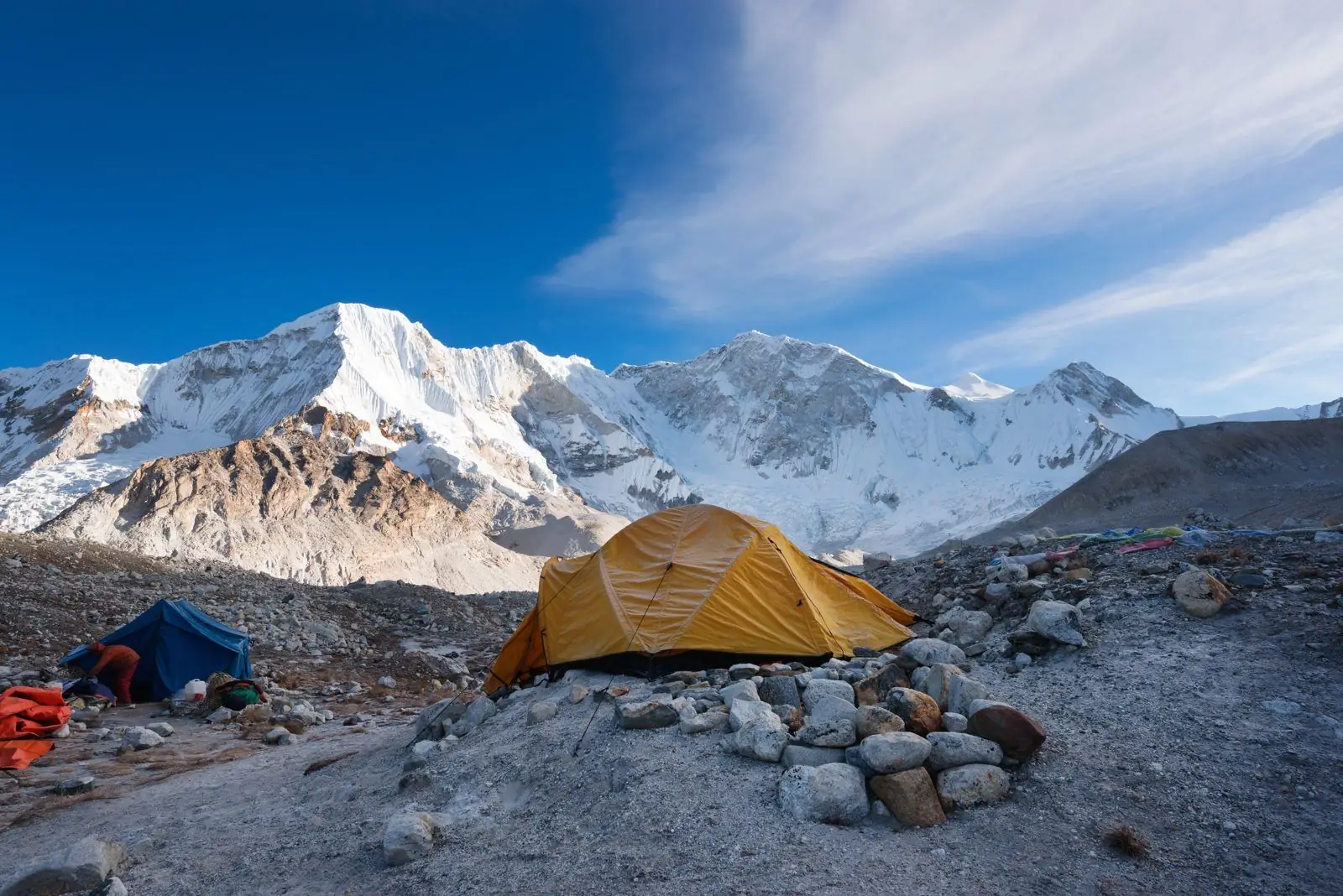
Summit day is the part that most climbers remember. It starts early, in darkness, and tests both your fitness and your patience.
Early start
You wake in the middle of the night, eat a light breakfast, check equipment and set off with headlamps. Cold and thin air make everything slower, so do not rush your preparation.
Rock and moraine
The first part is a steep, rocky path or scramble with loose stones. Take your time, and keep close to your guide to avoid dislodging rocks onto others.
The glacier
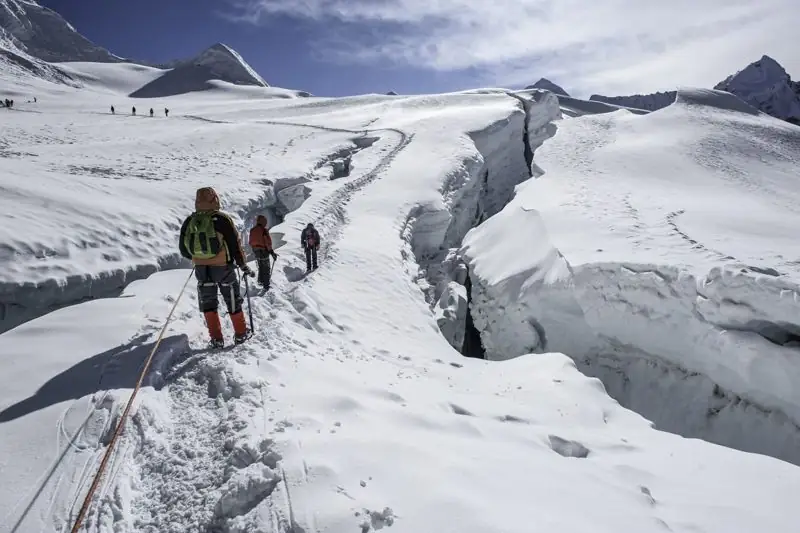
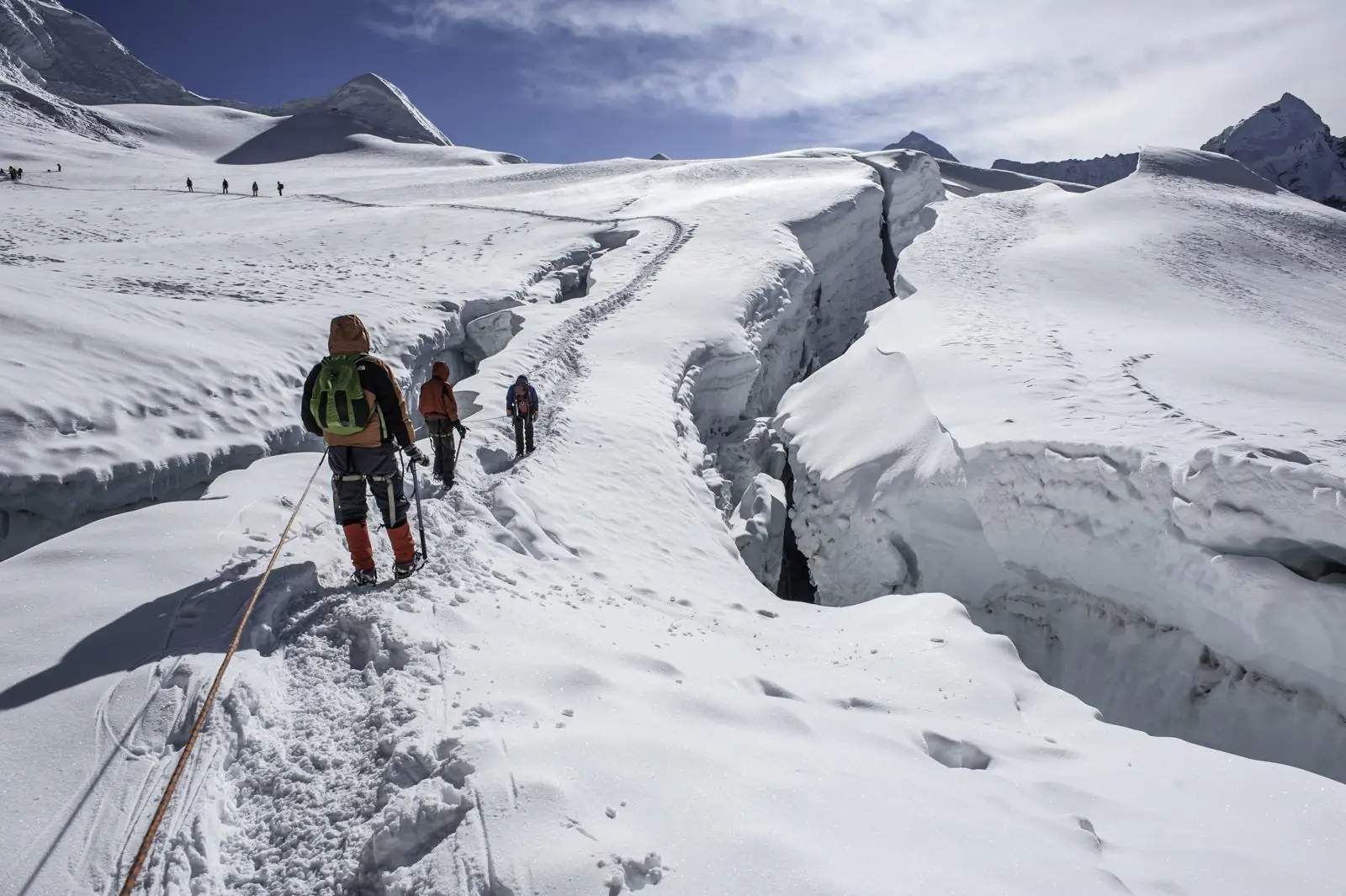
At the glacier, you put on crampons and rope up. Crevasses may be crossed by ladders or snow bridges, depending on the season. The guide chooses the route and sets protection.
The headwall
The final climb is a steep slope of snow and ice, often with a fixed rope. You use a jumar to ascend, and you move in short steps with rests. It is physically demanding and can feel long. Wind and cold make a difference at this stage.
The summit ridge
Above the headwall, a narrow ridge leads to the top. Views of surrounding giants can be extraordinary. You do not stay long, because the descent also takes time.
Descent
You return by the same route, often with abseils on the steep section. Many accidents happen when people are tired, so stay focused.
Turn-around times
Guides set a turn-around time, and respect it even if the summit seems close. Your safety and the group's safety come first.
What to eat and drink
Eat what you can at the early breakfast, even if appetite is low; tea, porridge and simple carbohydrates work for many climbers. Carry an insulated bottle or hydration system that will not freeze, plus snacks you can reach with gloves on. Sip little and often. Dehydration quietly worsens headaches and fatigue, and it is easy to forget in the cold.
Keeping your hands and feet warm
Cold extremities cause more turn-backs than almost anything else. Wear a thin liner glove under a warm outer glove, carry a spare pair in your pack and keep hand warmers handy. Boots should fit with room for toes to move, with a warm sock layer and no tight laces. Tell your guide at once if fingers or toes lose feeling.
The rhythm of the day
Summit day usually breaks into sections: a steady rocky climb in the dark, a break at the glacier edge to put on crampons and rope up, the steep headwall and the final ridge. Expect pauses, queues at the fixed ropes and a rest at the top for photos. The descent may feel long and tiring because attention flags, so keep concentrating until you are back at base camp.
- Pack your headlamp, spare batteries and sunglasses within easy reach.
- Have a small snack and water within arm's reach during the climb.
- Follow every instruction from your guide on pace and spacing.
Hour-by-hour timeline
A typical timeline begins at about 11 pm or midnight with tea and breakfast, departure from base camp or high camp by 1 to 2 am, a rocky ascent for two to three hours, crampons on at the glacier edge at about 5,500 metres, the headwall at dawn, the summit around 8 to 10 am, and a descent to base camp by early afternoon. Total time is roughly 9 to 12 hours depending on pace and conditions.
Teamwork and communication
You will be roped to your guide or another climber on the glacier, so clear communication matters. Learn the basic commands, such as stop, slow and rope tight, and keep a steady pace. Call out if you feel unwell or if gear is loose. Teams that communicate well move faster and more safely.
Mental strategies
- Break the climb into short sections and focus on the next hundred metres.
- Breathe with your steps and avoid looking too far ahead.
- Think of the descent as part of the climb, not an afterthought.
- Celebrate small milestones, such as reaching the crampon point.