




The Monkey Temple is the popular name for Swayambhunath, an ancient Buddhist stupa on a hill about 3 km west of Thamel in Kathmandu. It is reached by a stairway of about 365 steps, takes one to two hours to visit and is best at sunrise or late afternoon.
Why it is called the Monkey Temple
Troops of rhesus macaques live on the wooded hill and around the shrines, and they have been there for as long as anyone can remember. Local tradition calls them holy. The story is that the bodhisattva Manjushri, who is said to have drained the lake that once filled the Kathmandu Valley, let his hair grow long here, and that the lice in it turned into monkeys. The proper name, Swayambhu, means "self-arisen".
What you will see
The centre of the site is a white dome topped by a gilded tower painted with the eyes of the Buddha looking out in four directions. The curl between the eyes that looks like a question mark is the Nepali numeral one, a sign of unity. Around the dome are prayer wheels, small shrines, a large gilded thunderbolt (vajra) at the top of the eastern stairs, the Harati temple, which is visited by both Buddhists and Hindus, and monasteries where you may hear monks chanting.
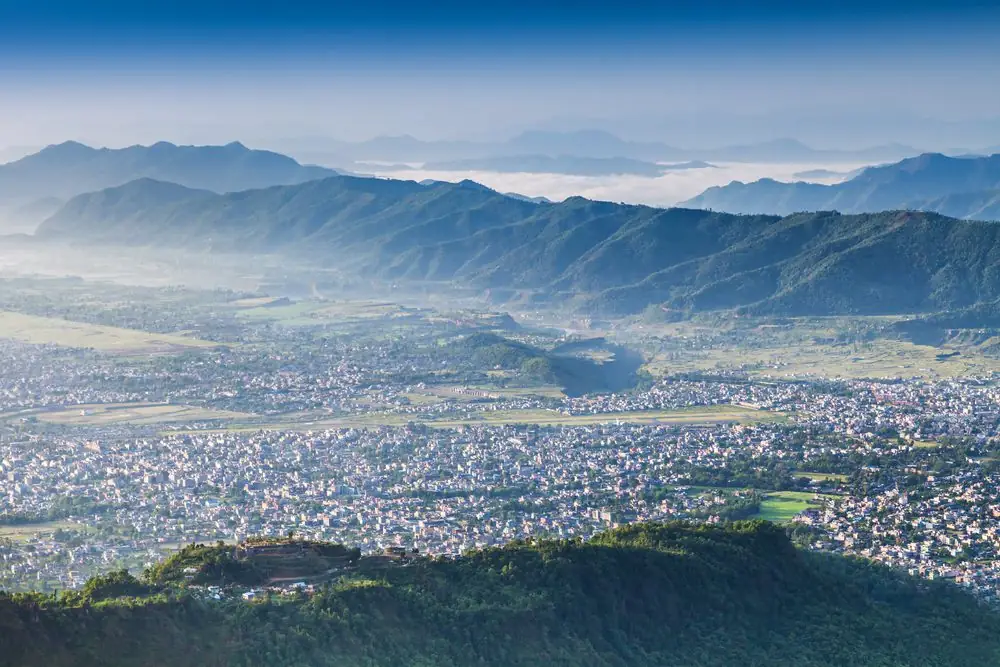
On a clear morning the terrace gives a wide view of the whole Kathmandu Valley, with the snow peaks of the Langtang and Ganesh ranges to the north.
The steps and the easier way up
The classic approach is from the east, up a steep stone stairway of about 365 steps through trees, past painted Buddhas and a great many monkeys. It takes 10 to 20 minutes at a steady pace and is good gentle exercise before a trek. If you prefer not to climb, vehicles can drive to a car park on the west side, which leaves only a short flight of steps.
How to get there
From Thamel it is about 3 km. A taxi takes 10 to 20 minutes depending on traffic, and many visitors walk it in 35 to 45 minutes through the old streets and across the Bishnumati river. Ride-hailing apps work in Kathmandu and are usually cheaper than street taxis. Ask to be dropped at the eastern stairs if you want the full climb.
Best time to visit
Early morning, from about six to eight, is the best: local people walk round the stupa clockwise, butter lamps are lit, and the air is clearest for the view. Late afternoon to sunset is the second choice, with warm light over the city. The middle of the day is busier and hotter. The site is open through the day, and the stupa is lit in the evening. On Buddha Jayanti, the full moon of April or May, it is crowded and festive.
Entry fee and rules
Foreign visitors pay a small entry fee at the gate, around NPR 200 at the time of writing, with a lower rate for SAARC nationals including Indians. Fees change, so carry some small notes. Walk clockwise round the stupa and the prayer wheels, dress modestly, ask before photographing people at prayer, and take off shoes where asked.
Living with the monkeys
They are wild animals that are used to people. Do not feed them, do not carry food or drinks in your hand, keep bags zipped and do not stare at or tease them. Hold children's hands on the stairs. If one grabs something, let it go and do not try to pull it back. Bites are rare, and a bite or scratch needs prompt medical advice.
How it fits round a trek
Swayambhunath is an easy half-day on your arrival day or the day before a flight to Lukla or a drive to Pokhara. Many people pair it with Kathmandu Durbar Square, which is about 2 km away, in one morning. See famous temples in Kathmandu and Kathmandu before and after your trek.
A short history
Swayambhunath is among the oldest religious sites in Nepal. An inscription records work here in the 5th century, and the place was almost certainly holy before that. The stupa has been repaired and regilded many times over the centuries, most recently after the earthquake of 2015, which damaged several of the smaller buildings round it while the main dome stood. In legend the hill was an island in the lake that once filled the valley, and a lotus that bloomed there gave out a light that was "self-arisen".
What else is on the hill
Give yourself time to walk beyond the main terrace. On the western side there is a second, smaller stupa, a row of shrines, a large pond with a Buddha figure where visitors throw coins for luck, and a quiet path that circles the whole hill past prayer wheels and rock carvings. Three very large gilded statues stand in a park at the western foot of the hill. Small shops near the top sell prayer flags, singing bowls and paintings, and prices are open to polite bargaining.
Common questions
Where is the Monkey Temple in Nepal?
On a hill in the west of Kathmandu, about 3 km from Thamel. Its real name is Swayambhunath.
How many steps are there at Swayambhunath?
About 365 on the main eastern stairway. A road on the west side avoids most of them.
Is the Monkey Temple Hindu or Buddhist?
It is a Buddhist stupa, and it is also revered by Hindus. Shrines of both faiths stand side by side on the hill.
How long does a visit take?
One to two hours on the hill, plus travel. Allow half a day if you combine it with Durbar Square.
Heights, dates, fees and rules are approximate and can change, so confirm the current details with us before you book.


