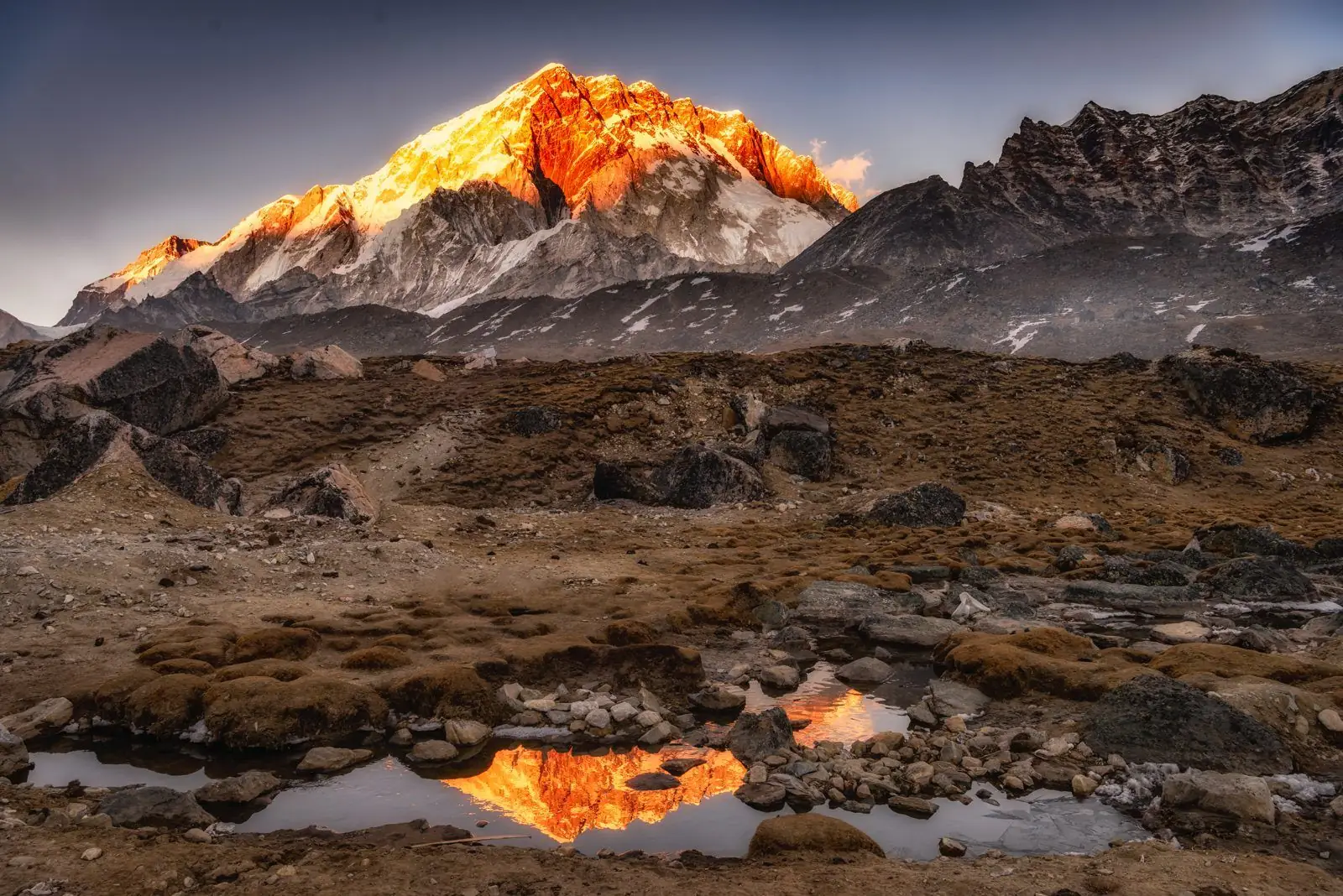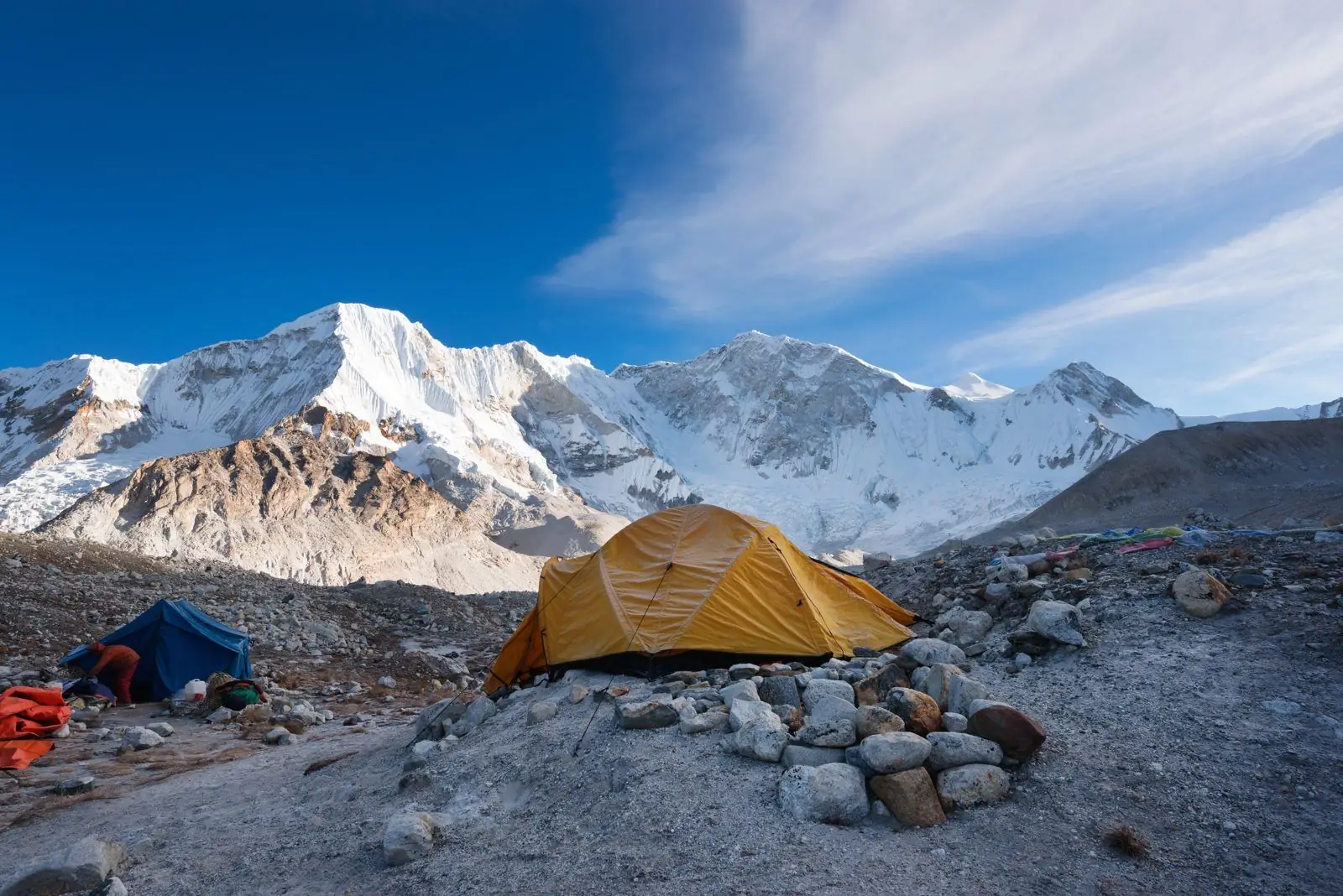
Lobuche East is one of the trekking peaks of the Khumbu, rising above the Everest Base Camp trail. It is more technical and more exposed than its neighbours, and it is often chosen by climbers who want a step up in difficulty.
What makes it harder
- Steeper terrain: The climb includes a rocky ridge and steep sections of snow and ice, often with fixed ropes.
- Exposure: Parts of the route have drops on either side, which can be intimidating.
- Altitude: The summit is above six thousand metres.
- Long summit day: The push is long and cold, with a descent that needs full concentration.
Skills used
You will use crampons, an ice axe, harness and ascender, and you will probably abseil on the way down. Some rock scrambling is involved. Time spent practising before the trip, and a skills session with your guide at base camp, make a real difference.
Fitness
A strong endurance base is necessary, with the ability to stay focused after many hours. Experience on a lower peak, a winter hillwalking season or a mountaineering course is a useful preparation.
Who it suits
Lobuche East suits fit climbers who are comfortable with heights and have some previous experience with ropes and snow. It can be a first six-thousand-metre peak for a well-prepared person, but Island Peak or Mera Peak are often considered gentler options.
Honest expectations
Summit success is never guaranteed. Weather, snow conditions and acclimatisation play major roles.
Tell us your experience and we will advise.
Why it feels more serious than a trek
Lobuche East involves steep, exposed ground, rope work and a summit day that tests concentration as well as fitness. The rocky ridge and the snow and ice sections require focus and calm movement. Climbers who have only trekked before often find the shift in mindset as challenging as the physical effort.
The shared route
Because Lobuche East is climbed in the Everest region, the approach is popular and the trail busy. Lodges at Lobuche and Dzongla offer a comfortable place to rest before moving to base camp. The crowds on the trail may fall away at base camp, but you may still share the route with other teams.
How to prepare your mind
Expect discomfort, cold and some fear. Prepare by practising scrambling, rope handling and walking in crampons so that the movements feel natural. A calm, steady attitude helps more than bravado.
- Practise on steep, uneven terrain before departure.
- Rehearse emergency procedures with your guide.
- Pack a warm hat, balaclava and goggles for the ridge.
A look at the route
Lobuche East rises to about 6,119 metres above Lobuche village. The route begins with a steep rocky approach to a high camp or direct from base camp, climbs a snow and ice ridge and ends in a final summit slope. The steepness varies with conditions. Fixed ropes are normally in place on the harder sections, and climbers use an ascender and harness.
Exposure and mindset
The ridge is narrow in places, and climbers may feel exposed. This can be unnerving for people who are not used to heights. A calm mind, deliberate steps and trust in your guide are crucial. Practise on steep terrain before you go so that the sensation is not new.
Weather and timing
Winds can be strong on the ridge, particularly in the afternoon. Summit day starts early to take advantage of calmer conditions and firm snow. If the wind rises, your guide may turn the group around. This is a normal decision, not a failure.