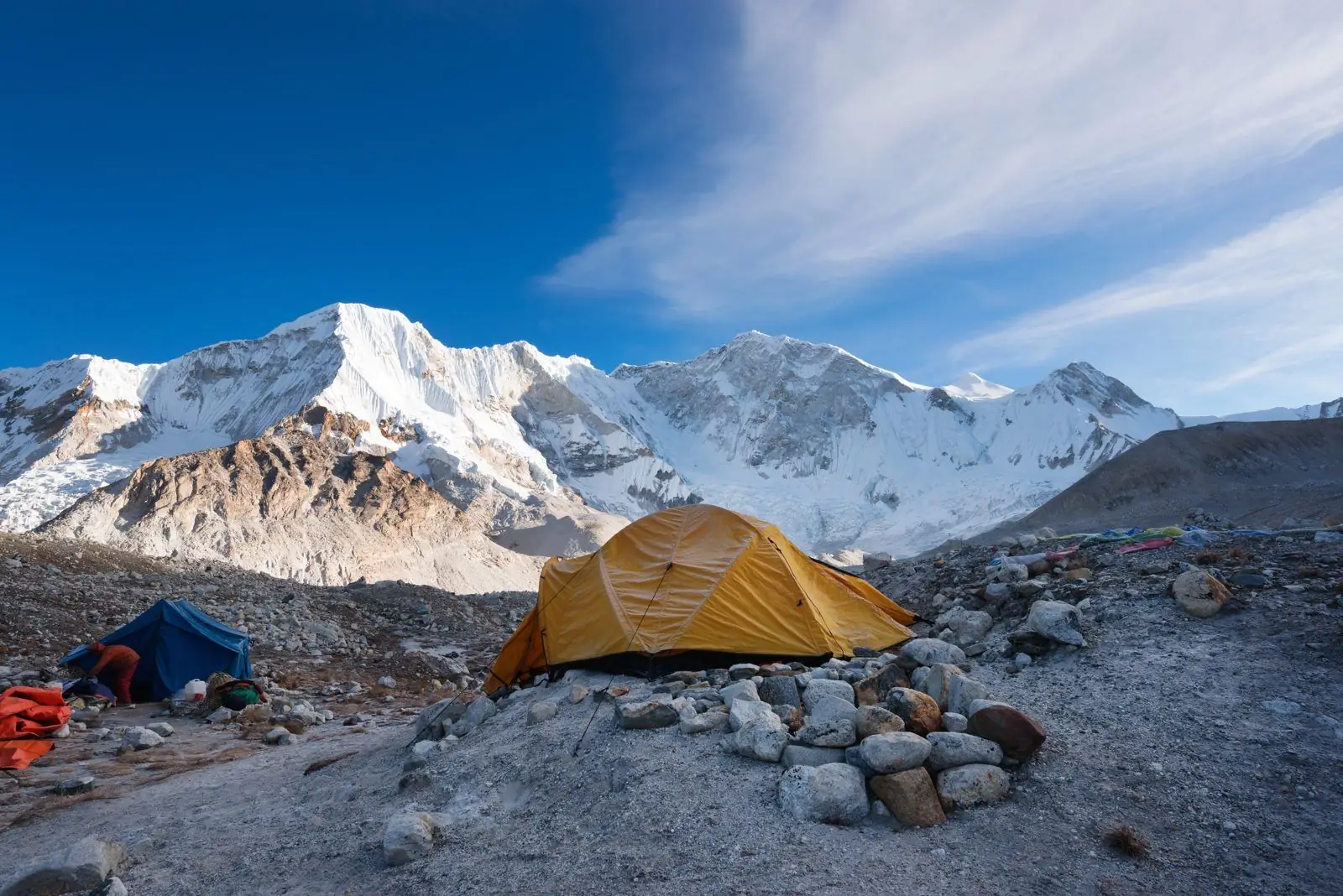
Most Lobuche East programmes use two camps above the village of Lobuche: a lower base camp and a higher camp closer to the rocky ridge. The choice depends on weather, the group and the operator's style.
Base camp
Base camp is a rocky site a short walk above Lobuche village. Your team sets up tents, a dining tent and a kitchen. A skills practice session is usually held here, covering ropes and crampons. It is a good place to check your equipment and rest.
High camp
A higher camp sits on a ridge below the steeper climbing. Using it shortens the summit day, but it means a night in a cold and exposed place, where sleep is often poor. The ground is rocky, and tents are small.
Direct from base camp
Some groups go straight from base camp, with a very early start. This avoids a night at high camp but makes the summit day longer and more tiring.
What to expect
- Cold nights, so use a warm sleeping bag and keep a spare layer handy.
- Simple hot meals prepared by your team.
- Limited space and no washing facilities.
The decision
Your guide will choose based on weather, snow conditions and how the group is acclimatising. Be ready for the plan to change.
Staff
Guides and kitchen staff support the camps, and tips are customary at the end of the programme.
Choosing your camp strategy
Some itineraries use a high camp to shorten summit day, while others go directly from base camp. A high camp means a colder night and more effort carrying gear, but a shorter push. Direct climbs are longer but offer a more comfortable night before.
Life at camp
Expect basic tents, simple meals and cold evenings. A warm sleeping bag, a thermal bottle and layers make a big difference. Rest and hydrate whenever possible.
Decision making
Your guide will weigh weather, health and team strength when choosing the plan. Trust the process and stay flexible.
Daily life at base camp
At base camp you may share a tent with another climber. Days are spent resting, checking gear and practising skills. Evenings are cold, and you will appreciate warm clothes and a hot water bottle. Eat and drink well, and keep your gear organised.
Why some prefer a high camp
A high camp shortens summit day and reduces the time at the most exhausting stage. It is colder and more basic, and carrying gear up is hard work. Climbers who sleep poorly at altitude may prefer to stay at base camp instead.
Communication
Staff may use radios or satellite phones for safety and forecasts. Ask how emergencies are handled and what equipment is available.