Because Lobuche East is more technical than some other trekking peaks, preparation should include skills as well as fitness.
Endurance and strength
Build an aerobic base with regular cardio, and add long hikes with a loaded pack. Include leg and core strength sessions: squats, lunges, step-ups and planks. Aim for steady progress over several months.
Scrambling and exposure
Spend time on easy rock or mountain paths with some exposure, so that heights become familiar. A guided scrambling day or an indoor climbing wall can build confidence.
Rope skills
- Learn to wear a harness correctly and tie in.
- Practise using an ascender on a fixed rope.
- Learn to abseil with a belay device under supervision.
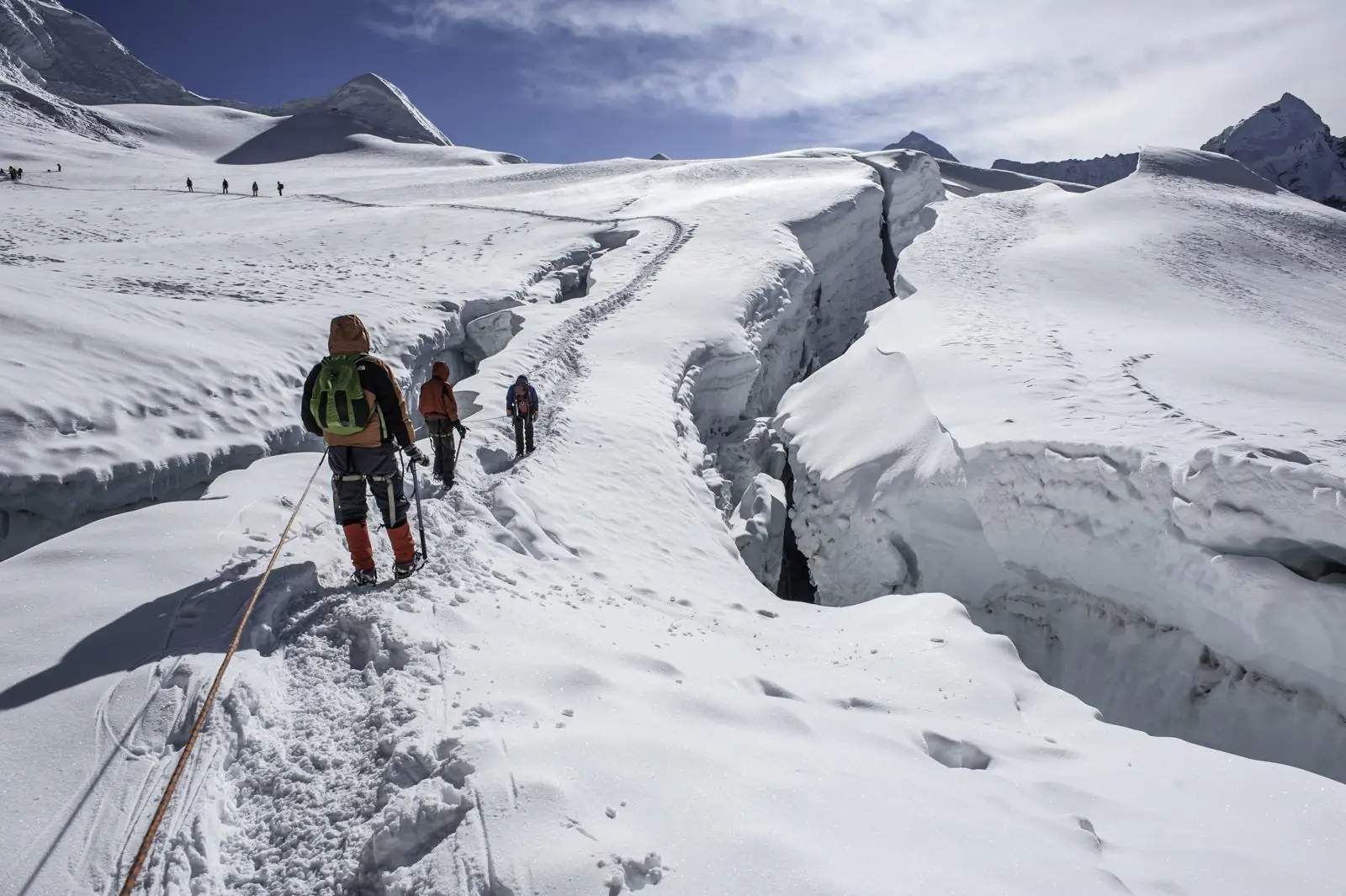
- Practise walking in crampons on snow or on a training site.
Experience that helps
A previous trek at altitude, such as Everest Base Camp, plus time on a lower snow peak, provides valuable background. A mountaineering course is excellent preparation.
Timeline
Four to six months of regular training is a sensible target. Begin with a medical check and adapt the plan to avoid injury.
Mental preparation
The climb needs calm under pressure and the discipline to follow your guide's instructions. Practise staying focused during long, tiring days.
Do not skip
Training for descent is as important as for ascent. Strong legs reduce the risk of errors when you are tired.
Building mountain confidence
Time on steep terrain builds comfort. Look for scrambling routes, via ferrata, indoor climbing or a mountaineering course. These experiences make the exposed ridge less intimidating.
Cardio and strength together
Combine long walks, stair climbs and strength work for legs and core. Practise carrying a pack and moving steadily for many hours.
Plan ahead
Start training several months before travel, include rest days and avoid injury. Consistency matters more than intensity.
A suggested weekly programme
Two aerobic sessions, one strength session, one long hike and a rest day make a balanced week. As the trip approaches, add back-to-back hikes and sessions with a loaded pack. Include scrambling or climbing practice if possible.
Skill courses
A short mountaineering or alpine course teaches rope management, crampon use and self-arrest. This knowledge builds confidence and makes summit day safer. If a course is not possible, practise with an experienced friend.
Staying injury-free
Avoid overtraining, stretch regularly, and treat niggles early. If an injury occurs, consult a physiotherapist and adjust your plans. It is better to arrive healthy and slightly under-trained than injured.