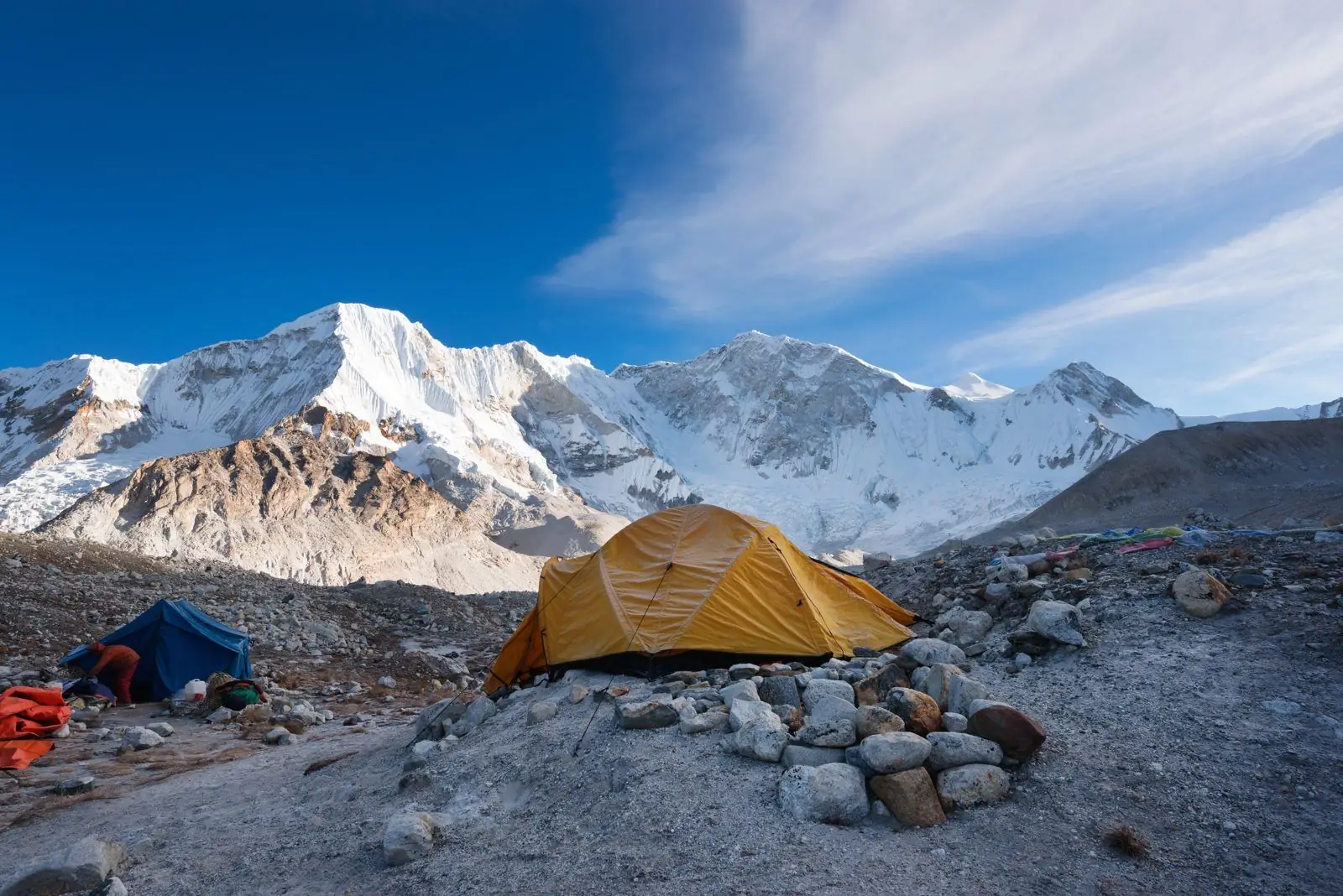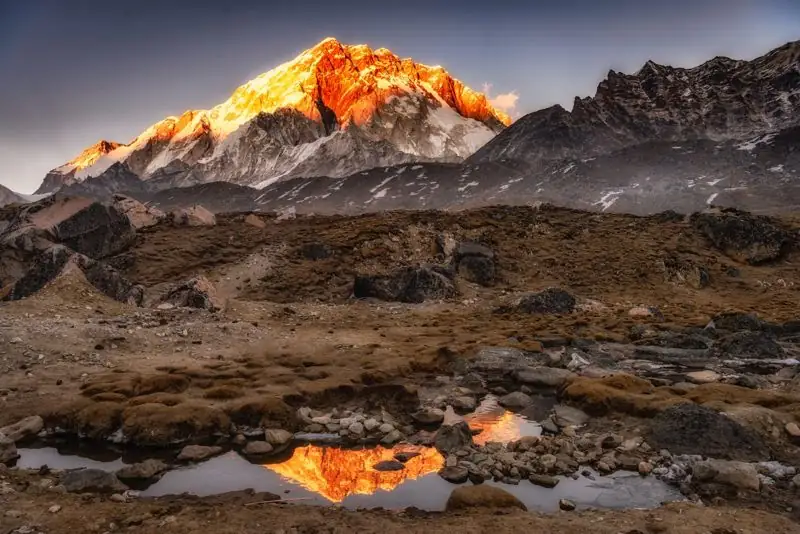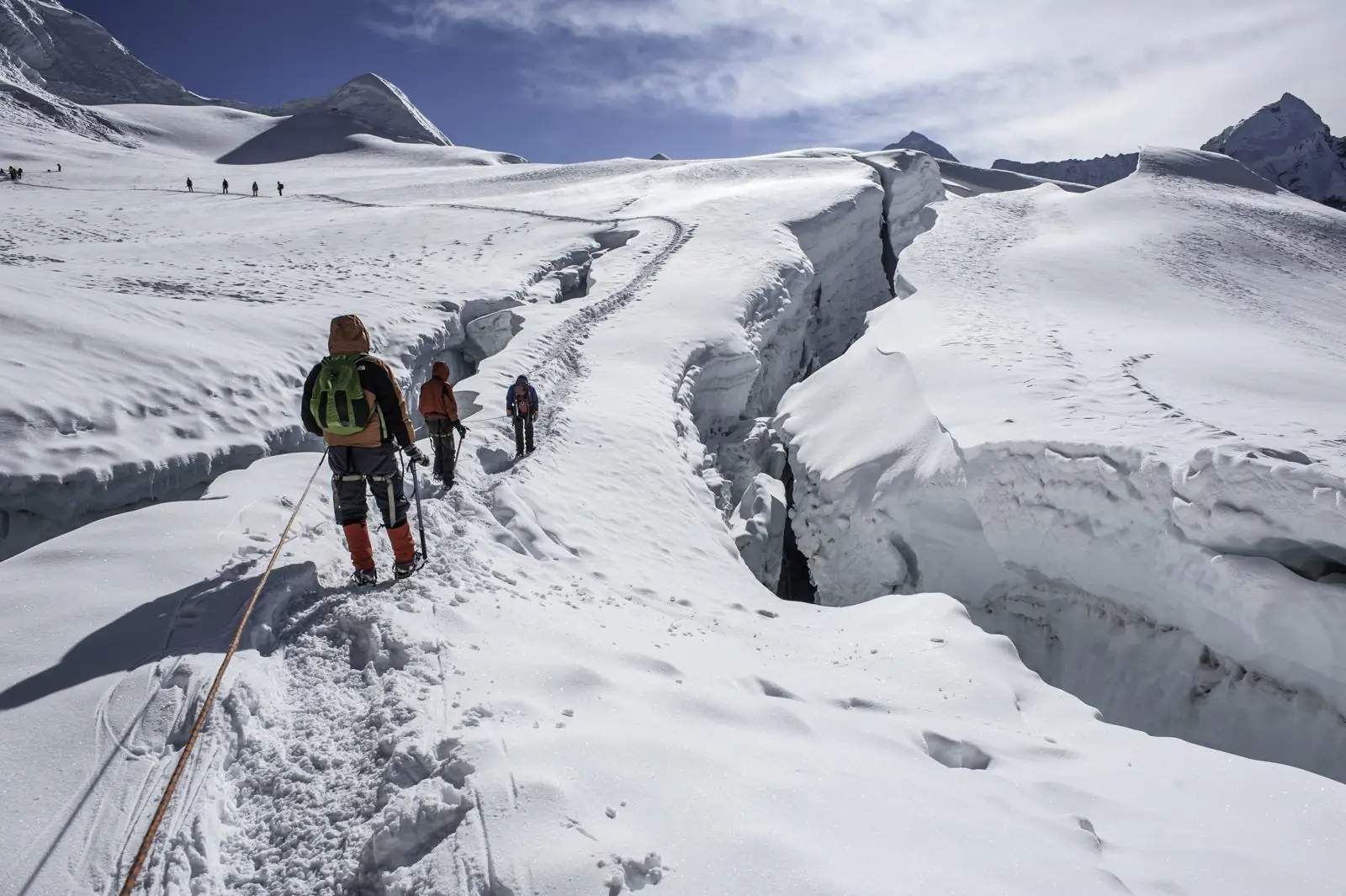
Both peaks are in the Khumbu and are popular with climbers. They are close in height, but the climbing is different.
Technical difficulty
Lobuche East has steeper rock and ice, with a more exposed ridge, so it feels more like mountaineering. Island Peak is more of a glacier route with one steep snow headwall. For a first technical climb, many people find Island Peak more approachable.
Approach
Lobuche East is reached on the main Everest Base Camp trail, and you can combine the climb with a visit to base camp and Kala Patthar. Island Peak lies in the Imja valley, off the main trail, and passes through Dingboche and Chhukhung.
Views
Lobuche East looks over Everest, Lhotse and Nuptse and offers a wide panorama. Island Peak has a famous view of Lhotse's south face and the surrounding peaks.
Crowds
Both can be busy in October and April. Island Peak sees larger numbers, while Lobuche East has fewer climbers but narrower sections of ridge.
Summary
- Learning technical skills: Island Peak.
- More exposed, mountaineering feel: Lobuche East.
- Combine with Everest Base Camp: Lobuche East fits naturally.
Doing both
Some climbers combine both peaks in one longer trip. This requires more days, good fitness and solid planning.
Tell us your experience and we will suggest a route.
Which is better for you
Choose Island Peak if you want a shorter, well-trodden route with a clear headwall challenge. Choose Lobuche East if you want a longer ridge, more exposure and a different view of the Everest range. Both require fitness, acclimatisation and good guiding.
Time and budget
Lobuche East is often combined with trekking to Everest Base Camp, which makes sense if you have time. Island Peak may suit a tighter schedule.
Talk with your guide
Discuss your experience, comfort with exposure and goals with your operator for honest advice.
Which to climb first
If you are new to climbing, Island Peak is often recommended as a first peak, then Lobuche East as a step up. Some climbers do Lobuche East first because of its location on the main trail. Your decision depends on experience and goals.
Skills practice
Both peaks require use of crampons, ascender and rope. Practising these skills before travel is valuable. Lobuche demands more comfort on exposed ridges.
Combining peaks
Some climbers combine both in a single trip of three to four weeks. Plan carefully, with extra rest days and a flexible attitude, since fatigue builds with repeated efforts.