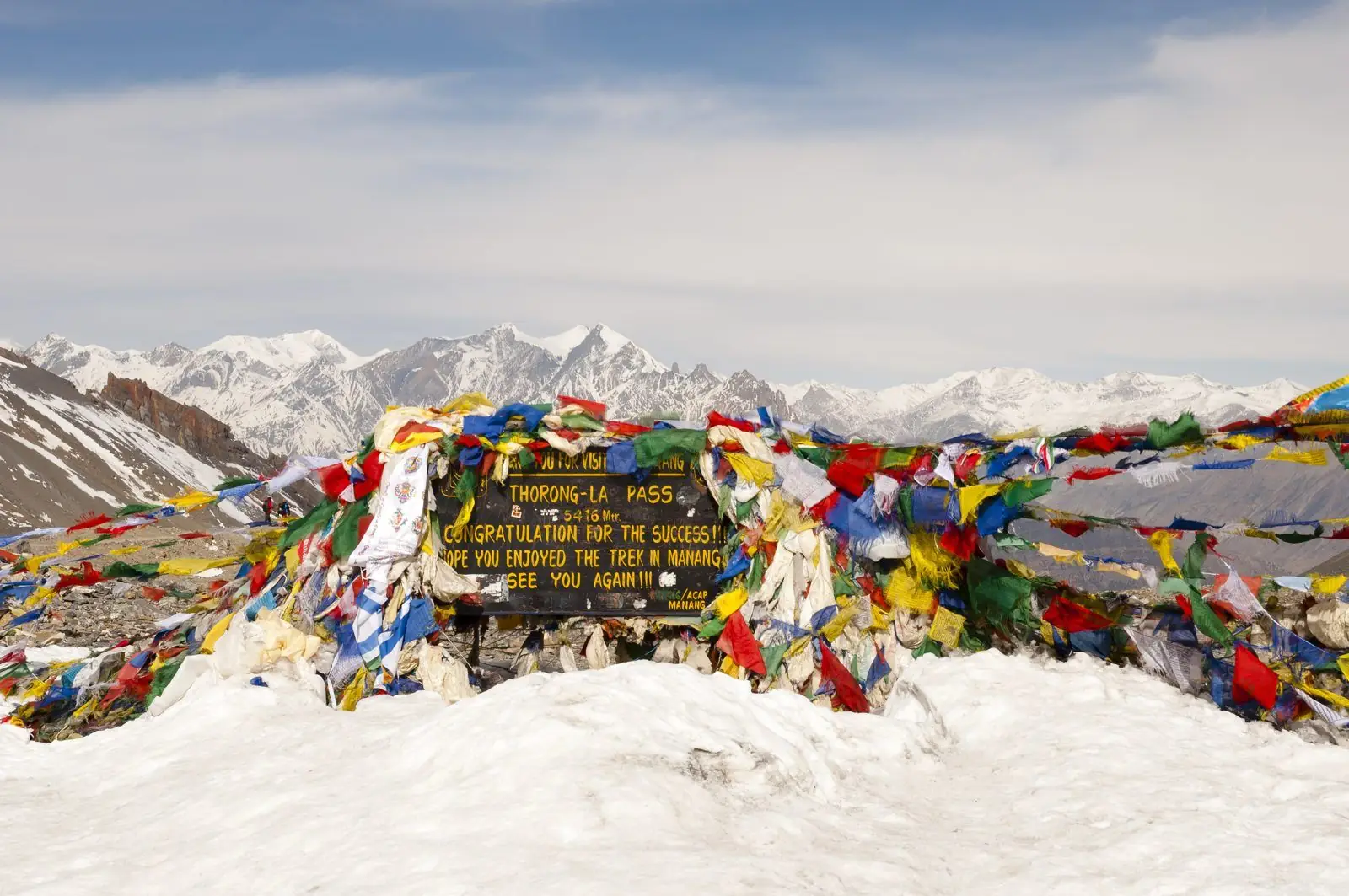
Muktinath, at about 3,710 m, is a sacred site for both Hindus and Buddhists. The name means "place of liberation". It lies on the east side of the Kali Gandaki valley, at the foot of the Thorong La, and is a destination for pilgrims as well as trekkers. This page is about the temple complex itself. For the pilgrim route as a whole, see Muktinath on the Annapurna route.
Two traditions in one place
For Hindus, Muktinath is a shrine of Vishnu and one of the major pilgrimage sites, linked with the idea of liberation from rebirth. For Buddhists, it is a place associated with Avalokiteshvara and Padmasambhava, known as Chumig Gyatsa, meaning "hundred waters". The two communities share the site, and the temple is managed with respect to both.
The 108 water spouts
A row of stone water spouts, often described as 108 in number, pour cold water from a mountain spring. Pilgrims walk beneath them, bathing in the icy flow. It is a powerful sight, but cold: many visitors only wet their hands and face. Take care on wet stone.
The eternal flame
The Jwala Mai temple is known for a small flame that burns from a natural gas seep beside water, a combination of fire and water that is seen as sacred. Look for it in the small shrine, usually with a monk or caretaker who explains its meaning.
Getting there
The complex lies above Ranipauwa, the village near Muktinath. From the village, a path and steps lead up. Jeep roads reach close to the area, and on foot the walk takes 30 to 60 minutes. The altitude is significant, so go slowly.
When to visit
- Morning is best: calm weather, softer light and fewer crowds.
- Festival days and the main pilgrim season in spring and autumn can be crowded.
- Winter is cold and quiet.
Etiquette
- Remove shoes where requested and follow signs.
- Dress modestly: cover shoulders and knees.
- Ask before photographing people or inside shrines.
- Do not touch ritual objects or offerings.
- Be patient in queues; pilgrims have priority.
Nearby: Jharkot and Kagbeni
Jharkot, a walled village with an old monastery, is a short walk from Muktinath. Kagbeni, below, is the gateway to Upper Mustang. A day walking from Muktinath through Jharkot to Kagbeni is a rewarding way to see the valley. See short treks and day hikes.
Planning your visit around the altitude
Muktinath lies at about 3,710 m. If you have flown in from Pokhara, spend a night at Jomsom or Kagbeni first. If you came over Thorong La, you will already be adapted. Walk slowly up the steps, carry water and take breaks. Cold wind can bite at the top, so a warm layer is a good idea.
Offerings and donations
Pilgrims bring flowers, incense and small offerings. Visitors may leave a modest donation in the boxes provided. Avoid bargaining with sellers of religious items; if you do not want to buy, a polite no is enough.
Common questions
What does Muktinath mean?
"Place of liberation", a sacred site for Hindus and Buddhists.
How many water spouts are there?
Commonly described as 108, though counts and traditions vary.
How long should I spend at Muktinath?
Allow a morning for the temple complex and an additional hour or two if you walk to Jharkot.