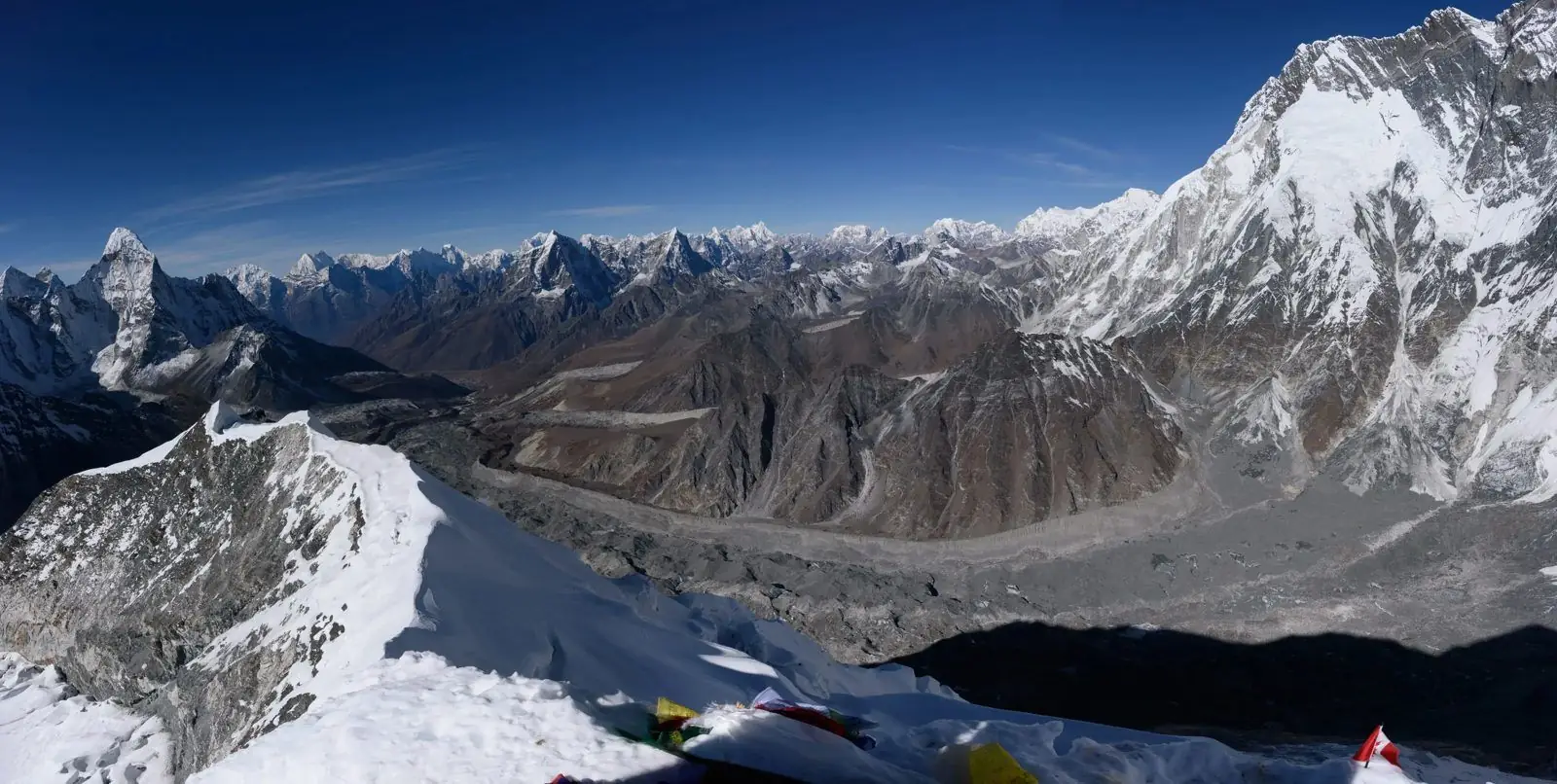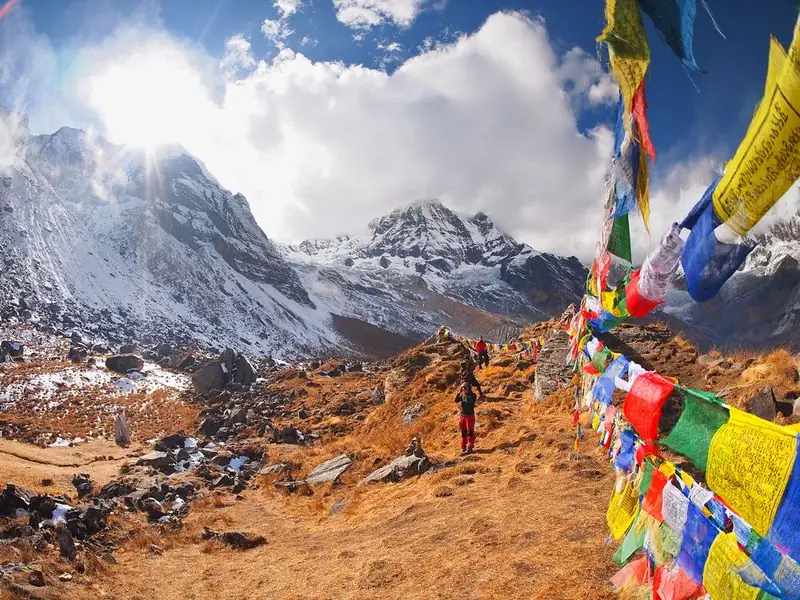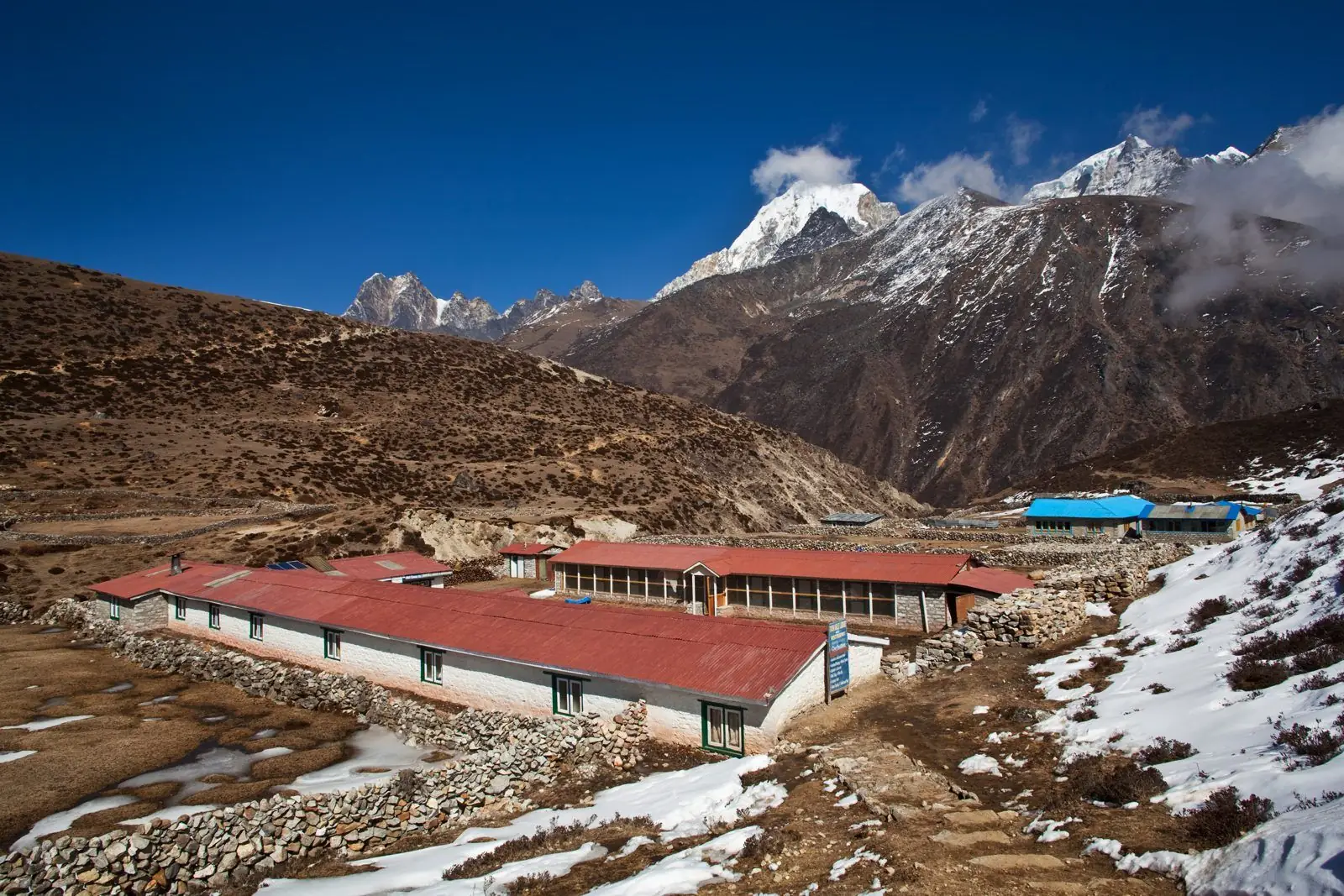
The Makalu Base Camp trek gains height slowly. The route starts in warm lowlands and climbs over many days to a high point of about 4,800 m. That gradual profile is good for acclimatisation, but the upper valley is remote, so any problem is harder to handle than on a busy trail. This is general guidance only and does not replace medical advice or your guide's decisions.
How the profile helps
After a week or more of walking through low and mid-altitude country, your body has time to adapt before you reach 4,000 m. The danger is the final few days, when you climb relatively quickly into the Barun valley. A rest day before base camp is important.
Early signs to watch for
- A headache that does not go away with water, rest and simple pain relief.
- Nausea, loss of appetite or unusual tiredness.
- Dizziness or very poor sleep.
- Breathlessness at rest.
Signs that mean descend now
Confusion, loss of coordination, a wet cough, breathlessness at rest or severe headache are danger signs. Tell your guide and descend at once. Do not go higher with worsening symptoms. Remember that rescue in this area is slower than on busy routes.
Habits that help
- Walk slowly and steadily, and take breaks.
- Drink water and warm fluids through the day.
- Eat regularly, even without appetite.
- Avoid alcohol and sleeping pills.
- Tell your guide how you feel each evening.
Remote medical considerations
Medical help is far away. A helicopter evacuation depends on weather and a safe landing site, and it needs suitable insurance. Make sure your policy covers trekking to at least 5,000 m and helicopter rescue. Carry your own medicines and a personal first-aid kit.