The Makalu Base Camp trek is as much about the journey as the destination. In a few weeks you pass from subtropical farmland to alpine meadows and a glacier valley, through one of Nepal's richest protected areas. The scenery changes every few days, and the quiet trail makes it feel unusually wild.
From farmland to forest
The first days follow terraced fields, bamboo groves and small villages in the Arun valley, where Rai and other communities farm millet, rice and maize. Climbing higher, you enter forests of oak, chestnut and rhododendron, with orchids and ferns in the damp air. In spring the hillsides turn pink and red with flowers.
The Makalu Barun National Park
The park spans a huge range of heights and climates, so it holds a great variety of plants and animals. Birdwatchers can find many species, and with luck and patience you may see signs of mountain animals, such as red pandas, Himalayan tahr or musk deer. Sightings are not guaranteed, and the best way to spot wildlife is to walk quietly and early.
The upper Barun valley
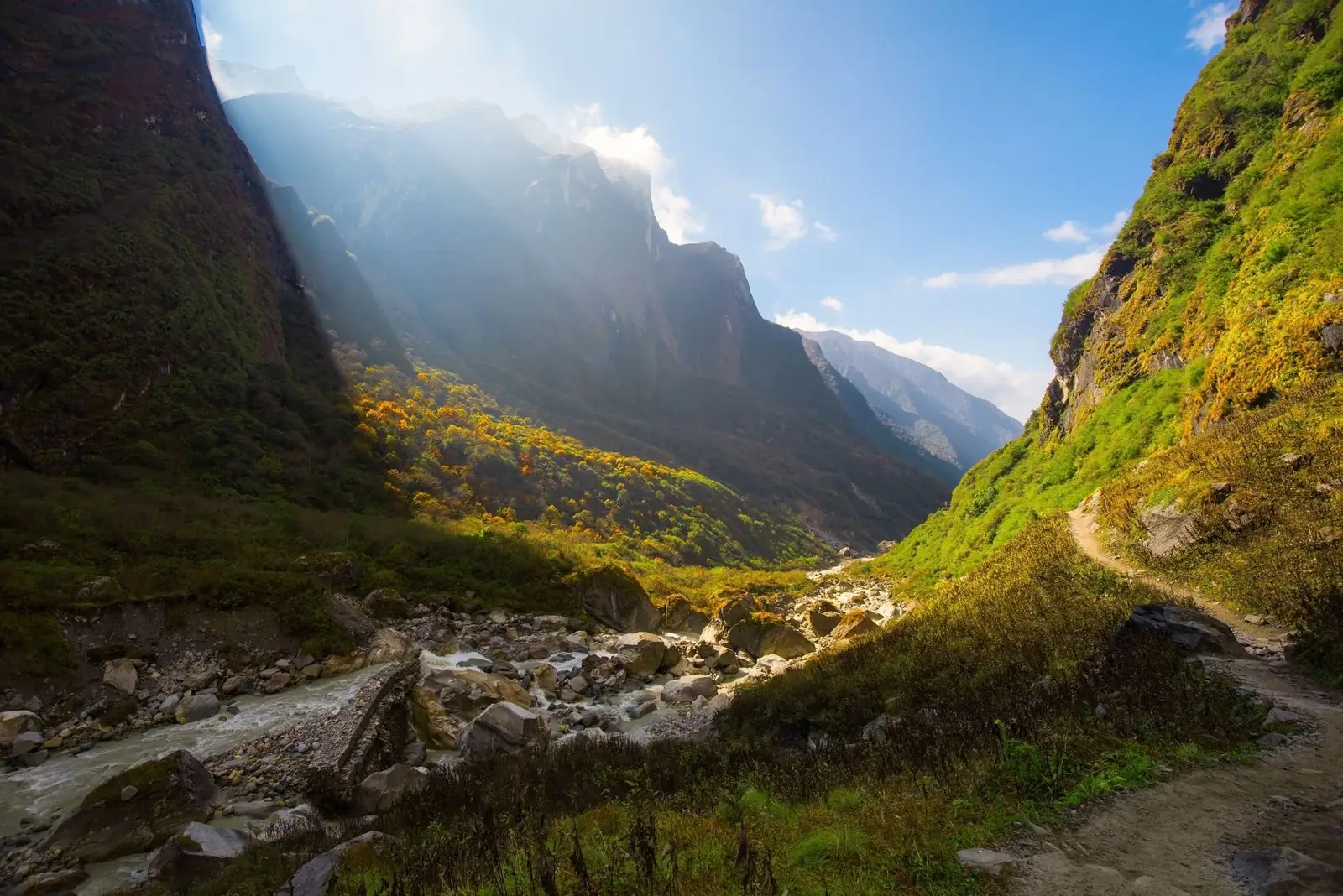
Above the forest the valley opens into alpine meadows and moraine. Waterfalls fall from cliffs, rivers run grey with glacier melt and the walls of the valley rise to snow peaks. In clear weather you see Makalu's sharp pyramid with Chamlang, Peak 6 and Peak 7 nearby, and Lhotse and Everest from certain viewpoints.
Culture
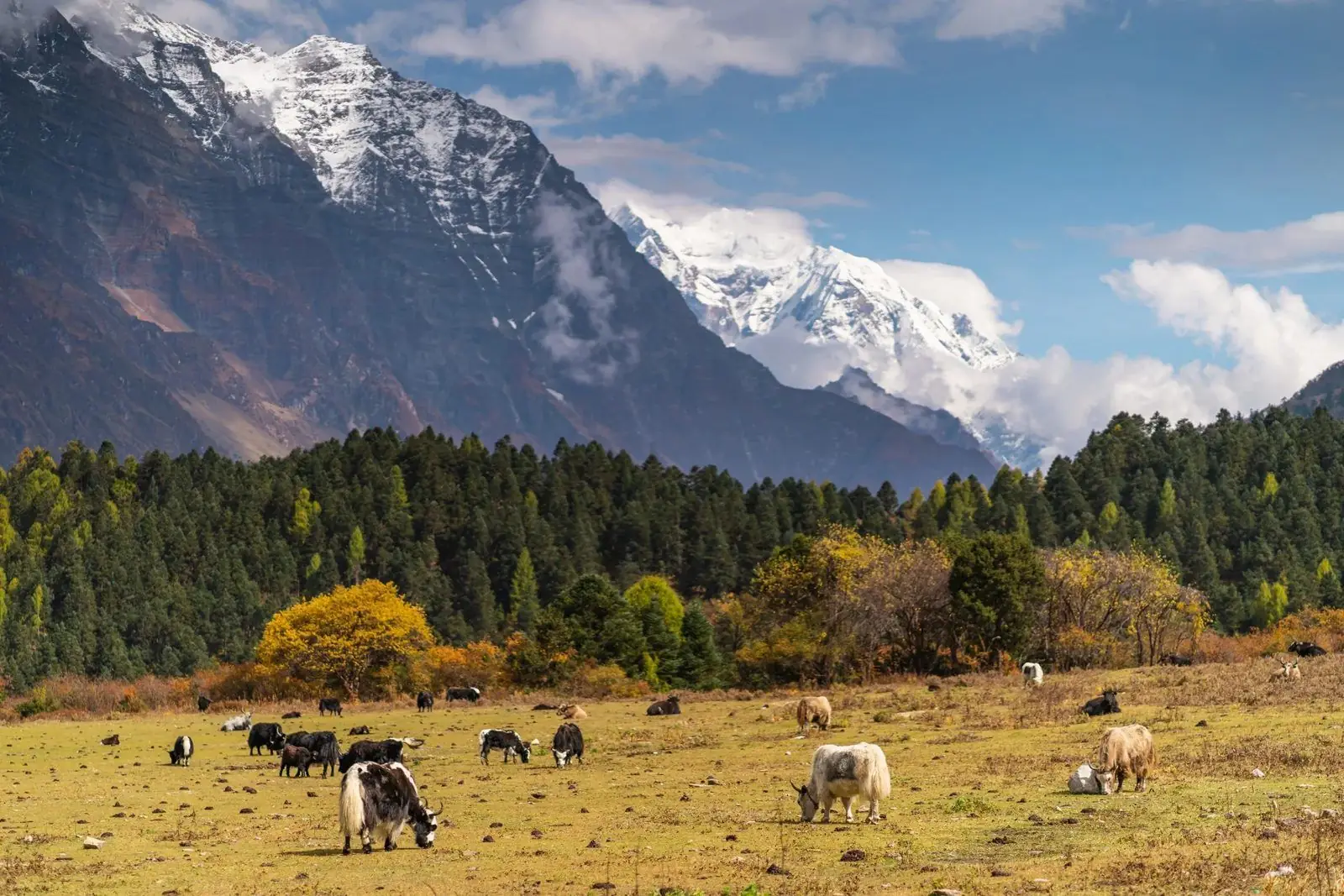
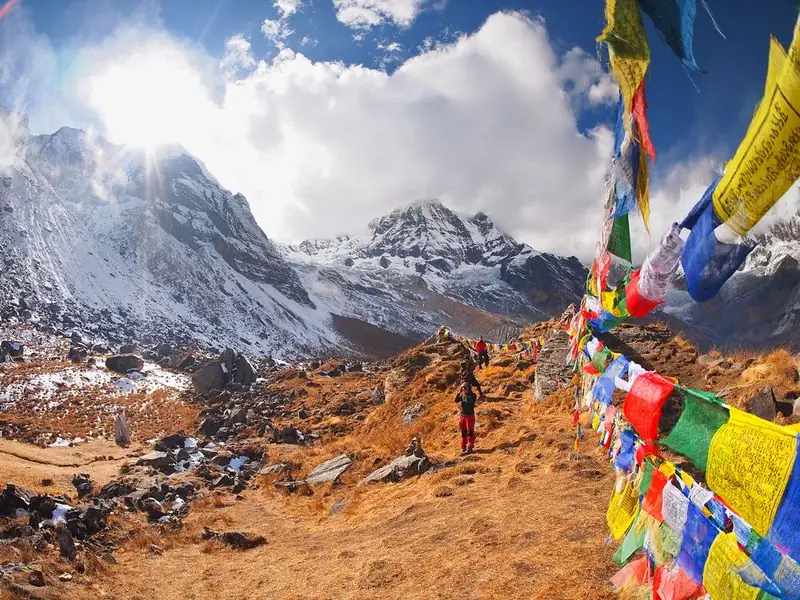
You meet Rai, Sherpa and other mountain communities, who keep traditions of farming, herding and Buddhist or local belief. Yak herders spend summers in high pastures. Greet people politely, ask before photographing, and buy local products where you can.
Best chances for views
- Early morning, before cloud builds in the valley.
- Autumn and spring, when the air is clearest.
- Base camp, with an extra night if time allows.
What it feels like
Expect long, quiet days with few other trekkers, simple meals with your crew and a sense of being far from roads and crowds. For many people this isolation is the highlight.