




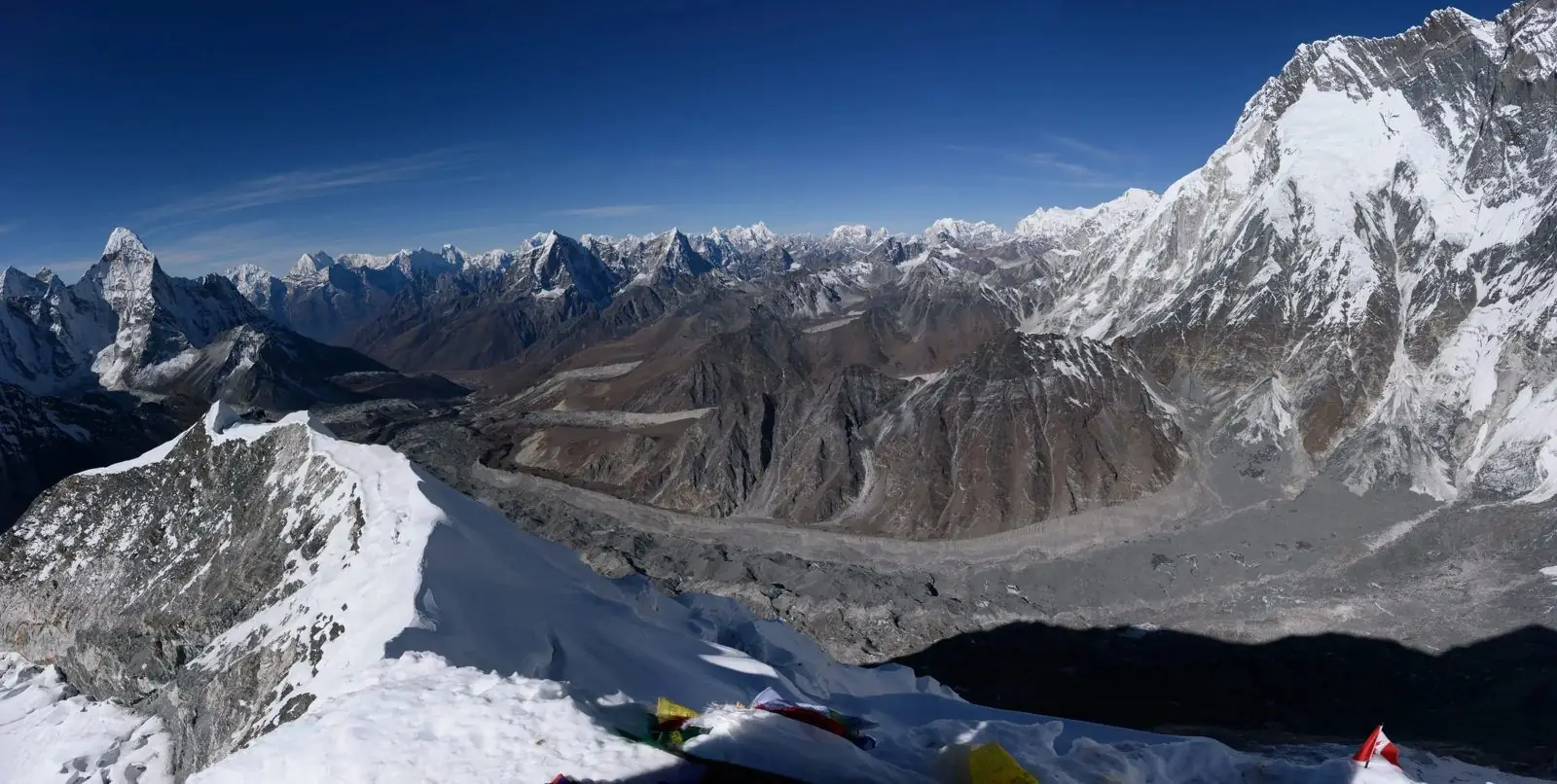
Everest Base Camp is cold. In spring and autumn the daytime temperature is around zero to 10 degrees Celsius in the sun, and nights are often minus 10 degrees or colder. The camp is at about 5,364 m, so the air is thin as well as cold.
Day and night
On a clear day the sun warms the rocks and you can walk in light layers. As soon as the sun goes, the temperature falls quickly. Nights at the highest villages, Lobuche and Gorak Shep, can be minus 15 C or lower in the cold months.
The lodges
Teahouses are not heated, except for a stove in the dining room that is usually lit in the evening. Bedrooms are cold, so a warm sleeping bag is essential. Hot water bottles help, and your guide can ask the lodge for one.
Spring and autumn
Autumn is colder at night but clearer. Spring is slightly warmer, with more cloud later in the day. Both seasons need winter-quality kit above 4,500 m.
Warm clothing
Wear a base layer, a fleece, a down jacket and a windproof shell. Add warm gloves, a woolly hat and thick socks. Keep a spare layer for the evenings.
Altitude and cold together
Cold makes altitude sickness harder to notice, because you are tired and short of appetite. Drink often, eat well and tell your guide about headaches or nausea. See altitude sickness on the trek.
Where to find more detail
The month-by-month table is on the temperature guide.
Temperatures along the trail
Typical spring and autumn nights are about 5 C in Lukla, 0 C in Namche, minus 5 C in Dingboche and minus 10 C or colder in Lobuche and Gorak Shep. Days are warmer in the sun. These are rough figures for orientation, and the guide on the temperature page gives more detail.
Sleeping warmly
Use a sleeping bag rated to at least minus 15 C, and add a liner. Sleep in a hat, drink warm water before bed and keep your boots inside the sleeping bag foot area if they might freeze. A water bottle filled with hot water and placed in the bag keeps you warm.
Hands and feet
Hands and feet are the first to feel the cold. Wear liner gloves under thick gloves, and keep spare dry socks. Avoid tight boots, which cut circulation.
When it is coldest
The coldest hours are just before dawn. Early starts to Kala Patthar are cold, so use the warmest layers you have. The cold usually eases within an hour after sunrise.
Plan it
Read Mount Everest temperature and what to pack.


