




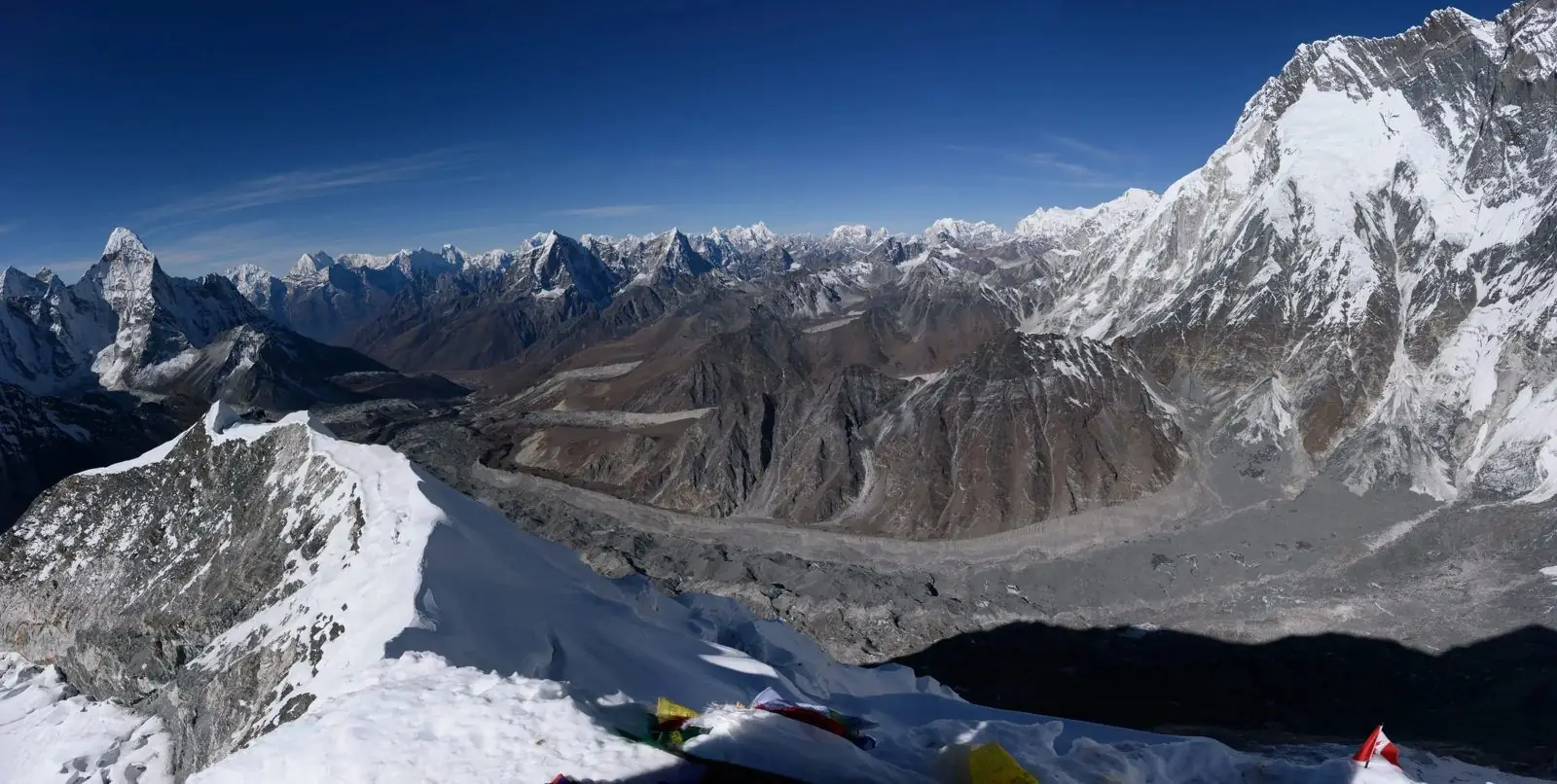
On the summit of Mount Everest the average temperature is about minus 19 degrees Celsius in July and about minus 36 degrees in January. The wind makes it feel much colder, and in winter it can drop below minus 40. Everest Base Camp is far warmer, but still below freezing most nights.
Summit temperature
The commonly quoted averages for the summit are about minus 19 C in July and minus 36 C in January. These are long-term averages, and the real figure on any day varies with wind, cloud and time of day. In the climbing window of May, the summit is typically a little under minus 20 C on a calm morning, though it can be colder.
Wind chill
Wind is the larger danger. In winter the jet stream sits over the mountain and winds can pass 150 km/h. At these speeds the wind chill is far below the air temperature, and exposed skin can freeze in minutes. This is why climbers go in spring, when the jet stream moves north for a short time.
Why the air feels so thin
The air pressure at the summit is about a third of that at sea level. Each breath gives about a third of the oxygen. This is why climbers use bottled oxygen above 8,000 m, and why altitude sickness is a real risk even at base camp.
Temperature at base camp and on the trek
Everest Base Camp is at about 5,364 m. In the trekking seasons the daytime temperature is around zero to 10 C in the sun, and nights are often minus 10 C or colder. Lower down, Namche Bazaar at 3,440 m is much milder. See the full table by month and altitude.
Temperatures in the sun and shade
The sun at altitude is strong. You can be warm in a T-shirt at midday and need a down jacket as soon as the sun drops behind a ridge. Layers matter more than any single heavy coat.
What this means for your kit
A trek to base camp needs a warm down jacket, a sleeping bag rated for minus 15 to minus 20 C, thermal layers, warm gloves and a hat. See the Everest Base Camp packing list.
Temperature at different heights
The air cools by about six to seven degrees Celsius for every 1,000 m of height. Between Lukla at 2,860 m and the summit, that is a difference of more than 35 degrees on the same day, which is why a pleasant morning in the valley can feel like a different planet at base camp.
Frostbite and hypothermia
At base camp and on the trek, frostbite is rare but possible in strong wind. Keep fingers, toes and the face covered, and tell your guide if a body part goes numb. On the summit, frostbite is a major risk for climbers.
Recording temperatures
Weather stations at Namche, Pyramid and the South Col give climbers and researchers records of temperature and wind. The numbers differ between sources, which is why this guide gives ranges rather than a single value.
Common questions
What is the lowest temperature on Everest? Winter lows on the summit are commonly cited as far below minus 40 C. Is it warmer in summer? Slightly, but the monsoon brings snow and cloud. Does it snow at base camp? Yes, in any season.
Plan it
Read the weather by month and how cold base camp is.


