




The Kang La, at roughly 5,300 m, is the high point of the Nar Phu loop and the reason many trekkers choose it. It is a walking pass, with no ropes or crampons in normal autumn conditions, but it is long, remote and cold, and it can turn dangerous when fresh snow covers the trail. This page covers what the crossing is like, how to prepare, and when to turn back.
The route in outline
The usual direction is from Nar towards Ngawal. From Nar or a high camp, the path climbs across a series of moraine terraces and stony slopes, then steepens into a final scree and snow pitch to the pass. At the top there is a modest cairn and strings of prayer flags. On the far side the trail drops steeply over loose rock before levelling into a long traverse above the Manang valley, then switchbacks down towards Ngawal. The pass is a day that can last 9 to 11 hours depending on where you sleep the night before.
Heights and times here are rounded. A lodge sign or your guide's GPS may differ by a little.
Starting early matters
Local guides start between 3:30 and 5:00 a.m. for three reasons. The first is that the final climb is easiest when the surface is frozen and stable. The second is that wind tends to build after mid-morning, and a gale on an exposed pass is both cold and tiring. The third is the length of the descent: leaving late means arriving at Ngawal in the dark on a trail with loose stones. A headlamp with spare batteries is a safety item here, not a convenience.
Compared with Thorong La
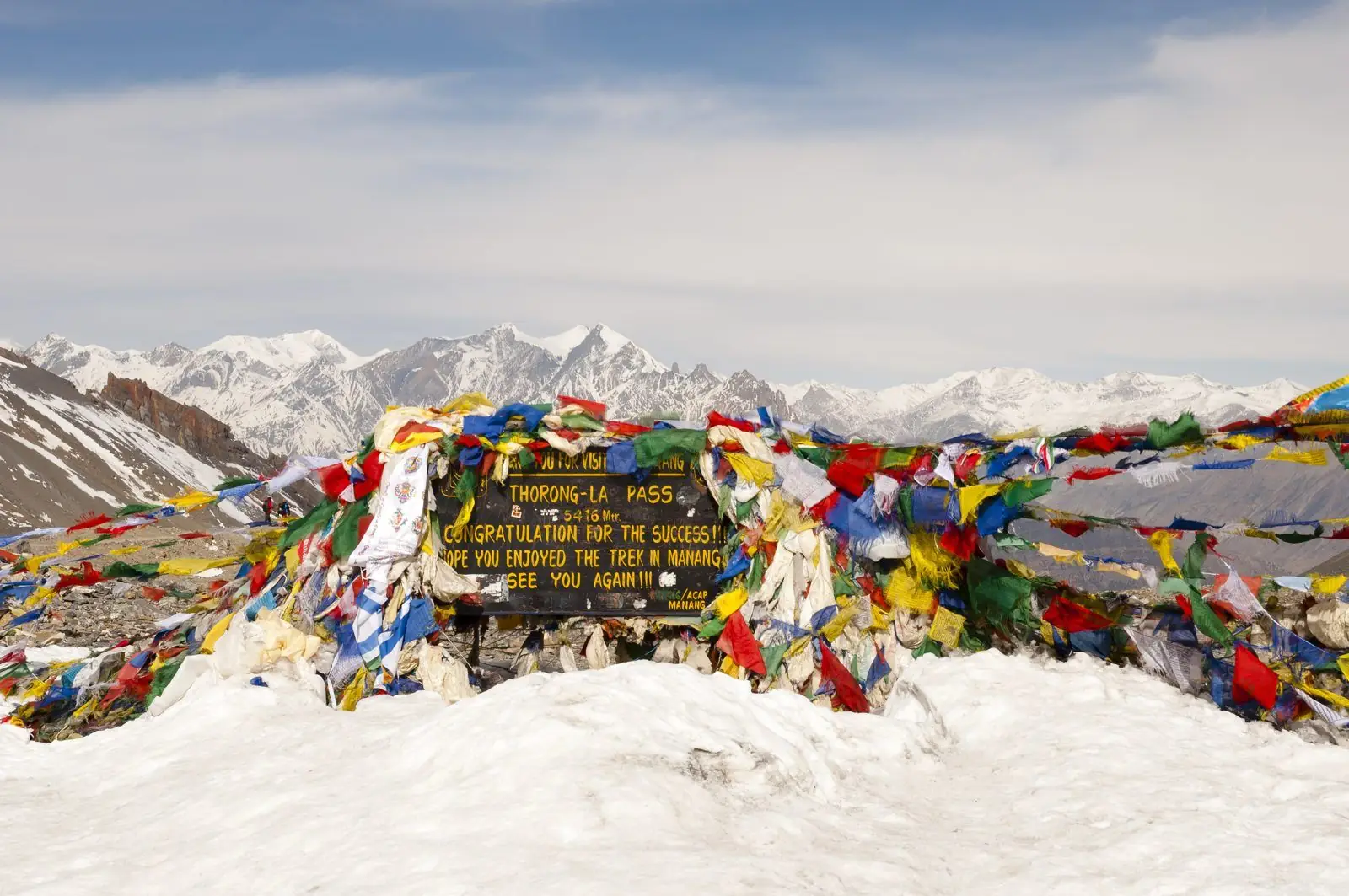
- Height. Thorong La is about 5,416 m; Kang La is about 5,320 m. The difference is small, and both are high enough to cause altitude illness.
- Support. Thorong La has lodges at both ends and heavy trekker traffic; Kang La has neither. If you slow down or feel unwell at Kang La, help is hours away.
- Trail. Thorong La is a well-trodden path; Kang La is rougher, less marked and more affected by rockfall and snow.
- Order. Most guides prefer that trekkers do Kang La first and Thorong La second, because Kang La is the harder test and Thorong La then feels more manageable.
For more about the other pass on the loop, read crossing Thorong La
Snow, ice and conditions
In a dry autumn, the Kang La is a stony walk with patches of ice. After a snowfall, the trail disappears under drifts, the final slope becomes slower and more exposed, and guides sometimes decide to wait a day for the snow to settle. Trekkers with microspikes find ice sections easier to manage. A winter or early-spring crossing is a different undertaking: it needs warm layers, experience of snow travel and a decisive guide.
Preparation checklist
- A sleeping bag rated to at least minus 15 degrees Celsius for the nights before the pass.
- Insulated gloves, a windproof shell, a warm hat and a buff or balaclava.
- Trekking poles; they spare the knees on the long descent.
- Sun protection: glasses with side shields, sunscreen and lip balm. The glare on snow burns quickly.
- At least two litres of water or tea, plus snacks you actually want to eat in the cold.
- A written plan for who makes the turn-back call and at what time.
When to turn back
Turning back is not failure. Typical red flags are a headache that does not respond to rest and fluids, loss of appetite combined with nausea, unsteady walking, new shortness of breath at rest, or fresh snow that hides the track. If any member of the group shows these signs, descent is the cure. Because there is no road or lodge at the pass, the plan should also include an alternative: retreat to Nar, wait one day or choose to exit via the way you came.
After the pass
The descent from the Kang La is steep and unforgiving. Take it slowly, use poles, and do not try to make up time. The trail eventually joins grazing land above Ngawal, and the first sign of trees and bigger barley fields is a welcome change. Ngawal has simple lodges, and the views across to Annapurna II and IV make the effort feel worth it.
Common questions
How high is the Kang La pass?
About 5,300 m (reported figures range a little between sources). It is slightly lower than Thorong La.
Do I need crampons for Kang La?
Not usually in normal autumn conditions, but microspikes are useful on icy patches and are standard for early-season or post-snow crossings.
Can I cross Kang La from Ngawal to Nar instead?
It is possible, but most itineraries go Nar to Ngawal because the descent into Manang is easier on a tired body than a steep climb from Ngawal to the pass.


