




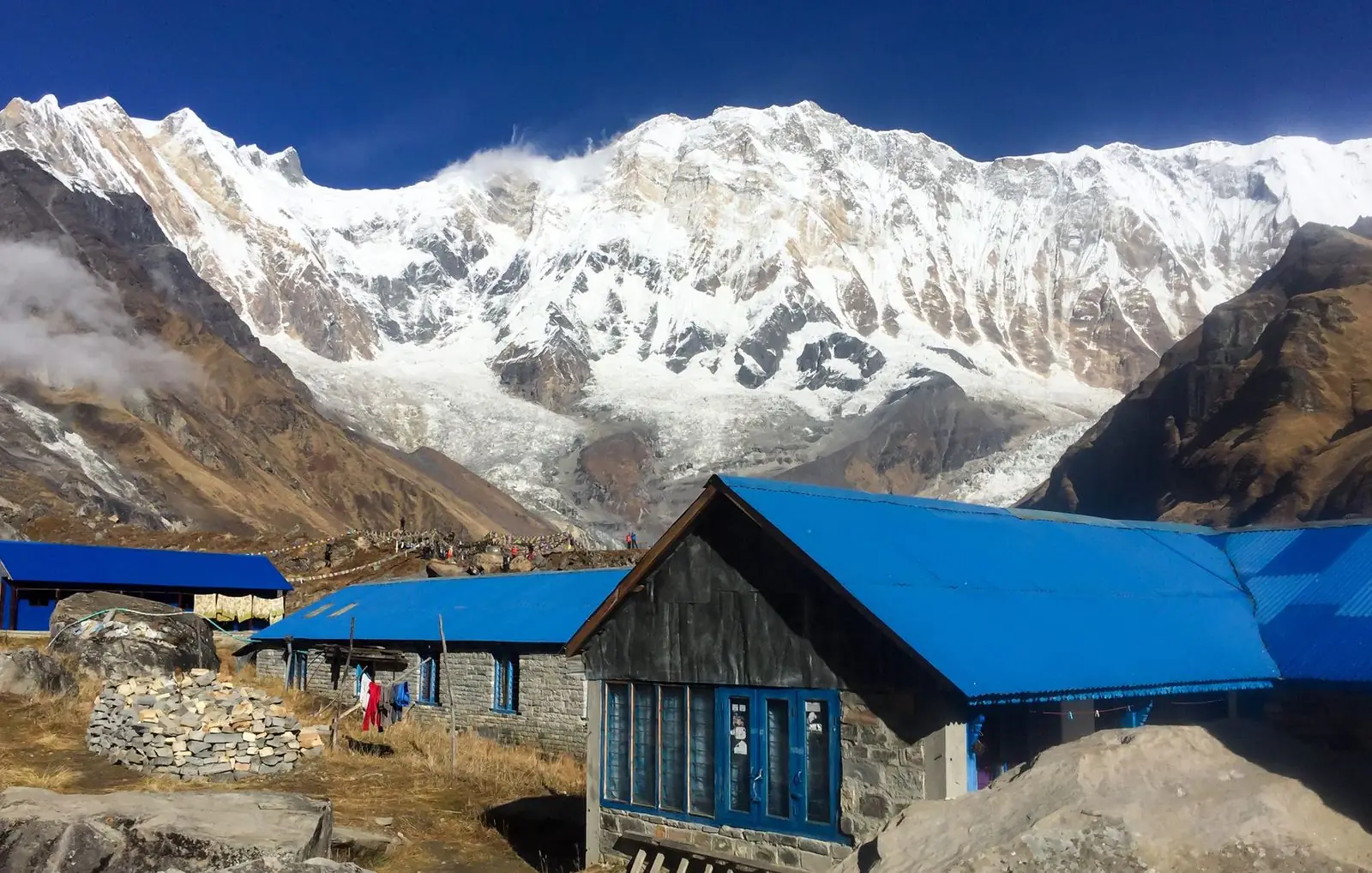
You can trek in Nepal during the monsoon, from June to September, but most regions are wet, cloudy and less reliable. Expect rain, leeches in lower forest, landslides and flight delays. Rain-shadow areas such as Upper Mustang, Dolpo and Nar-Phu receive far less rain and are the usual monsoon choices.
What the monsoon is really like
Rain arrives in June, peaks in July and August, and eases in September. Most rain falls in the afternoon and night, with cloud often hiding mountain views. Valleys are lush and green, waterfalls are full and trails are quiet, which some trekkers enjoy.
The downsides are real. Paths turn muddy and slippery, rivers rise, and clothing and boots rarely dry. Humid heat at lower elevations adds to the effort. Conditions vary by region and year, so treat this as general information. If you want clear views and easy logistics, other seasons are a better fit, and we are happy to say so.
Leeches, landslides and flight delays
Three problems come up most. Leeches live in damp lower forest, especially on routes through subtropical hills. Landslides can block roads and trails, sometimes for days. Flights to mountain airstrips are often delayed or cancelled because of cloud, which can disrupt tight schedules.
- Carry salt or repellent, and check legs and socks regularly.
- Allow extra days at both ends of your trek.
- Avoid steep trails after heavy rain.
- Follow your guide's advice on rivers and slopes.
Build flexibility into your plan, and consider travel insurance that covers delays. We can add spare days to any itinerary.
Rain-shadow regions that stay drier
The Himalaya block much of the monsoon, so areas north of the main range get far less rain. Upper Mustang, Dolpo and Nar-Phu are the best known. Landscapes there are dry, high and desert-like, with colourful cliffs, monasteries and old villages.
These are restricted areas, so they need a special permit and a licensed guide through a registered agency. Rules change, so confirm before you travel. Fees change; confirm the current figure with us before you book. Our Upper Mustang trek takes 18 days. Access still depends on roads and flights, which can be disrupted, so plan spare days and keep your schedule loose.
Which routes to avoid in summer
Popular lower routes such as Annapurna Base Camp, Poon Hill, Langtang and Mardi Himal have heavy rain, leeches and cloud. Everest Base Camp and Gokyo get poor views, and flights to the mountain airstrip are unreliable. Long circuits such as Annapurna Circuit involve wet conditions on the southern side.
If you must travel in these months, shorter trips with firm buffers are safer than long ones. Landslides are the main risk on roads, and rivers can rise quickly. Some lodges close in the off season. Check the latest conditions with us before you book, because they change from year to year.
Staying safe and comfortable
Waterproofs, a pack liner, quick-drying clothing and spare socks matter most. Gaiters help against leeches and mud. Keep electronics in sealed bags. Start early each day, since afternoon rain is more common.
Altitude illness can still occur: headache, nausea, dizziness and poor sleep are warning signs, and the safe response is to stop climbing and descend if symptoms worsen. This is general information, not medical advice. Indian travellers do not need a visa for Nepal but should carry valid photo ID such as a passport or voter ID. Rules change, so confirm before you travel.
Common questions
Is it worth trekking in Nepal in the monsoon?
It can be, in rain-shadow areas like Upper Mustang, or if you want green scenery and quiet trails. For clear mountain views and reliable flights, other seasons are better.
Which regions stay dry in the monsoon?
Upper Mustang, Dolpo and Nar-Phu sit in the rain shadow and receive much less rain. They are restricted areas that need a special permit and licensed guide. Rules change, so confirm before you travel.
Are there leeches on Nepal treks?
Yes, in damp lower forest during the monsoon, especially on southern routes. Gaiters, repellent or salt, and regular checks help. Leeches are usually a nuisance, not a danger.
Do flights get cancelled in the monsoon?
Often, because of cloud. Delays and cancellations to mountain airstrips are common, so add spare days, avoid tight onward bookings and check with us before you travel.


