




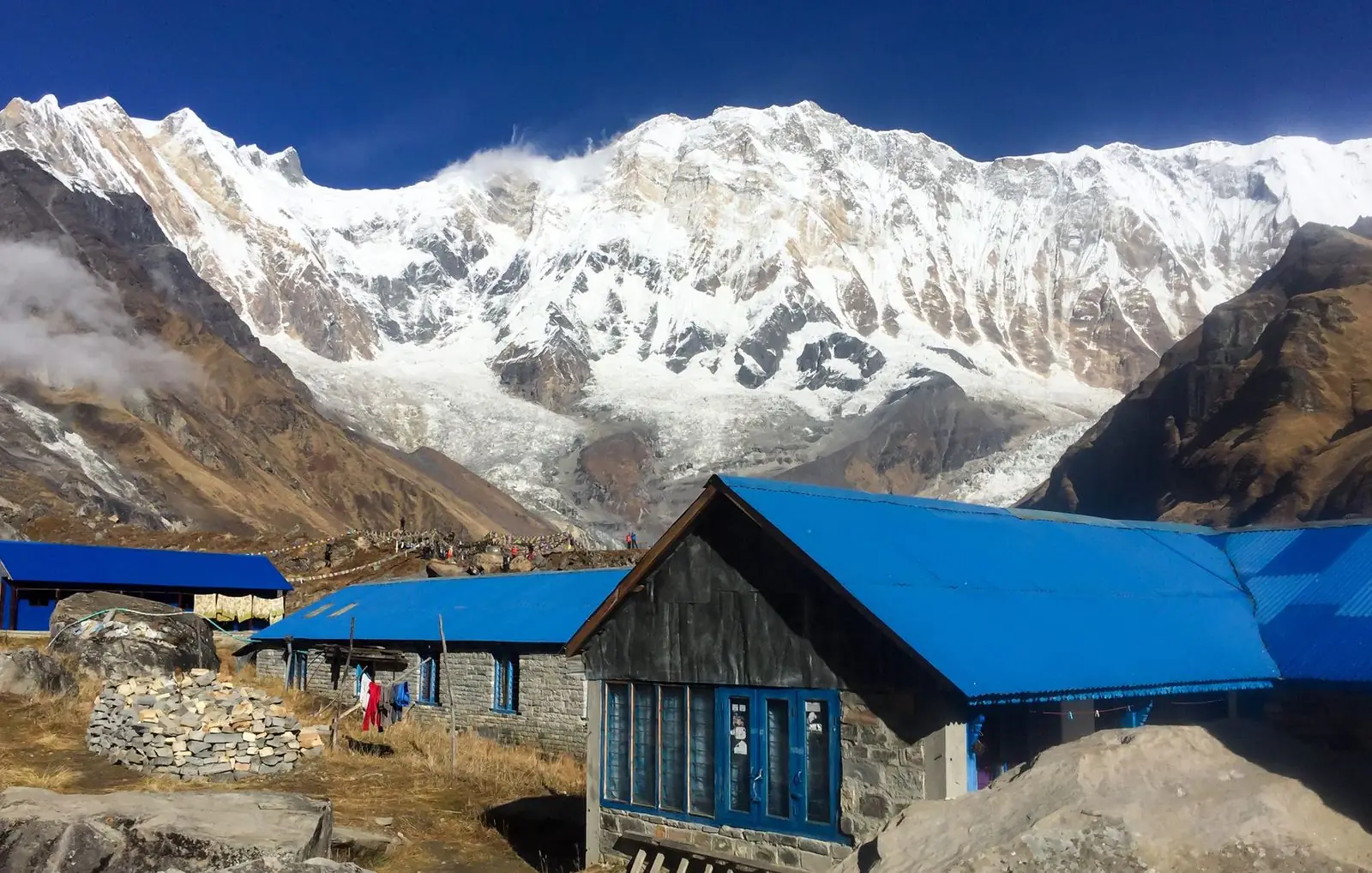
February is late winter in Nepal. Mornings are often clear and trails are quiet, but nights stay cold and high routes can still hold snow. Spring is starting in the lower hills, though rhododendron is mostly not yet open. Lower and mid altitude treks such as Poon Hill and Mardi Himal are the safest choices.
What February is like
February sits between winter and spring. In the lower hills, days begin to feel milder and the first signs of spring appear, while at altitude, winter conditions linger. Clear mornings are common, but cloud and the odd storm can arrive, and weather varies a lot between years.
Because conditions are less predictable than in October, keep your plans flexible and avoid tight schedules. Days are still shorter than in spring, so early starts help. This is general information, and we suggest checking the latest conditions with us before you book and again before you travel.
Rhododendron and spring signs
Many visitors ask about flowers. In February, rhododendron on most routes is not yet in full bloom, and the big displays usually come in March and April, depending on altitude and the year. You may see early buds or a few flowers at the lowest elevations in some years, but do not count on it.
What you can expect are green terraces, birdsong in the forest and the slow warming of the lower valleys. If flowers are your main goal, consider travelling a month or two later. If quiet trails and clear mornings matter more, February can suit you well.
Treks that suit February
Lower and mid altitude treks are the most sensible. Poon Hill in 9 days and Mardi Himal in 11 days are good choices, and Langtang in 10 days is possible with a warm kit and flexibility. Annapurna Base Camp in 10 or 14 days can work when snow is manageable.
Everest Base Camp in 14 days is walked in February, with very cold nights at higher villages and a chance of flight delays. High passes may still be snowbound, so long circuits are best left for another season. Restricted areas need special permits and a licensed guide; rules change, so confirm before you travel.
Cold, snow and lodge services
Expect freezing nights at higher villages and rooms that are rarely heated. Some lodges at the top of routes may still be closed or run limited services after winter, and this varies by place and year.
- Bring a warm sleeping bag and down jacket.
- Pack thermal layers, hat, gloves and sunglasses.
- Carry a headtorch and spare batteries.
- Keep a dry set of clothes for sleeping.
A spare day in your plan gives you room for snow or flight delays, and we can add one to any itinerary.
Health and safety notes
Cold and altitude together call for care. Headache, nausea, dizziness, poor sleep and unusual tiredness may signal altitude illness; the safe response is to stop going higher and descend if symptoms worsen. This is general information, not medical advice, so see a doctor before high altitude trips.
Move slowly, stay hydrated and use rest days. Watch for numb fingers or toes and warm them early. Indian travellers do not need a visa for Nepal but should carry valid photo ID such as a passport or voter ID. Rules change, so confirm before you travel.
Common questions
Is February a good time to trek in Nepal?
It can be, on lower routes, if you accept cold nights and changeable weather. Trails are quiet and mornings often clear. High routes may hold snow.
Are rhododendrons in bloom in February?
Usually not yet. The main blooms come in March and April, depending on altitude and the year. A few early flowers may show at the lowest elevations, but do not rely on it.
Which trek is best in February?
Poon Hill and Mardi Himal are sensible lower options. Everest Base Camp is walked too, with very cold nights. Avoid high passes unless conditions are confirmed.
How cold is Nepal in February?
Mild at low elevations in the daytime, but nights above about 3,000 m are cold, and above 4,000 m often well below freezing. Pack layers and a warm sleeping bag.


