




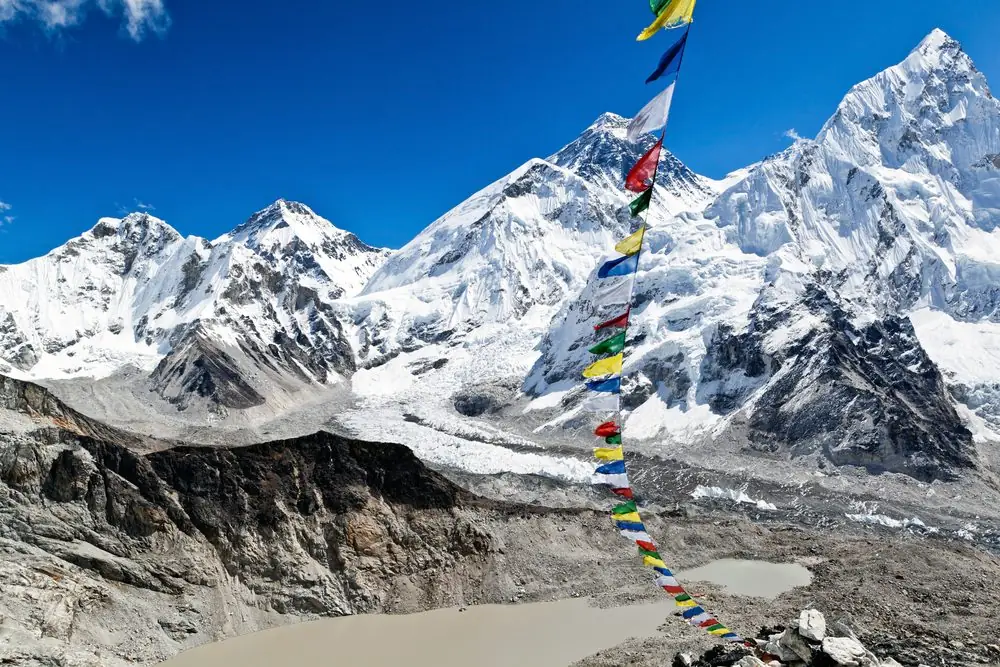
The short version: three of the most asked questions, answered in a line each. The rest of the page goes into detail.
- What are the main hazards on Nuptse? Avalanche, rockfall, cold and altitude illness are the main hazards.
- Why is rescue difficult on Nuptse? The terrain is steep and exposed, so help is hard to bring in.
- What insurance should a Nuptse climber carry? Plan for insurance that includes helicopter evacuation, alongside permits, flights, base camp services and equipment.
What are the main hazards on Nuptse?
Avalanche, rockfall, cold and altitude illness are the main hazards. The terrain includes steep snow and ice, mixed climbing on exposed ridges and long traverses at altitude. Camps are exposed to wind and avalanches. Because these hazards combine, even experienced teams plan conservatively, and a responsible leader will tell you in advance what conditions mean a turn back.
Why is rescue difficult on Nuptse?
The terrain is steep and exposed, so help is hard to bring in. The ridge is long with no easy escape. Climbers must be self-sufficient and comfortable with long days and bivouacs. For that reason, agree your rescue plan with the operator before you leave, and make sure your insurance includes helicopter evacuation.
Is it normal for Nuptse teams to turn back?
Yes. Many attempts fail because of avalanche hazard, bad weather and equipment problems on the long ridge. Even strong teams may turn back. A responsible leader sets a turnaround plan. Turning back is a sensible decision, not a failure, and you should choose an operator who is honest about this in advance.
What insurance should a Nuptse climber carry?
Plan for insurance that includes helicopter evacuation, alongside permits, flights, base camp services and equipment. Check the policy for altitude and mountaineering exclusions and confirm with your agency. Read the policy wording for altitude limits and technical climbing, and ask your agency which cover they require before you book.
What medical preparation is sensible?
A medical check-up, high-altitude training and expedition-quality gear are needed. Excellent fitness is essential too. Talk to your doctor early about altitude medication and your own health history. Start well before your departure date, and take any recommended medication and first aid advice into account when you pack.
Do trekkers need to worry about altitude when viewing Nuptse?
Yes, a little. Views from Lobuche, Gorak Shep and Kala Patthar are at high altitude, so ascend gradually, rest, drink water and descend if symptoms worsen. Tell your guide at once about a persistent headache.
How quickly does the weather change on the ridge?
Quickly. Weather changes fast and fixed ropes are limited, so climbers must be prepared to wait or retreat. Weather windows are short, and spring is the main season. Wind, cloud and snow can arrive within hours, so check forecasts daily and be willing to wait for a better window.


