




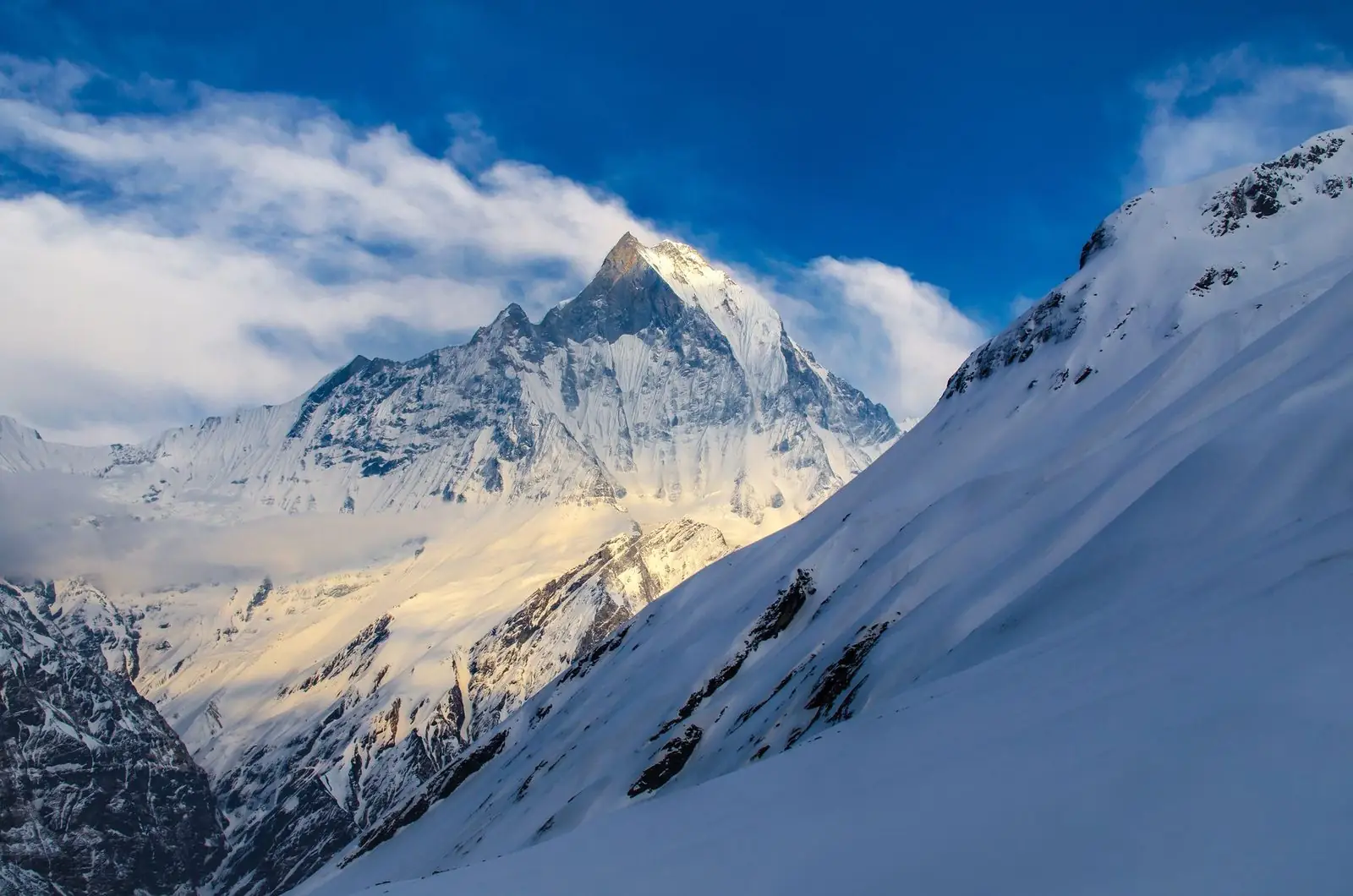
Several of Nepal's mountains are holy to the people who live below them. Machapuchare (6,993 m) is closed to climbers, Khumbila (5,761 m) is too sacred for most Sherpas to climb and has never been climbed, Gaurishankar (7,134 m) was closed for years and then climbed, and on Kanchenjunga the 1955 team stopped short of the top out of respect.
Why mountains are holy
In the Himalaya a high peak is often seen as the home of a god. Hindu and Buddhist traditions overlap here, and villages may offer prayers to the mountain above them. Climbing rules sometimes follow these beliefs, and sometimes visitors are simply asked to respect them.
The main sacred peaks
- Machapuchare, 6,993 m: closed to climbing since the early 1960s. See the unclimbed mountains guide and the Machapuchare guides.
- Khumbila, 5,761 m: the god of the Khumbu, never climbed. See the Khumbila guide.
- Gaurishankar, 7,134 m: linked to Shiva and Parvati. See the Gaurishankar guide.
- Kanchenjunga, 8,586 m: climbed in 1955, but the summit is left untouched by tradition. See the 1955 first ascent.
Not in Nepal
Mount Kailash, holy to Hindus, Buddhists, Jains and followers of Bon, is in Tibet. It is not a Nepal mountain, though many pilgrims travel through Nepal to reach it.
What it means for trekkers
You can see all of these peaks without climbing them. The Annapurna Base Camp trek shows Machapuchare, the Everest region shows Khumbila, and the Rolwaling valley shows Gaurishankar. Please read how to respect sacred mountains on a trek.
Plan it
Start with unclimbed mountains of Nepal, or see the Annapurna Base Camp guides and the Everest Base Camp guides.


