




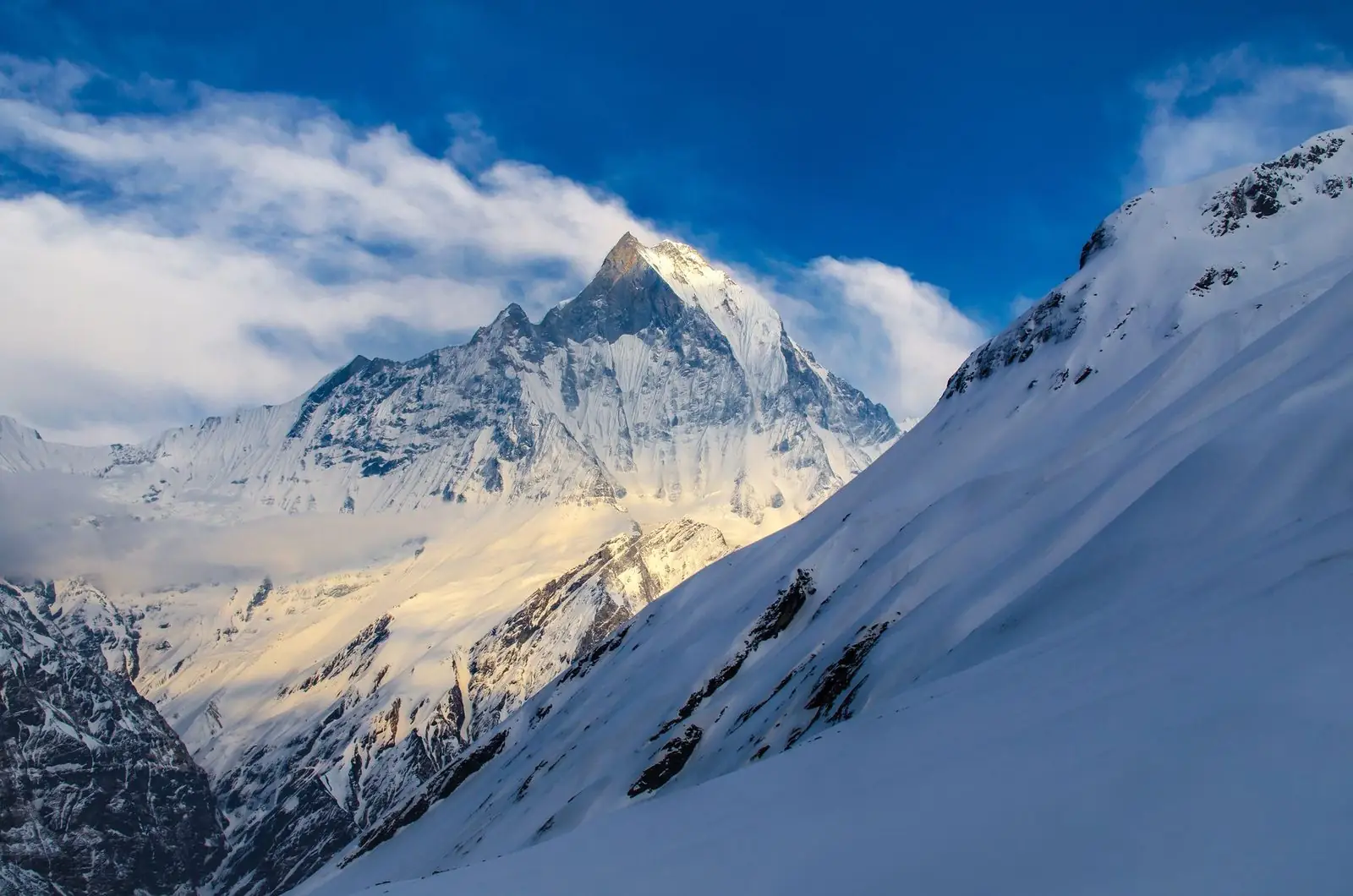
Gaurishankar is a 7,134 m mountain on the Nepal and China border, in the Rolwaling Himal of Dolakha District. Its higher north summit is Shankar (7,134 m) and its lower south summit is Gauri (7,010 m). Sherpas call it Jomo Tseringma. It was closed to climbers from 1965 to 1979, and the main summit was first climbed on 8 May 1979.
Two summits
The name joins the Hindu deities Gauri, a form of Parvati, and Shankar, a form of Shiva. The northern summit, Shankar, is higher at 7,134 m. The southern summit, Gauri, is 7,010 m.
Sacred to two faiths
Hindus and Buddhists both honour the mountain. Sherpas call it Jomo Tseringma. It is the second highest peak of the Rolwaling Himal.
The ban and the first ascent
Climbing was closed from 1965 to 1979. On 8 May 1979 John Roskelley and Dorje Sherpa reached the main summit by the west face. The permit required equal numbers of American and Nepali climbers on the team.
Later ascents
In November 1979 a British-Nepalese expedition led by Peter Boardman reached the south summit. A Slovenian team climbed the main summit in 1983, there was a winter ascent in January 1986, and a French team climbed the south face in 2013.
How to see it
The Rolwaling valley around Beding and Na gives the best views. See the Rolwaling and Tashi Lapcha guides and the Gaurishankar peak guide.
Plan it
Read the sacred mountains overview or how to respect sacred mountains on a trek.


